ToolMage
Sign in

Best 1 Personal Care AI tools for Health

Popular Personal Care AI tools in Health include Lushair, helping you work more efficiently.

Lushair
Paid

Lushair

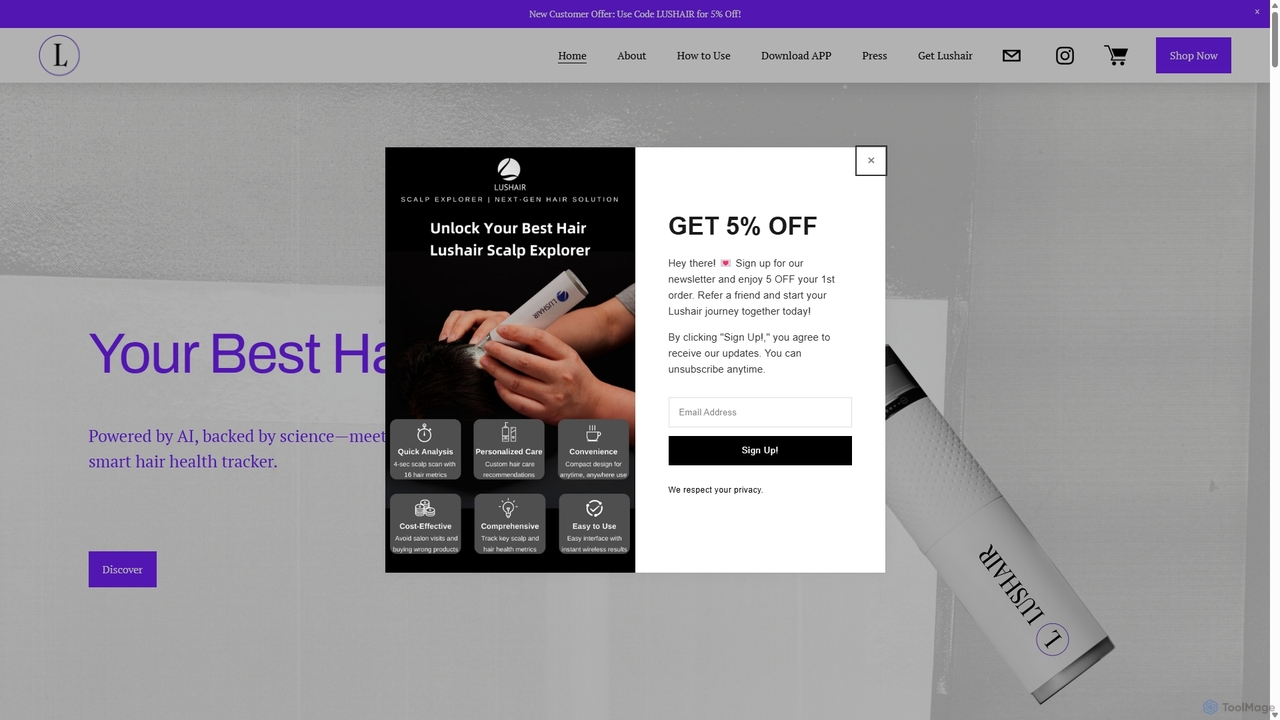
Lushair is an AI-powered hair and scalp analysis system that uses a smart dermascope and a mobile app to provide clinic-grade diagnostics at home. It analyzes 16 vital signs to generate personalized care plans, including product, lifestyle, and professional recommendations, helping users proactively manage their hair health.

Diagnostics
Visits 5.8KFavorites 145Likes 140

About Personal Care

AI Personal Care tools are applications that use artificial intelligence to provide personalized analysis and recommendations for beauty, fitness, and wellness. They leverage computer vision and machine learning algorithms to analyze user data, such as photos or survey responses, to create customized routines. These tools empower users to make informed decisions about their skincare, makeup, and health habits, transforming personal care from a generic approach to a highly tailored experience. This data-driven guidance helps optimize routines for better results.

Core Features

  • Personalized Analysis: Uses camera input to analyze skin condition, hair type, or body posture.
  • Customized Recommendations: Suggests specific products, workout plans, or meal ideas based on individual needs and goals.
  • Virtual Try-On: Allows users to digitally preview makeup, hairstyles, or accessories before committing.
  • Progress Tracking: Monitors changes over time and provides feedback on the effectiveness of a routine.
  • Routine Management: Helps create, schedule, and maintain daily personal care habits.

Use Cases

These tools are widely used by individuals seeking to improve their beauty and wellness routines, beauty brands for virtual product testing, and fitness enthusiasts for personalized coaching. For example, a user can get a daily skincare regimen based on a selfie, or a runner can receive real-time feedback on their form through their phone's camera.

How to Choose

When selecting an AI Personal Care tool, consider the specificity of its function (e.g., skincare vs. fitness), the scientific basis for its recommendations, and its data privacy policy. Also, evaluate the user interface for ease of use and check if it integrates with other health apps or devices you use.

Personal Care use cases

1

Personalize Your Skincare Routine

A user struggling with inconsistent skin conditions like acne and dryness uses an AI skincare app. They take a selfie, and the app's computer vision algorithm analyzes their face, identifying areas of concern, hydration levels, and wrinkle depth. Based on this analysis, the tool generates a personalized daily and weekly skincare routine, recommending specific active ingredients like salicylic acid for acne-prone areas and hyaluronic acid for dry patches. It also suggests specific, non-affiliated products that contain these ingredients, helping the user build an effective, targeted regimen without guesswork.

2

Virtual Makeup and Hairstyle Try-On

Before making an online purchase or visiting a salon, a user wants to see how a new lipstick shade or hairstyle would look on them. Using a virtual try-on tool, they access their device's camera for a live preview. The AI uses augmented reality (AR) to accurately map the product or style onto their face in real-time. They can switch between dozens of colors and styles instantly, compare side-by-side looks, and make a confident decision. This reduces purchase regret for cosmetics and helps communicate desired styles clearly to a hairstylist.

3

AI-Powered Fitness and Posture Coaching

A fitness enthusiast working out at home wants to ensure they are performing exercises with the correct form to prevent injury. They use an AI fitness coach app that utilizes their phone's camera. The AI tracks 18 key points on their body to analyze their movements during squats, lunges, or yoga poses. If their form deviates from the ideal—for example, if their knees go past their toes in a squat—the app provides immediate audio and visual feedback for correction. This provides real-time, personalized coaching that was previously only available with a human trainer.

4

Generate a Personalized Nutrition Plan

An individual aiming for weight loss and muscle gain inputs their physical stats (age, weight, height), activity level, dietary restrictions (e.g., gluten-free), and food preferences into an AI nutrition planner. The AI processes this information to calculate their daily caloric and macronutrient needs. It then generates a complete weekly meal plan, including recipes for breakfast, lunch, and dinner, that meets these specific targets. The plan is balanced, varied, and tailored to their tastes, removing the complexity and time commitment of manual meal planning.

5

Discover Your Ideal Fragrance Profile

A consumer looking for a new perfume feels overwhelmed by the vast number of choices. They use an AI fragrance finder that presents a series of visual and text-based questions about their lifestyle, personality, favorite scents (like 'freshly cut grass' or 'old books'), and desired mood. The AI analyzes these abstract preferences and maps them to specific fragrance notes and perfume families. It then recommends a curated list of 3-5 commercially available perfumes that match their unique profile, explaining why each one is a good fit. This transforms a confusing shopping experience into a guided journey of discovery.

6

Track and Analyze Sleep Patterns

A user concerned about their sleep quality uses an AI-powered sleep tracking app. The app uses the phone's microphone and accelerometer to monitor sleep stages (light, deep, REM) by analyzing sounds like snoring and movement patterns throughout the night. In the morning, the AI provides a detailed report with a sleep score, duration of each stage, and insights into potential disruptions. Over time, it identifies patterns and offers personalized advice to improve sleep hygiene, such as adjusting bedtime or reducing evening screen time, contributing to overall wellness.

Personal Care FAQ

What are AI Personal Care tools?

AI Personal Care tools are software applications that use artificial intelligence to offer personalized advice and analysis for beauty, fitness, and wellness. They function by processing user-provided data, such as photos, videos, or questionnaire answers, through machine learning models. Key features include skin analysis, virtual makeup try-ons, personalized workout plans, and custom nutrition guides. These tools aim to make expert-level personal care guidance accessible and tailored to each individual's unique characteristics and goals.

How do I choose the right AI Personal Care app?

To choose the right AI Personal Care app, consider these factors:

  • Specific Goal: Identify your primary need. Are you focused on skincare analysis, fitness tracking, virtual makeup, or nutrition planning? Choose an app that specializes in that area.
  • Data Privacy: Review the app's privacy policy. Understand how your personal data, especially photos and health information, is stored and used.
  • Scientific Backing: For health and skincare apps, check if their recommendations are based on scientific research or backed by professionals like dermatologists or trainers.
  • User Experience: Look for an intuitive interface and clear, actionable feedback. A free trial or version can help you evaluate its usability before committing.
What's the difference between AI Personal Care and general Health AI tools?

The main difference lies in their focus. AI Personal Care tools concentrate on wellness, aesthetics, and lifestyle improvements, such as skincare, beauty, and fitness coaching. Their goal is to optimize daily routines and personal appearance. General Health AI tools, which are part of the parent category, have a broader and often more clinical scope. They may include applications for symptom checking, mental health support, managing chronic diseases, or analyzing medical records. While Personal Care is a subset of Health, it is specifically non-diagnostic and focuses on proactive self-improvement rather than medical treatment.

How accurate is AI skin analysis?

The accuracy of AI skin analysis can be quite high for identifying common surface-level concerns like spots, wrinkles, texture, and hydration levels. Many leading tools are trained on vast datasets of clinical images, allowing them to detect subtle patterns effectively. However, their accuracy depends on factors like image quality, lighting conditions, and the complexity of the skin concern. It's important to remember that these tools are for informational and cosmetic purposes. They are not a substitute for a professional diagnosis from a dermatologist, who can assess underlying conditions that an app cannot see.

Who can benefit from using AI Personal Care tools?

A wide range of individuals can benefit from these tools. This includes:

  • Beginners: People new to skincare or fitness who need guidance on where to start and what products or exercises are suitable for them.
  • Enthusiasts: Users who are already knowledgeable but want to optimize their routines with data-driven insights and track their progress meticulously.
  • Busy Professionals: Individuals who lack the time for extensive research or consultations and appreciate the convenience of instant, personalized recommendations.
  • Online Shoppers: Consumers who want to virtually try on makeup or hairstyles before purchasing products online, reducing the risk of buying the wrong item.