
ToolMage
Sign in

Best 1 Personalized Skincare AI tools for Health

Popular Personalized Skincare AI tools in Health include Proven Skincare, helping you work more efficiently.

Proven Skincare
Paid

Proven Skincare

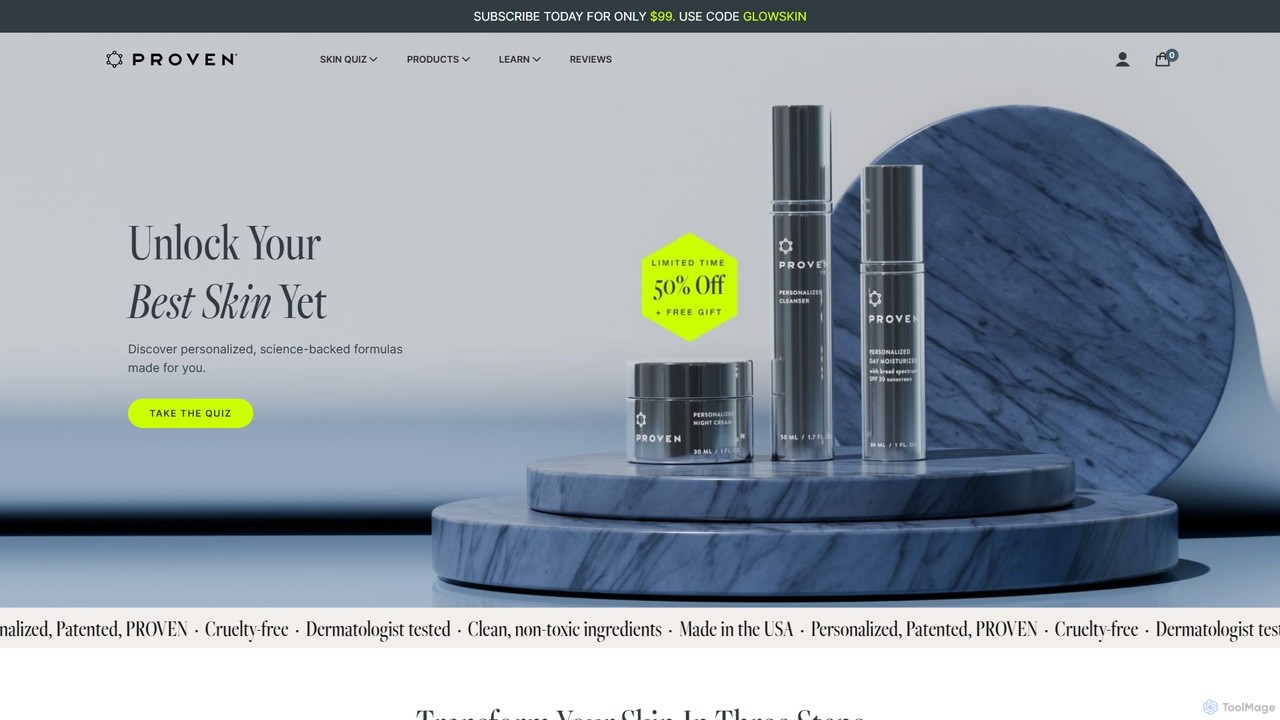
Proven Skincare offers a hyper-personalized skincare routine powered by AI. By completing a 3-minute quiz, their Skin Genome Project™ technology analyzes over 47 factors about your skin, lifestyle, and environment. It then formulates a unique 3-step system (cleanser, day cream, night cream) using clinically effective, clean, and cruelty-free ingredients, delivered directly to you.

Recommendation Engine
Visits 83.2KFavorites 143Likes 136

About Personalized Skincare

Personalized Skincare tools are AI-driven applications that analyze an individual's skin condition to provide customized product and routine recommendations. These platforms typically use computer vision to assess photos for concerns like acne, wrinkles, and pigmentation, cross-referencing this data with user-provided information. The primary value is to move beyond generic advice, offering a data-driven, scientific approach to building an effective skincare regimen. This helps users save time and money by reducing trial-and-error with unsuitable products.

Core Features

  • AI Skin Analysis: Utilizes smartphone cameras to scan the face, identifying and quantifying skin concerns such as dark spots, texture, and fine lines.
  • Custom Routine Generation: Creates tailored morning and evening skincare routines with specific product types and application steps.
  • Product Recommendation: Suggests commercially available products whose ingredients are matched to the user's specific skin needs and goals.
  • Ingredient Analysis: Scans product ingredient lists to flag potential irritants or highlight beneficial components for the user's skin profile.
  • Progress Tracking: Allows users to monitor skin improvements over time by comparing analysis results and photos from different dates.

Use Cases

These tools are ideal for individuals new to skincare who feel overwhelmed by options, as well as experienced users looking to optimize their routine for specific concerns like anti-aging or hyperpigmentation. Skincare brands and retailers also use this technology to offer personalized shopping experiences and increase customer loyalty.

How to Choose

When selecting a Personalized Skincare tool, consider the accuracy of its AI analysis; check reviews or for clinical validation. Evaluate the breadth of its product database—whether it's brand-agnostic or tied to a specific line. Prioritize platforms with clear data privacy policies. Finally, assess the user interface for ease of use and the clarity of its recommendations.

Personalized Skincare use cases

1

Building a Foundational Skincare Routine

A person in their early 20s, new to skincare, feels overwhelmed by the vast amount of products and conflicting advice online. They use a personalized skincare app to get a clear starting point. After taking a selfie for AI analysis and answering a quiz about their skin type (oily, combination) and goals (reduce occasional breakouts), the tool generates a simple 3-step morning (cleanse, moisturize, SPF) and evening (cleanse, treat, moisturize) routine. It recommends specific, affordable drugstore products, explaining why each ingredient like salicylic acid is beneficial for their concerns. This provides an actionable, educated start to their skincare journey.

2

Targeting Specific Anti-Aging Concerns

A user in their 40s wants to address signs of aging, specifically fine lines around the eyes and a loss of firmness. They use an AI skincare tool to track their progress. The initial scan quantifies the depth of wrinkles and skin elasticity. Based on this, the app recommends a routine incorporating retinol, peptides, and vitamin C. Every month, the user takes a new photo. The tool's progress tracking feature overlays the scans, showing a measurable reduction in fine lines and providing data-driven encouragement that the routine is effective, motivating them to stay consistent.

3

Identifying Potential Ingredient Irritants

Someone with sensitive skin frequently experiences redness and irritation but struggles to pinpoint the cause. They use a personalized skincare tool's ingredient analysis feature. They scan the barcodes of products that caused reactions in the past. The AI cross-references these ingredient lists and identifies a common potential irritant, such as a specific fragrance or preservative, across all of them. The app then flags this ingredient in any future product searches or scans, helping the user make informed purchasing decisions and avoid products that are likely to cause a flare-up.

4

Adapting a Routine for Seasonal Changes

A user with combination skin finds their T-zone becomes much oilier in the summer, while their cheeks get dry and tight in the winter. Instead of guessing which products to swap, they use their personalized skincare app at the start of each season. In summer, the AI analysis detects increased sebum production and recommends switching to a lighter, gel-based moisturizer and adding a clay mask once a week. In winter, it detects dehydration and suggests a richer cream moisturizer and a hydrating serum with hyaluronic acid. This proactive, data-informed approach keeps their skin balanced year-round.

5

Verifying Product Suitability Before Purchase

A shopper is in a store, considering a new, expensive serum that's trending online. Before committing, they use their personalized skincare app to scan the product's barcode. The app's ingredient analysis feature instantly processes the list. It confirms the serum contains two ingredients (Niacinamide, Vitamin C) that align with their goals of reducing redness and brightening skin. However, it also flags a high concentration of alcohol, which the user's profile indicates they are sensitive to. Based on this instant, personalized feedback, the shopper decides to look for an alcohol-free alternative, avoiding a potentially costly and irritating mistake.

6

Professional Aid for Estheticians and Dermatologists

An esthetician uses a professional-grade personalized skincare tool during client consultations. After an initial visual assessment, they use the tool's AI scanner to get objective metrics on hydration levels, pore size, and pigmentation. This data is shared with the client on a tablet, helping them visualize their skin's condition and understand the need for recommended treatments like chemical peels or hydration facials. The esthetician then uses the tool to track the client's progress over a series of treatments, providing clear, quantitative evidence of improvement, which enhances client trust and satisfaction.

Personalized Skincare FAQ

What are AI Personalized Skincare tools?

AI Personalized Skincare tools are digital platforms, usually mobile apps, that use artificial intelligence to analyze your skin and recommend a tailored skincare routine. They work by having you take a photo of your face, which a computer vision algorithm then assesses for various concerns like acne, wrinkles, dark spots, and texture. Combined with your answers to a questionnaire about your goals and skin type, the AI suggests specific products and routines designed to meet your unique needs, taking the guesswork out of building an effective regimen.

How accurate is AI skin analysis?

The accuracy of AI skin analysis can be quite high for common, visible concerns but varies between applications. These systems are trained on vast datasets of dermatological images, allowing them to recognize patterns related to acne, pigmentation, and wrinkles with reasonable precision. However, their performance depends on factors like photo quality, lighting, and the complexity of the AI model. It's important to view these tools as a guide for cosmetic and wellness purposes, not as a medical diagnostic tool. For any serious or persistent skin conditions, consulting a human dermatologist is essential.

Personalized Skincare AI vs. a Dermatologist: What's the difference?

The primary difference lies in their purpose and qualification. A Personalized Skincare AI is a wellness tool designed to help you manage common cosmetic concerns and build a non-prescription routine. A dermatologist is a medical doctor who diagnoses and treats skin diseases, can prescribe medication, and performs medical procedures.

  • AI Tool: Offers recommendations for over-the-counter products, routine building, and progress tracking for issues like mild acne or fine lines.
  • Dermatologist: Provides medical diagnoses for conditions like cystic acne, eczema, or skin cancer, and creates a comprehensive treatment plan that may include prescriptions.
Think of the AI as a helpful guide for your daily care, while a dermatologist is the essential expert for your medical skin health.

How should I choose a personalized skincare tool?

When selecting a personalized skincare tool, focus on four key areas:

  • Analysis Method: Look for tools that use high-quality photo analysis combined with a detailed questionnaire. The more data points it collects, the more personalized the recommendation.
  • Product Database: Check if the tool recommends products from a wide range of brands (brand-agnostic) or if it's tied to a single brand's ecosystem. A wider range offers more flexibility.
  • Data Privacy: Read the privacy policy. Ensure the company is transparent about how your photos and personal data are stored and used. Choose services that prioritize user data protection.
  • Features and Usability: Consider what features are most important to you, such as progress tracking, ingredient analysis, or community features. The app should be intuitive and easy to navigate.

Is my data safe with personalized skincare apps?

Data safety is a critical consideration. Reputable personalized skincare apps should have a clear and accessible privacy policy that explains what data is collected (e.g., photos, survey answers) and how it is used. Generally, companies use anonymized data to train their AI models. Look for services that use encryption to protect your data during transmission and storage. However, it is always wise to be cautious. Avoid sharing overly sensitive personal information and choose apps from well-known, trusted developers with positive reviews regarding privacy and security.