CineAI
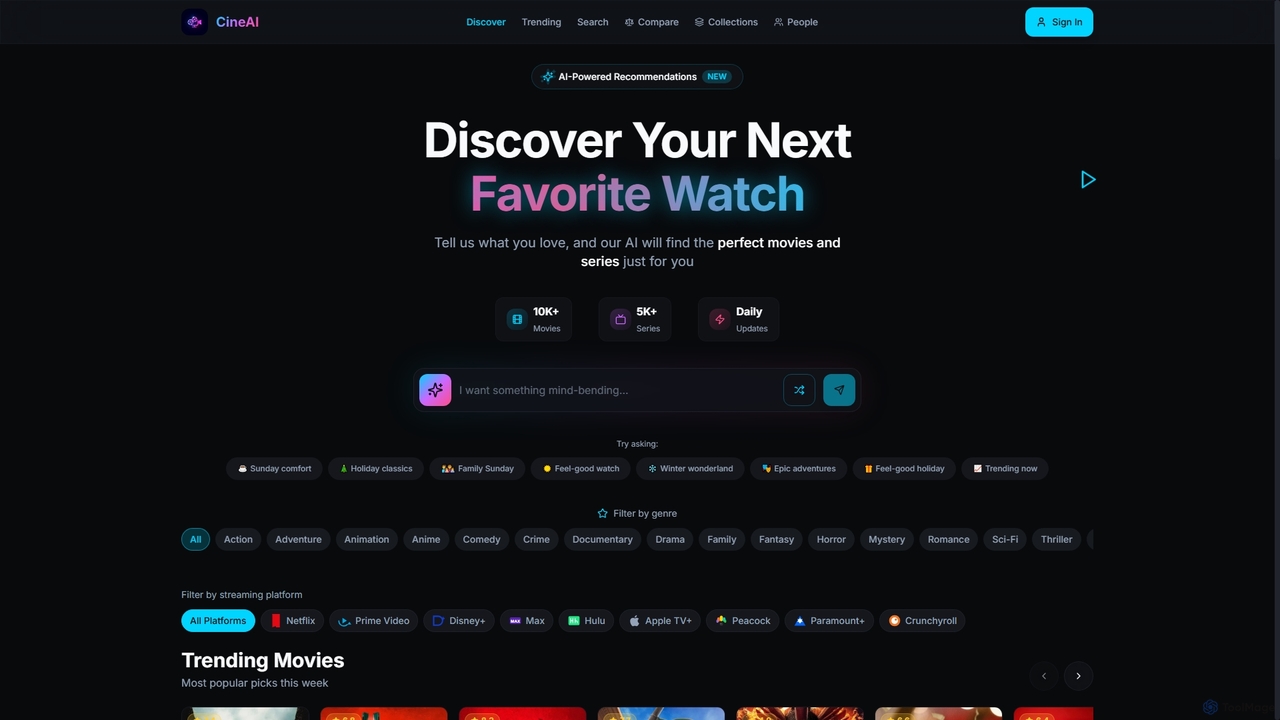
CineAI is an AI-powered platform designed to help users discover their next favorite movies and series. By understanding …
CineAI is an AI-powered platform designed to help users discover their next favorite movies and series. By understanding your preferences, it provides personalized recommendations, allows filtering by genre and streaming platform, and offers tools to explore trending content, compare titles, and browse AI-curated collections.
Proven Skincare
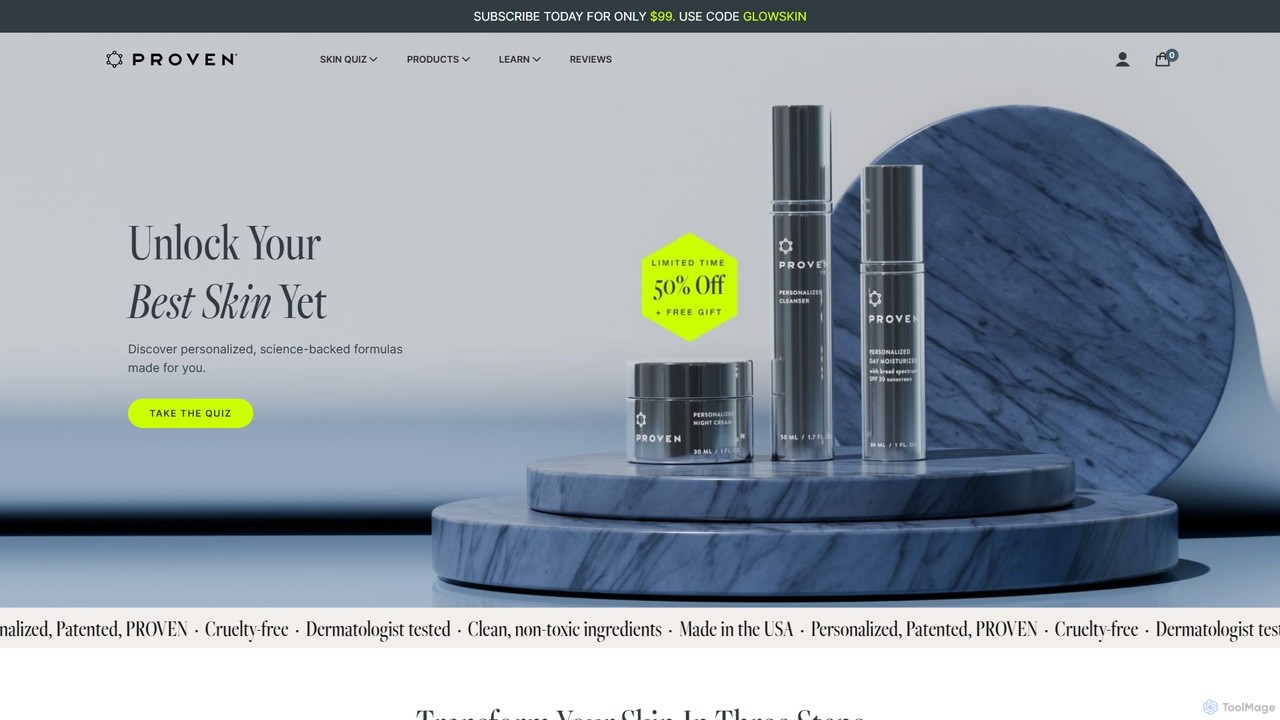
Proven Skincare offers a hyper-personalized skincare routine powered by AI. By completing a 3-minute quiz, their Skin Genome …
Proven Skincare offers a hyper-personalized skincare routine powered by AI. By completing a 3-minute quiz, their Skin Genome Project™ technology analyzes over 47 factors about your skin, lifestyle, and environment. It then formulates a unique 3-step system (cleanser, day cream, night cream) using clinically effective, clean, and cruelty-free ingredients, delivered directly to you.
About Recommendation Engine
A Recommendation Engine is a class of AI system that predicts user preferences and suggests relevant items such as products, content, or services. These engines analyze vast amounts of data, including user behavior, item attributes, and contextual information, using algorithms like collaborative filtering and content-based filtering. Their primary value lies in creating personalized user experiences, which significantly increases engagement, conversion rates, and customer loyalty. Unlike standard search functions that react to queries, recommendation engines proactively surface new and relevant items, fostering discovery and enhancing user satisfaction.
Core Features
- Personalized Suggestions: Generates unique recommendations for each user based on their individual profile, history, and behavior.
- Collaborative Filtering: Recommends items by identifying patterns among users with similar tastes or behaviors.
- Content-Based Filtering: Suggests items that share attributes with items a user has previously interacted with positively.
- Real-time Adaptation: Dynamically updates recommendations in response to a user's immediate actions and changing interests.
- Performance Analytics: Provides metrics on recommendation effectiveness, such as click-through rates (CTR) and conversion lift.
Use Cases
Recommendation Engines are widely used across digital platforms. In e-commerce, they power 'you might also like' sections to boost sales. Streaming services like Netflix and Spotify rely on them for movie and music suggestions to retain subscribers. News aggregators and content platforms use them to personalize article feeds, increasing reader engagement.
How to Choose
When selecting a Recommendation Engine, first assess the types of algorithms it supports (collaborative, content-based, hybrid). Evaluate its scalability to handle your user base and item catalog. Check for robust API and integration capabilities with your existing systems. Also, consider the level of customization available for tuning recommendation logic and the quality of its analytics dashboard.

Recommendation EngineUse Cases
Boosting E-commerce Sales with Product Recommendations
An e-commerce manager uses a recommendation engine to automatically display personalized product carousels on the homepage, product pages, and in the shopping cart. By showcasing sections like 'Customers Also Bought' and 'Trending Products,' the platform guides users to relevant items they might not have found otherwise. This strategy directly increases the average order value (AOV) and improves the overall shopping experience, leading to higher customer retention.
Personalizing Content Discovery on Streaming Platforms
A media streaming service integrates a recommendation engine to enhance user engagement. The engine analyzes viewing history, ratings, and genre preferences to create personalized content rows like 'Top Picks for You' and 'Because You Watched...'. This proactive content discovery helps users find new movies and shows effortlessly, reducing churn and increasing the total time spent on the platform. The recommendations adapt in real-time as the user interacts with the content.
Increasing Reader Engagement for Online Publishers
An online news portal or blog uses a recommendation engine to keep readers on their site longer. At the end of each article, a widget suggests other relevant articles based on the current topic, author, and the reader's historical interests. This prevents readers from leaving the site after consuming a single piece of content. By promoting continuous discovery, the publisher increases page views per session, ad revenue, and the likelihood of converting casual visitors into loyal subscribers.
Automating Personalized Email Marketing Campaigns
A marketing automation specialist integrates a recommendation engine with their email service provider. The engine analyzes each subscriber's past interactions, such as clicks and purchases, to dynamically populate newsletters with personalized product or content suggestions. Instead of sending a generic email blast, each recipient gets a unique version tailored to their interests. This results in significantly higher open rates, click-through rates (CTR), and ultimately, more conversions from email marketing efforts.
Improving Course Discovery on E-Learning Platforms
An online learning platform uses a recommendation engine to help students find relevant courses. Based on a student's completed courses, skill profile, and stated career goals, the engine suggests a personalized learning path. It can recommend individual courses, specializations, or entire certificate programs. This not only improves the student experience by simplifying navigation but also increases course enrollment rates and promotes long-term platform engagement.
Driving In-App Upsells and Feature Adoption
A SaaS company uses a recommendation engine within its application to drive growth. By analyzing how a user interacts with the software, the engine identifies opportunities to suggest premium features or add-on services. For example, if a user frequently exports data manually, the engine might recommend an automated reporting feature available in a higher-tier plan. This context-aware upselling is more effective than generic pop-ups, leading to increased feature adoption and higher customer lifetime value (LTV).