Health Best in category 1 results Psychology AI Tool

Popular AI tools in the Psychology field of Health include Riot IQ, etc., helping you quickly improve efficiency.

Riot IQ

Riot IQ

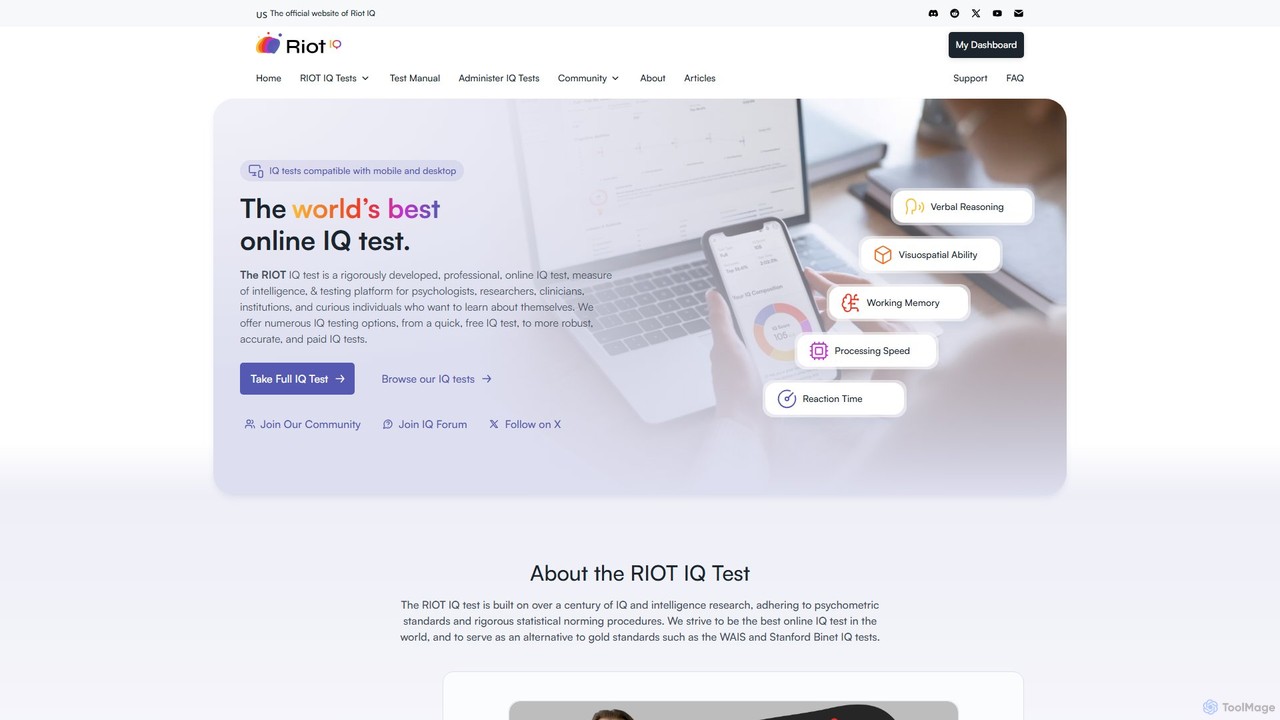
Riot IQ is a professional, scientifically-validated online IQ testing platform. Developed by psychometrics experts, it offers a modern, …

161.7K

About Psychology

AI Psychology tools are a specialized category of applications that leverage artificial intelligence to analyze human behavior, support mental well-being, and assist in psychological research. These tools often utilize Natural Language Processing (NLP), sentiment analysis, and machine learning to interpret text, speech, and behavioral data. They provide users with data-driven insights into emotional patterns, cognitive functions, and mental health states. The primary value of these tools lies in offering accessible, personalized, and scalable psychological support and analysis.

Core Features

  • Sentiment & Emotion Analysis: Automatically identifies and quantifies emotions and opinions from text or speech to gauge mental state.
  • Behavioral Pattern Recognition: Uses machine learning to detect recurring patterns in user data that may indicate specific psychological traits or conditions.
  • Personalized Interventions: Delivers tailored content, exercises (like CBT), and coping strategies based on an individual's unique psychological profile.
  • AI-Powered Chatbots: Provides conversational support, guided journaling, and therapeutic exercises in an interactive format.
  • Cognitive Assessment: Employs AI-driven tasks and puzzles to measure cognitive abilities such as memory, attention, and problem-solving.

Use Cases

These tools are utilized by mental health professionals to augment therapy, by researchers to analyze large datasets of human behavior, and by corporations for employee wellness programs. Individuals also use them for self-help, mood tracking, and developing better mental health habits. For instance, a therapist might use a tool to monitor a patient's mood between sessions, while a researcher could analyze online forum data for public mental health trends.

How to Choose

When selecting an AI Psychology tool, prioritize those with a strong evidence-based foundation, developed in consultation with clinical experts. Data privacy and security are paramount, so look for compliance with regulations like HIPAA or GDPR. Consider the specific psychological methodology used (e.g., CBT, Mindfulness). Finally, evaluate the user interface for ease of use and the quality of insights and feedback it provides.

PsychologyUse Cases

1

Providing Corporate Mental Wellness Support

An HR manager in a large corporation implements an AI psychology platform to support employee well-being. The platform offers anonymous access to resources like guided meditations, stress-reduction exercises, and AI chatbots for initial support. It analyzes aggregated, anonymized data to identify workplace stressors (e.g., high stress levels in a specific department) without compromising individual privacy. This allows the HR department to proactively introduce targeted wellness initiatives, such as workshops on burnout prevention, ultimately improving morale and reducing employee turnover.

2

Automating Analysis for Psychological Research

A university researcher is studying the emotional impact of social media. Instead of manually reading and coding thousands of posts, they use an AI psychology tool with advanced NLP capabilities. The tool processes the entire dataset in hours, identifying themes, quantifying sentiment polarity (positive, negative, neutral), and tracking emotional shifts over time. This allows the researcher to focus on higher-level analysis and interpretation of the results, significantly accelerating the research timeline and enabling the analysis of a much larger dataset than would be feasible manually.

3

Personalized Cognitive Behavioral Therapy (CBT) Exercises

An individual dealing with anxiety uses an AI-powered mobile app that provides CBT exercises. Based on their daily journal entries and mood tracking, the app's AI identifies negative thought patterns. It then suggests personalized exercises, such as cognitive reframing or guided exposure tasks, tailored to their specific triggers. The app tracks their progress, adjusting the difficulty and type of exercises over time. This provides consistent, accessible support between therapy sessions, empowering the user to actively manage their anxiety with tools that adapt to their personal journey.

4

AI-Assisted Augmentation for Therapists

A licensed therapist uses an AI tool to augment their clinical practice. After each session, with patient consent, they upload a transcript of the conversation. The AI analyzes the text for linguistic markers, emotional tone, and key themes discussed, providing a concise summary and highlighting potential areas of concern that might have been missed. This doesn't replace the therapist's judgment but acts as a 'second pair of eyes,' helping them prepare more effectively for subsequent sessions and track patient progress with objective data points, ultimately leading to more targeted and efficient care.

5

Daily Mood and Emotion Tracking for Self-Awareness

A user interested in personal growth uses an AI journaling app to build self-awareness. Each day, they write about their experiences and feelings. The app's AI performs sentiment analysis on their entries, creating visualizations that show mood trends over weeks and months. It also identifies recurring themes or topics associated with strong positive or negative emotions. By reviewing these insights, the user can better understand their emotional triggers, recognize patterns in their well-being, and make more informed decisions to improve their daily life and mental state.

6

Developing Social Skills with an AI Coach

An individual looking to improve their communication skills practices with an AI-powered conversation coach. The tool simulates various social scenarios, such as a job interview or a difficult conversation with a colleague. The user speaks their responses, and the AI provides real-time feedback on factors like tone of voice, pacing, use of filler words, and clarity. It can offer suggestions for rephrasing and allows the user to practice repeatedly in a safe, non-judgmental environment. This builds confidence and helps them apply more effective communication strategies in real-life situations.

PsychologyFrequently Asked Questions