ToolMage
Sign in

Best 4 Testing AI tools for Education

Popular Testing AI tools in Education include Riot IQ, assess, yunkaoai, and Zenquiz, helping you work more efficiently.

Zenquiz
Paid

Zenquiz

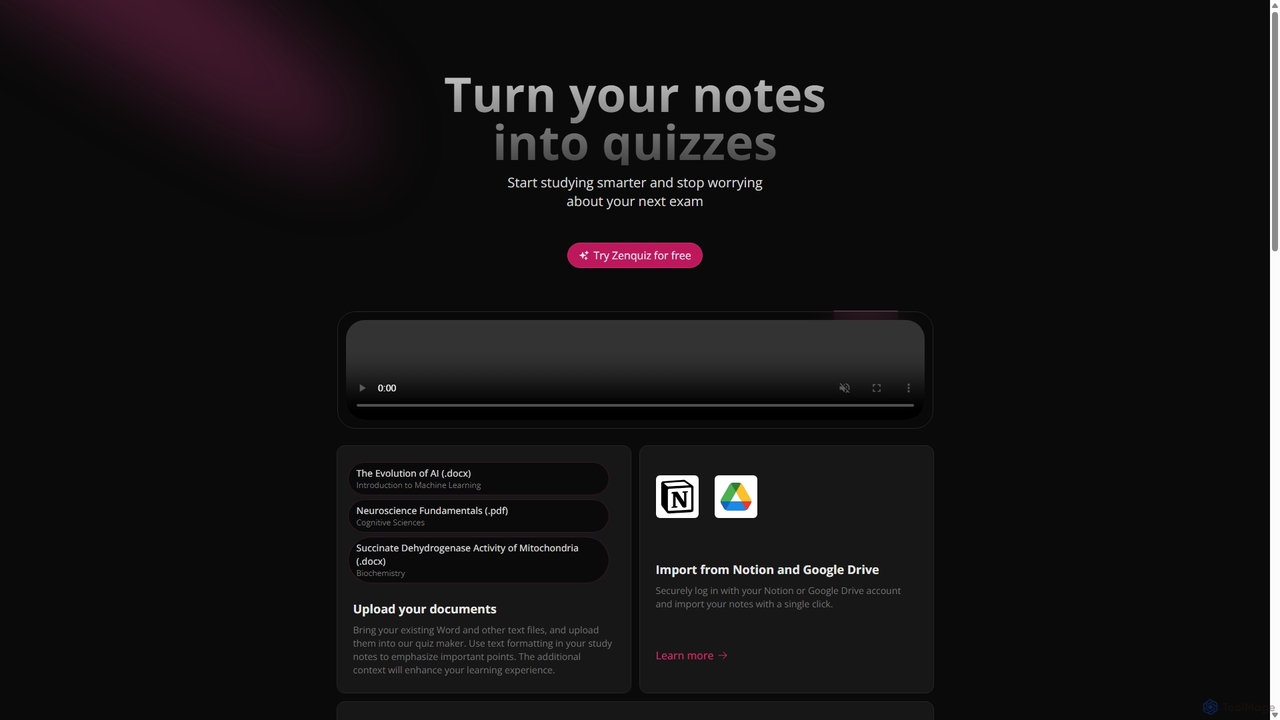
Zenquiz is an AI-powered quiz generator that transforms your study notes, documents, and text into interactive quizzes. Upload files or import from Notion and Google Drive to create multiple-choice, true/false, and fill-in-the-blank questions, making studying more efficient for students, educators, and businesses.

Text Analysis
Visits 8.2KFavorites 145Likes 152
assess
Paid

assess

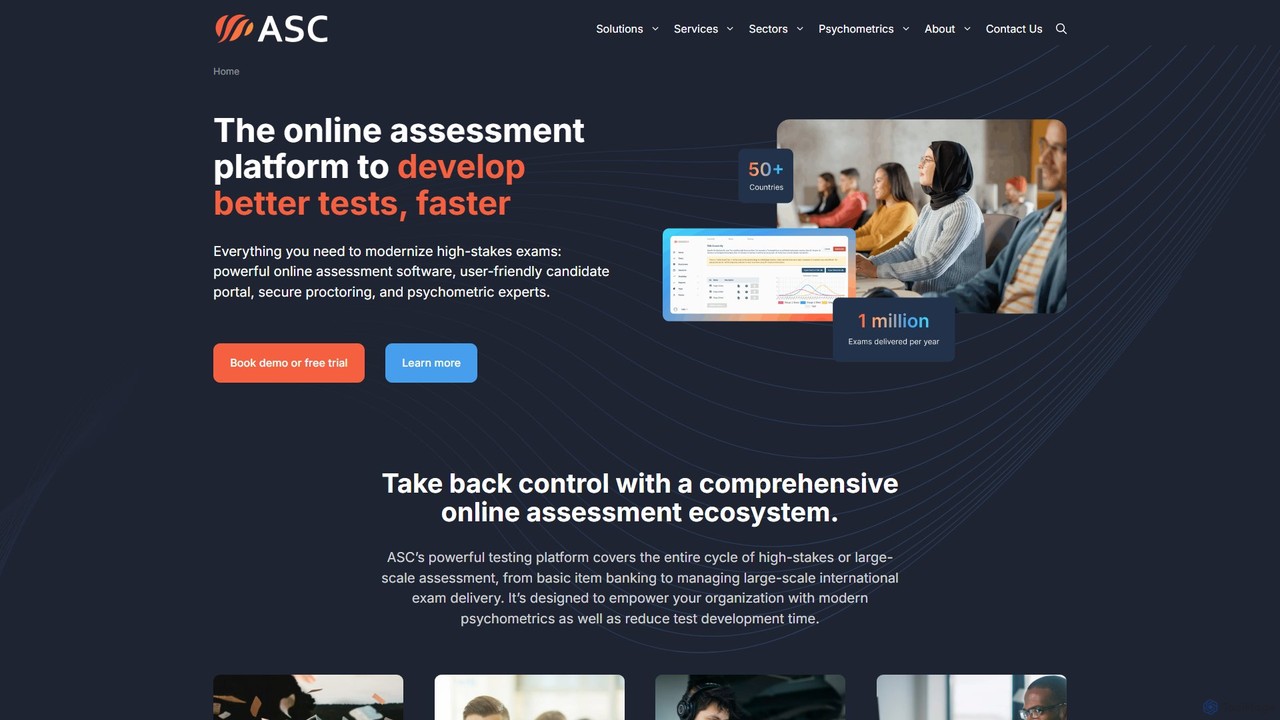
An advanced online assessment platform leveraging AI and psychometrics for high-stakes exams. It offers an end-to-end solution, including item banking, adaptive testing (CAT), secure proctoring, and expert consulting for certification, HR, and education.

Testing
Visits 67.2KFavorites 172Likes 174
Riot IQ
Freemium

Riot IQ

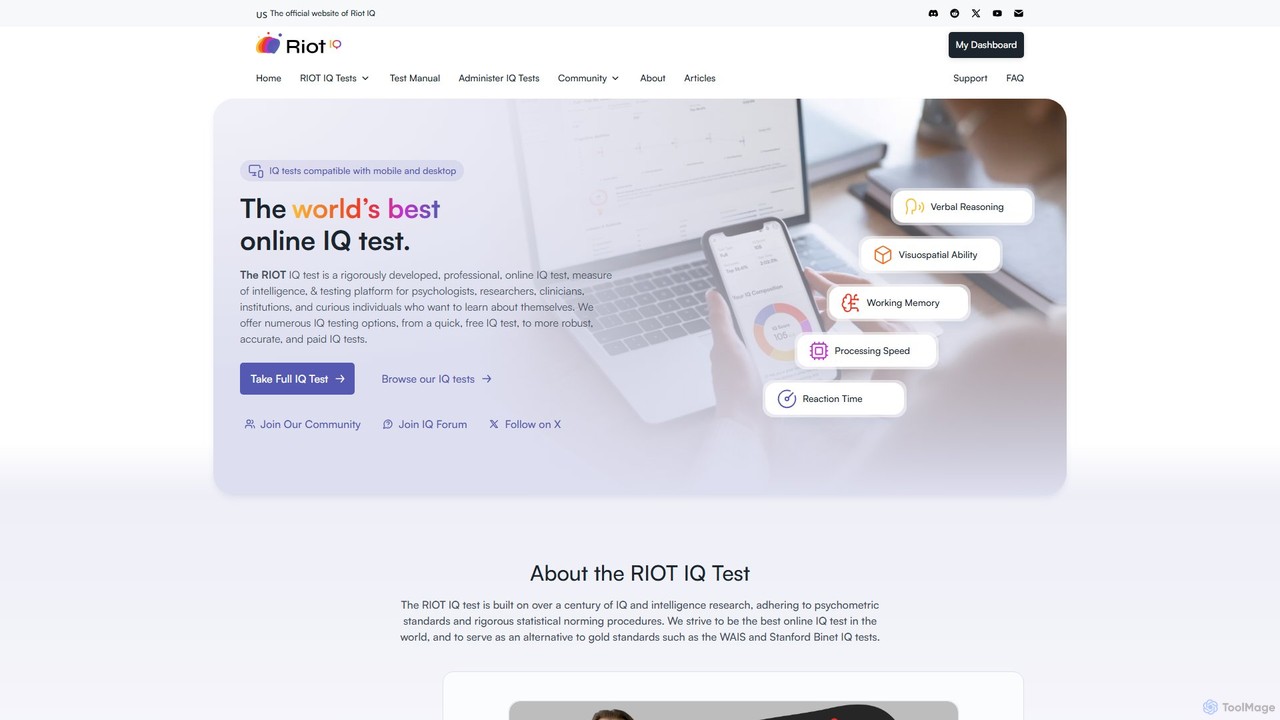
Riot IQ is a professional, scientifically-validated online IQ testing platform. Developed by psychometrics experts, it offers a modern, accessible alternative to traditional tests, providing detailed analysis of five core cognitive abilities for individuals, researchers, and clinicians.

Testing
Visits 170.7KFavorites 170Likes 154
yunkaoai
Paid

yunkaoai

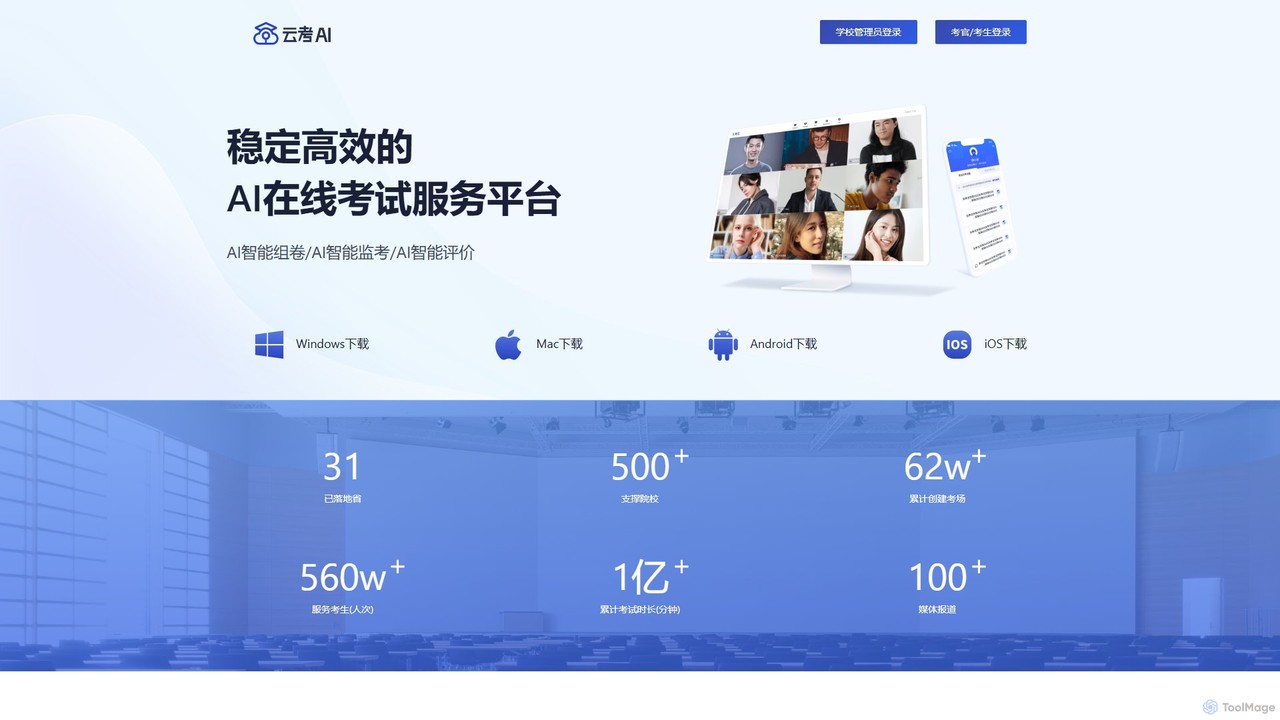
yunkaoai is an AI-powered online examination platform designed for educational institutions. It offers a comprehensive solution for creating, proctoring, and evaluating remote exams, leveraging AI to ensure fairness, security, and efficiency throughout the entire testing process.

Human Resources
Visits 30.4KFavorites 134Likes 123

About Testing

AI Testing tools are a specialized category of educational technology that uses artificial intelligence to automate and enhance the entire assessment lifecycle. These tools leverage Natural Language Processing (NLP) and machine learning algorithms to generate diverse questions, administer adaptive tests, and provide instant, detailed feedback. They empower educators and trainers to create more effective, secure, and personalized evaluations while saving significant time on administrative tasks. The core value lies in transforming standard tests into dynamic tools for deeper learning insights and improved educational outcomes.

Core Features

  • Automatic Question Generation: Creates a variety of question types (multiple-choice, fill-in-the-blank, essay) directly from source materials like textbooks or articles.
  • Adaptive Testing: Adjusts the difficulty of questions in real-time based on the test-taker's performance, providing a more accurate assessment of their ability.
  • Automated Grading and Feedback: Instantly grades a wide range of answer formats, including complex open-ended responses, and offers constructive feedback.
  • Performance Analytics: Delivers in-depth reports and visualizations on individual and group performance, highlighting knowledge gaps and areas of strength.
  • Proctoring and Security: Offers features like browser lockdown, webcam monitoring, and plagiarism detection to ensure academic integrity during remote exams.

Use Cases

AI Testing tools are widely used by K-12 educators, university professors, corporate trainers, and certification bodies. They are ideal for creating formative quizzes to check understanding, administering high-stakes summative exams, evaluating employee skills in corporate training programs, and conducting large-scale certification tests securely.

How to Choose

When selecting an AI Testing tool, consider the following: First, evaluate its compatibility with your subject matter and the specific question types you need. Second, check for seamless integration with your existing Learning Management System (LMS). Third, assess the depth and clarity of its analytics dashboard. Finally, for high-stakes assessments, verify the robustness of its security and proctoring features.

Testing use cases

1

Automating Weekly History Quiz Creation

A high school history teacher needs to create weekly quizzes to ensure students are keeping up with the reading material. Instead of spending hours manually writing questions, they upload a PDF of the textbook chapter into an AI testing tool. The AI analyzes the content and generates 20 unique multiple-choice and short-answer questions in minutes. The teacher can review, edit, and even request different versions of the quiz to prevent cheating, saving over 80% of their preparation time each week.

2

Creating Adaptive Language Proficiency Tests

A language learning platform needs to accurately assess the proficiency level of new users to place them in the right course. They use an AI testing tool to create an adaptive test. The test starts with intermediate-level questions. If a user answers correctly, the next question becomes harder; if they answer incorrectly, it becomes easier. This process allows the platform to quickly and precisely determine a user's CEFR level (e.g., A2, B1, C1) within 15-20 questions, providing a much better user experience than a long, static test.

3

Evaluating Employee Compliance Knowledge

A corporate trainer at a financial firm must certify that all employees have completed their annual compliance training. They use an AI testing platform to create a secure, proctored exam. The platform includes features like browser lockdown and webcam monitoring to ensure integrity. The AI also helps generate scenario-based questions that test practical application, not just memorization. Upon completion, the system automatically grades the exams and issues digital certificates to those who pass, creating an efficient and auditable compliance process.

4

Providing Instant Feedback on Coding Exercises

A university computer science professor assigns weekly coding exercises to a large class. Manually grading each submission is time-consuming and often delayed. By using an AI testing tool specialized for programming, the professor can create assignments that are automatically graded. The tool not only checks if the code runs correctly but also analyzes its efficiency, style, and adherence to best practices. Students receive immediate, detailed feedback upon submission, allowing them to learn from their mistakes and iterate much faster.

5

Administering Secure University Entrance Exams

A university admissions office needs to conduct entrance exams for thousands of applicants across different geographical locations. An AI testing platform provides a scalable and secure solution. It allows the university to schedule exams, register candidates, and deliver the test online. During the exam, AI-powered proctoring monitors for suspicious behavior through webcam and screen sharing analysis, flagging potential cheating incidents for human review. This ensures a fair and standardized testing environment for all applicants, regardless of their location.

6

Analyzing Class-wide Math Learning Gaps

A middle school math teacher wants to understand why their class is struggling with algebra. They use an AI assessment tool to administer a diagnostic test covering key concepts. The tool's analytics dashboard doesn't just show individual scores; it visualizes class-wide performance, highlighting specific topics (e.g., 'factoring polynomials') and even individual question types where students are weakest. This data-driven insight allows the teacher to tailor future lesson plans and provide targeted support exactly where it's needed most, rather than re-teaching the entire unit.

Testing FAQ

What are AI Testing tools in education?

AI Testing tools are software platforms that use artificial intelligence to streamline the creation, administration, and analysis of educational assessments. Unlike simple quiz makers, they offer advanced features like generating questions automatically from text, creating adaptive tests that adjust difficulty in real-time, and grading complex open-ended answers. Their primary goal is to save educators time while providing deeper, more actionable insights into student learning patterns and knowledge gaps.

How to choose the right AI Testing tool?

To choose the right AI Testing tool, consider these four key factors:

  • Content & Subject Compatibility: Ensure the tool supports your specific subject matter (e.g., STEM, humanities, coding) and the question types you need.
  • Integration Capabilities: Check if it can seamlessly integrate with your existing Learning Management System (LMS) like Canvas, Moodle, or Blackboard to sync grades and rosters.
  • Analytics and Reporting: Evaluate the depth of the analytics. A good tool should provide clear, actionable insights into both individual student and class-wide performance.
  • Security and Scalability: For high-stakes exams, confirm it has robust proctoring, anti-cheating features, and the capacity to handle your expected number of test-takers concurrently.
What's the difference between AI Testing tools and standard online quiz makers?

The main difference lies in intelligence and automation. Standard online quiz makers (like Google Forms) require you to manually write every question and primarily support simple, auto-graded formats like multiple-choice. AI Testing tools go much further by:

  • Generating questions for you from source material.
  • Offering adaptive testing that personalizes the experience.
  • Grading complex answers like essays and short responses.
  • Providing deep analytics on learning gaps, not just scores.

In essence, standard tools are for creating simple digital forms, while AI tools are comprehensive assessment platforms designed to enhance the entire educational process.

What are the main benefits of using AI for educational testing?

Using AI for educational testing offers several key benefits:

  • Time Efficiency for Educators: It drastically reduces the time spent on creating, distributing, and grading assessments, freeing up educators to focus on teaching.
  • Personalized Learning for Students: Adaptive tests provide a tailored challenge for each student, preventing boredom or frustration, and instant feedback helps them learn from mistakes immediately.
  • Data-Driven Insights: AI provides deep analytics that help teachers identify and address specific learning gaps for individuals or the entire class.
  • Enhanced Academic Integrity: Advanced features like AI-powered proctoring and plagiarism detection help maintain a fair and secure testing environment, especially for remote learning.
Are AI Testing tools secure for high-stakes exams?

Yes, many AI Testing tools are specifically designed for high-stakes exams like university finals, professional certifications, or entrance tests. They incorporate multiple layers of security to ensure academic integrity. Common features include:

  • AI Proctoring: Webcam and microphone monitoring to detect suspicious behavior like looking away from the screen or having another person in the room.
  • Browser Lockdown: Prevents test-takers from opening new tabs, copying/pasting, or accessing other applications during the exam.
  • Identity Verification: Uses ID scans and facial recognition to confirm the test-taker is who they claim to be.
  • Plagiarism Detection: Scans written answers against a vast database of online content and academic papers.

When choosing a tool for this purpose, it's crucial to verify that it offers these specific security and proctoring features.