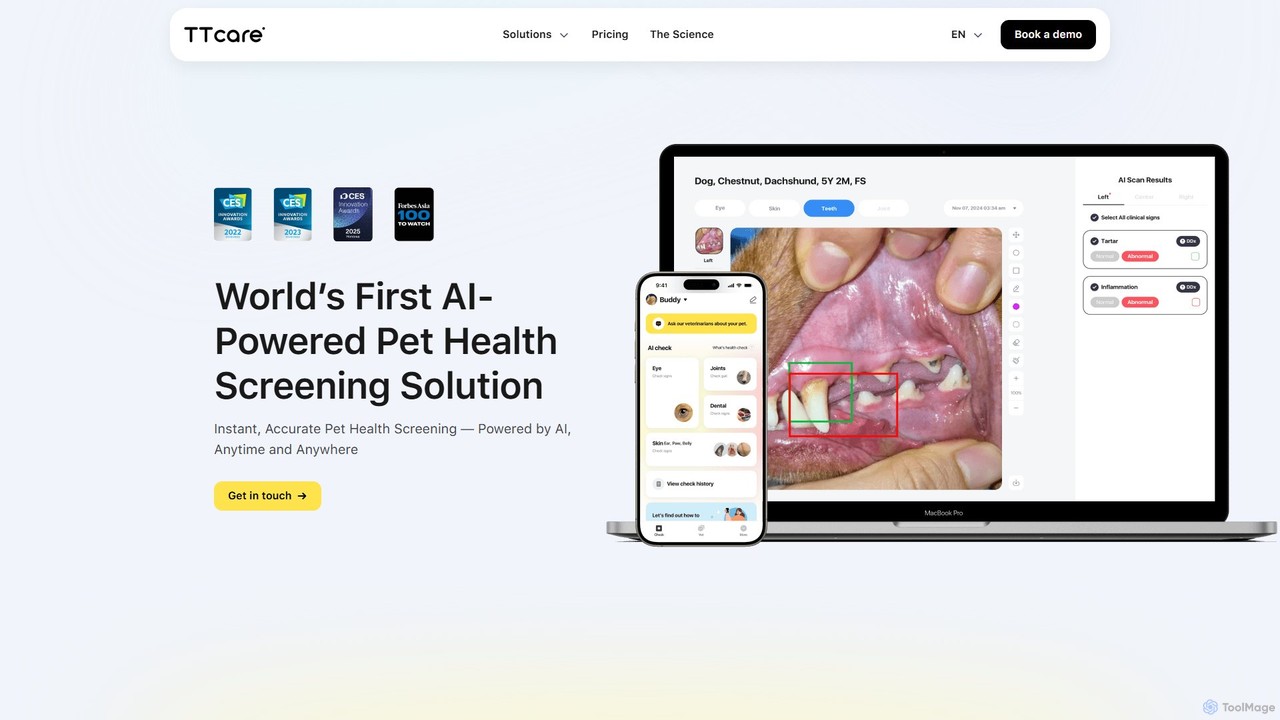
Veterinary Medicine AI tools are advanced solutions that leverage artificial intelligence to enhance animal healthcare. These tools utilize machine learning, computer vision, and data analytics to assist veterinarians and animal care professionals. They significantly improve diagnostic accuracy, streamline treatment planning, and optimize various aspects of animal health management, contributing to better outcomes for pets and livestock.
Core Features
- AI-Powered Diagnostics: Analyzes medical images (X-rays, ultrasounds, CT scans) and lab results to detect diseases, anomalies, or conditions with high accuracy, aiding veterinarians in faster and more precise diagnoses.
- Predictive Health Analytics: Uses historical data and real-time monitoring to predict disease outbreaks, identify at-risk animals, and forecast health trends in populations, enabling proactive intervention.
- Personalized Treatment Planning: Recommends tailored treatment protocols, drug dosages, and surgical approaches based on individual animal data, species, breed, and medical history.
- Smart Monitoring Systems: Integrates with wearable sensors and environmental monitors to track vital signs, behavior patterns, and environmental factors, alerting professionals to potential health issues.
- Drug Discovery & Development: Accelerates the research and development of new veterinary pharmaceuticals by simulating drug interactions and predicting efficacy and safety profiles.
Use Cases
These tools are invaluable for veterinary clinics, animal hospitals, livestock farms, and research institutions. They are used to enhance diagnostic capabilities, manage large animal populations more effectively, and support the development of new treatments. For instance, a veterinary radiologist might use AI to quickly identify subtle fractures on an X-ray, or a farm manager could employ AI to monitor the health of an entire herd, preventing widespread illness.
How to Choose
When selecting Veterinary Medicine AI tools, consider the specific clinical or operational needs, such as diagnostic imaging support, herd health management, or research acceleration. Evaluate the tool's integration capabilities with existing veterinary software, data privacy and security protocols, and the accuracy and validation of its AI models. User-friendliness, ongoing support, and scalability for future growth are also crucial factors.