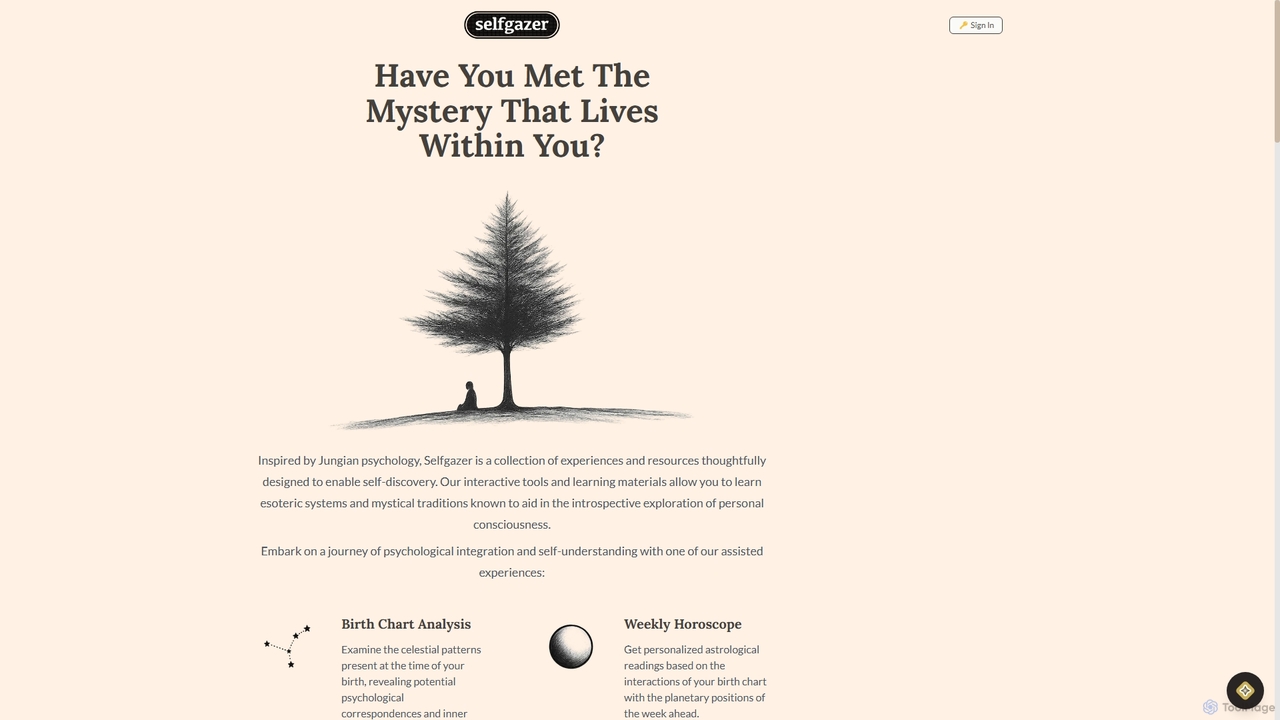
Selfgazer
Selfgazer is an AI-powered platform for self-exploration, inspired by Jungian psychology. It offers interactive tools for psychological tarot, …
Selfgazer is an AI-powered platform for self-exploration, inspired by Jungian psychology. It offers interactive tools for psychological tarot, astrology, and I Ching readings. Users can gain deep insights into their psyche, relationships, and life path through personalized birth chart analysis, guided tarot sessions, and consultations with the Selfgazer Oracle. The platform combines ancient wisdom with modern technology to facilitate a profound journey of self-discovery and personal growth.
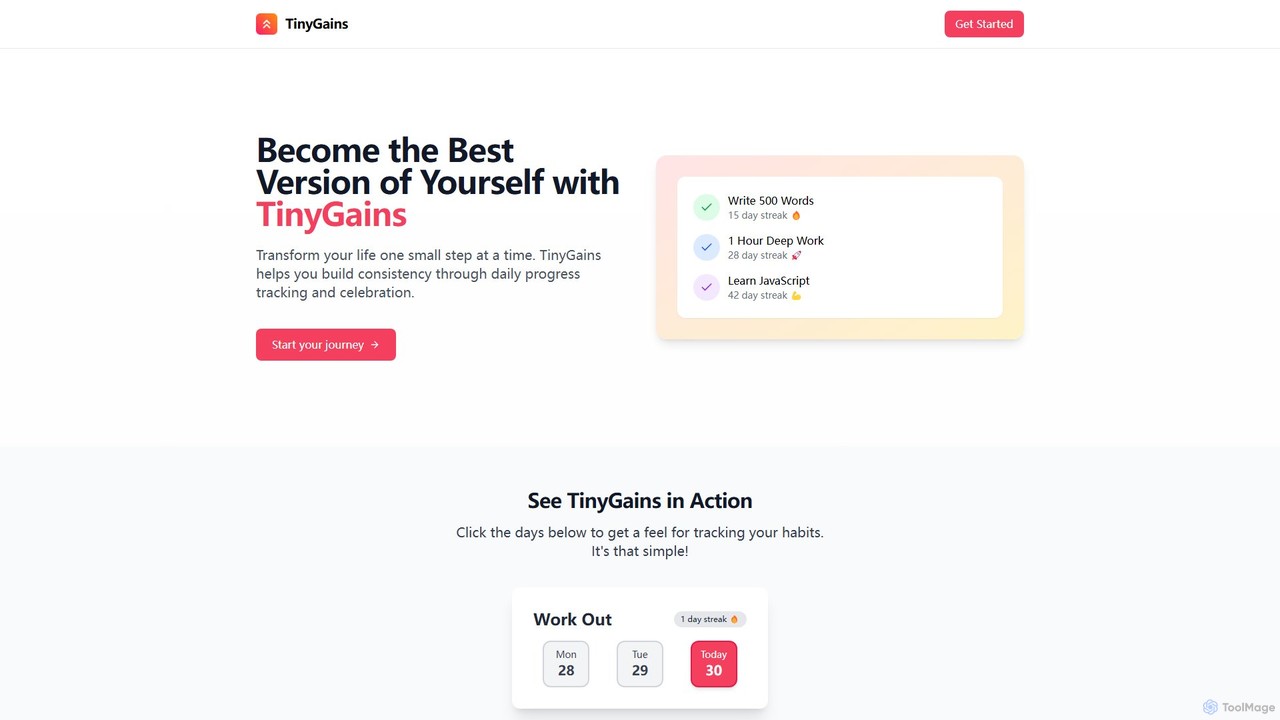
TinyGains
TinyGains is an AI-powered habit tracker designed to help you achieve personal growth through small, consistent daily actions. …
TinyGains is an AI-powered habit tracker designed to help you achieve personal growth through small, consistent daily actions. It transforms your long-term goals into manageable habits, using features like AI-assisted goal setting, persistent reminders, and streak tracking to build momentum and keep you motivated on your self-improvement journey.
About Self Improvement
Self Improvement AI tools are a category of AI-powered applications designed to foster personal growth and enhance well-being. These tools leverage advanced algorithms and data analysis to provide personalized guidance, track progress, and facilitate the development of positive habits. They empower individuals to achieve their personal, professional, and health-related goals by offering structured support and actionable insights.
Core Features
- Personalized Goal Setting: AI assists in defining clear, achievable goals and breaking them down into manageable steps.
- Habit Tracking & Formation: Monitors daily activities, provides reminders, and offers insights to build and maintain positive habits.
- Mood & Emotional Intelligence Analysis: Analyzes user input to understand emotional patterns and suggest strategies for emotional regulation.
- Cognitive Training: Offers exercises and games to improve memory, focus, problem-solving, and other cognitive functions.
- Mindfulness & Stress Reduction: Provides guided meditations, breathing exercises, and techniques to manage stress and enhance mental clarity.
Applicable Scenarios
Individuals seeking structured support for personal development, professionals aiming to enhance productivity and manage stress, and students looking to improve focus and learning habits can greatly benefit. These tools are also valuable for anyone wanting to cultivate new skills, improve emotional well-being, or maintain a consistent routine for better health.
How to Choose
When selecting a Self Improvement AI tool, consider its customization options for goal setting and habit tracking, ensuring it aligns with your specific needs. Evaluate the scientific backing or psychological principles integrated into its methodologies for credibility. Check for data privacy policies and the tool's ability to integrate with other health or productivity apps. Finally, assess the user interface for intuitiveness and the pricing model to ensure it fits your budget and offers long-term value.
Self ImprovementUse Cases
Building & Maintaining Positive Habits
An individual aiming to establish a consistent exercise routine or daily reading habit can use AI self-improvement tools. The tool helps by setting personalized reminders, tracking daily progress, and providing motivational insights based on their performance. This structured approach helps overcome procrastination and reinforces positive behaviors, leading to sustained habit formation and improved discipline over time.
Personalized Goal Setting for Career Development
A professional aiming to advance their career can utilize AI self-improvement tools to set and track specific career goals, such as learning a new skill or achieving a promotion. The AI analyzes their current skills, interests, and career path to suggest relevant learning resources, milestones, and timelines. This personalized roadmap ensures focused effort and measurable progress towards their professional aspirations, optimizing their development journey.
Stress Management & Mindfulness Practice
Individuals experiencing high stress levels, such as busy executives or students during exam periods, can leverage AI tools for stress management. These tools offer guided meditation sessions, personalized breathing exercises, and mood tracking features that help users identify stress triggers and develop coping mechanisms. By consistently engaging with these practices, users can reduce anxiety, improve emotional resilience, and cultivate a greater sense of calm and focus in their daily lives.
Enhancing Cognitive Functions for Learning
Students or lifelong learners seeking to improve memory, focus, and problem-solving skills can use AI cognitive training tools. These tools offer brain games, personalized learning paths, and adaptive exercises that challenge cognitive abilities. By regularly engaging with these AI-driven programs, users can sharpen their mental acuity, enhance information retention, and improve overall academic or professional learning performance, leading to better comprehension and faster skill acquisition.
Improving Emotional Intelligence & Communication
Individuals aiming to enhance their emotional intelligence and interpersonal communication skills can benefit from AI self-improvement tools. These tools often include features like mood journaling with AI analysis, feedback on communication patterns, and simulated social scenarios for practice. By gaining deeper insights into their emotional responses and communication styles, users can develop greater empathy, manage conflicts more effectively, and build stronger, more meaningful relationships in both personal and professional contexts.
Optimizing Sleep Patterns for Better Health
Individuals struggling with inconsistent sleep patterns or seeking to improve sleep quality can utilize AI self-improvement tools focused on sleep optimization. These tools often integrate with wearables to track sleep cycles, analyze environmental factors, and provide personalized recommendations for bedtime routines, relaxation techniques, and sleep hygiene. By following AI-driven insights, users can establish healthier sleep habits, leading to improved rest, increased energy levels, and enhanced overall physical and mental well-being.