Healthcare Best in category 3 results Clinical Trials AI Tool

Popular AI tools in the Clinical Trials field of Healthcare include Unlearn、Curebase、baselinetrials, etc., helping you quickly improve efficiency.

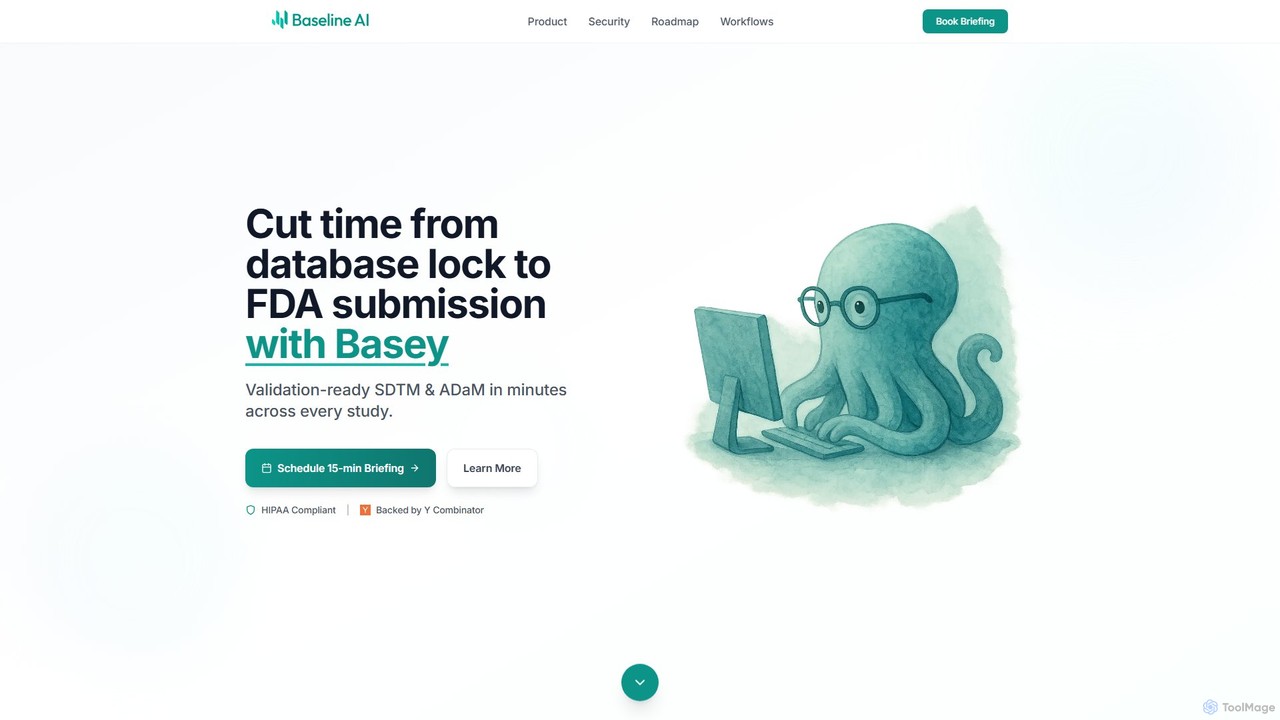
baselinetrials

baselinetrials

An AI platform for clinical research that automates the generation of validation-ready SDTM and ADaM datasets. It dramatically …

3.4K
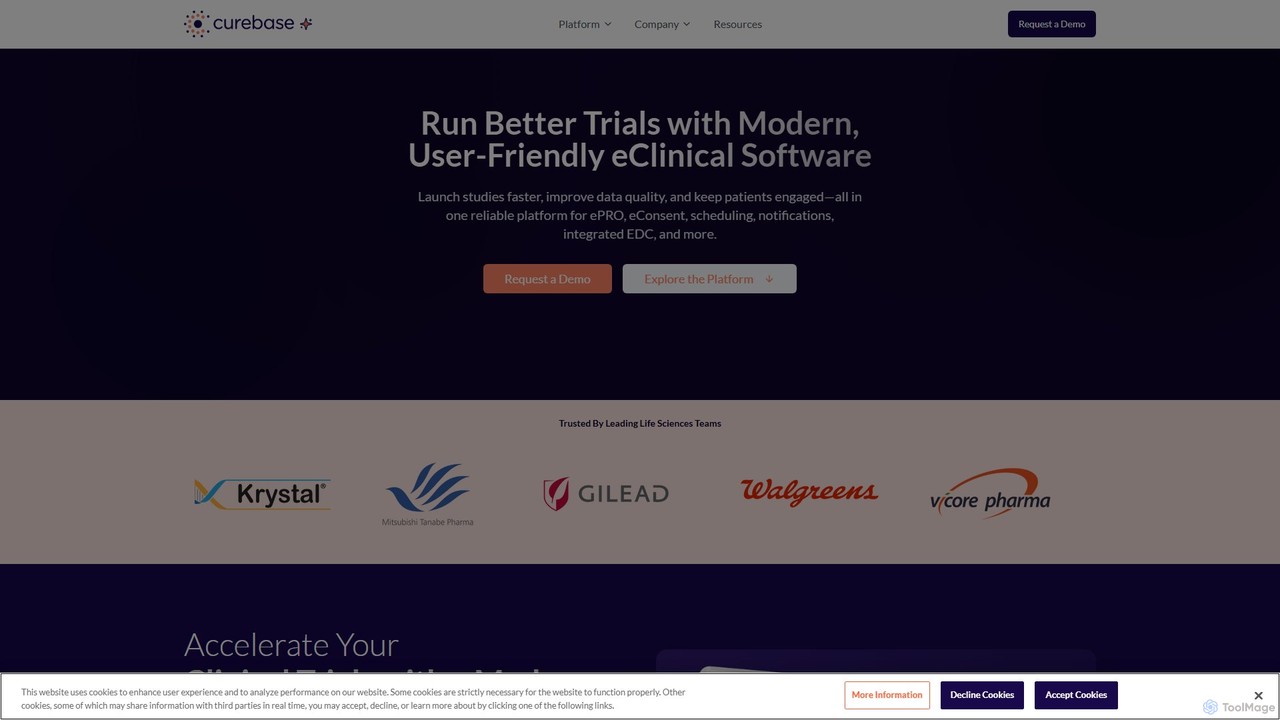
Curebase

Curebase

Curebase is a modern eClinical software platform designed to streamline and manage clinical trials. It offers a comprehensive …

8.0K
Unlearn

Unlearn

Unlearn is an AI-powered platform that accelerates clinical trials by creating 'Digital Twins' of patients. By leveraging machine …

30.7K

About Clinical Trials

AI tools for Clinical Trials are specialized platforms that use machine learning to enhance the design, execution, and analysis of medical research studies. These tools process vast datasets, including electronic health records and genomic data, to identify patterns and make predictions. They are primarily used to accelerate drug development timelines, reduce operational costs, and increase the success rate of trials by optimizing key processes from patient recruitment to data submission. Their ability to provide data-driven insights makes them a critical component in modern pharmaceutical and biotech research.

Core Features

  • Intelligent Patient Matching: Uses AI to scan patient records and identify eligible candidates for trials based on complex inclusion/exclusion criteria, significantly speeding up recruitment.
  • Predictive Analytics: Forecasts trial outcomes, patient dropout rates, and potential safety risks, allowing for proactive adjustments.
  • Automated Data Monitoring: Continuously analyzes trial data in real-time to ensure data integrity, detect anomalies, and identify emerging trends.
  • Optimized Protocol Design: Simulates various trial scenarios to help researchers design more efficient and effective study protocols before launch.
  • Natural Language Processing (NLP): Extracts structured information from unstructured clinical notes, research papers, and reports to enrich trial data.

Use Cases

These tools are essential for pharmaceutical companies, biotechnology firms, and Contract Research Organizations (CROs). They are applied throughout the trial lifecycle, from designing Phase I studies to analyzing large-scale Phase III data and preparing regulatory submissions. Academic medical centers also use them to advance clinical research and improve patient outcomes.

How to Choose

When selecting an AI tool for clinical trials, consider its data integration capabilities with existing EMR/EHR systems. Evaluate its compliance with regulatory standards like FDA 21 CFR Part 11 and GDPR. Assess the transparency and validation of its machine learning models. Finally, consider its specialization—whether it focuses on a specific therapeutic area or a particular phase of the clinical trial process.

Clinical TrialsUse Cases

1

Accelerating Patient Recruitment for Oncology Trials

A clinical research coordinator at a large hospital is tasked with finding 50 patients with a specific rare genetic mutation for a new cancer drug trial. Manually screening thousands of electronic health records (EHRs) would take months. By using an AI patient matching tool, the coordinator can run a query across the hospital's entire EHR database. The AI's Natural Language Processing (NLP) capabilities analyze both structured data fields and unstructured doctors' notes to identify potential candidates in hours, reducing the recruitment timeline by over 80% and allowing the trial to start sooner.

2

Optimizing Clinical Trial Protocol Design

A biotech startup is developing a novel therapy and needs to design a Phase II trial protocol. They have limited funding and cannot afford a failed trial. Using an AI protocol design tool, their research team simulates hundreds of trial variations. The AI analyzes historical trial data to recommend the optimal patient population, endpoint selection, and trial duration. This data-driven approach helps them design a protocol with a higher probability of success, avoid costly amendments later, and present a more compelling case to investors and regulatory bodies.

3

Real-time Monitoring of Adverse Events

A global pharmaceutical company is running a large Phase III trial across multiple countries. A clinical data manager uses an AI-powered monitoring platform to get a consolidated, real-time view of all incoming data. The system's algorithms are trained to detect patterns that may indicate an adverse event or a safety signal, such as unusual lab value combinations. When a potential issue is flagged, the system sends an alert to the safety monitoring team for immediate investigation, enabling a much faster response than traditional periodic data reviews.

4

Predicting Patient Dropout Risk

In a long-term study for a chronic disease, patient retention is a major challenge. A Contract Research Organization (CRO) uses a predictive AI model that analyzes patient demographics, visit adherence, and data from wearable devices. The model assigns a dropout risk score to each participant. This allows study coordinators to proactively engage with high-risk patients, offering additional support, reminders, or transportation assistance. This targeted intervention helps to reduce the overall dropout rate, preserving the statistical power of the study and ensuring data integrity.

5

Automating Clinical Data Abstraction

An academic research center needs to analyze thousands of unstructured pathology reports for a retrospective study. Manually extracting key data points like tumor size, grade, and specific biomarkers is slow and prone to error. Researchers use an AI tool with advanced NLP to automatically scan these reports. The tool identifies and extracts the required data points into a structured format, such as a spreadsheet. This automation saves hundreds of hours of manual labor, ensures higher data accuracy and consistency, and allows the research team to focus on analysis and interpretation rather than data entry.

6

Identifying Novel Biomarkers from Trial Data

After a Phase II trial for a new Alzheimer's drug concludes, a data science team at a pharmaceutical company uses an AI platform to perform an exploratory analysis of the complete dataset, which includes genomic, imaging, and clinical data. The AI model sifts through millions of data points to identify complex, non-obvious patterns. It discovers a novel combination of genetic markers and protein levels that strongly correlates with patient response. This finding not only helps in designing a more targeted Phase III trial but also provides new insights into the disease's mechanism, potentially opening up new avenues for drug development.

Clinical TrialsFrequently Asked Questions