ChatSlide
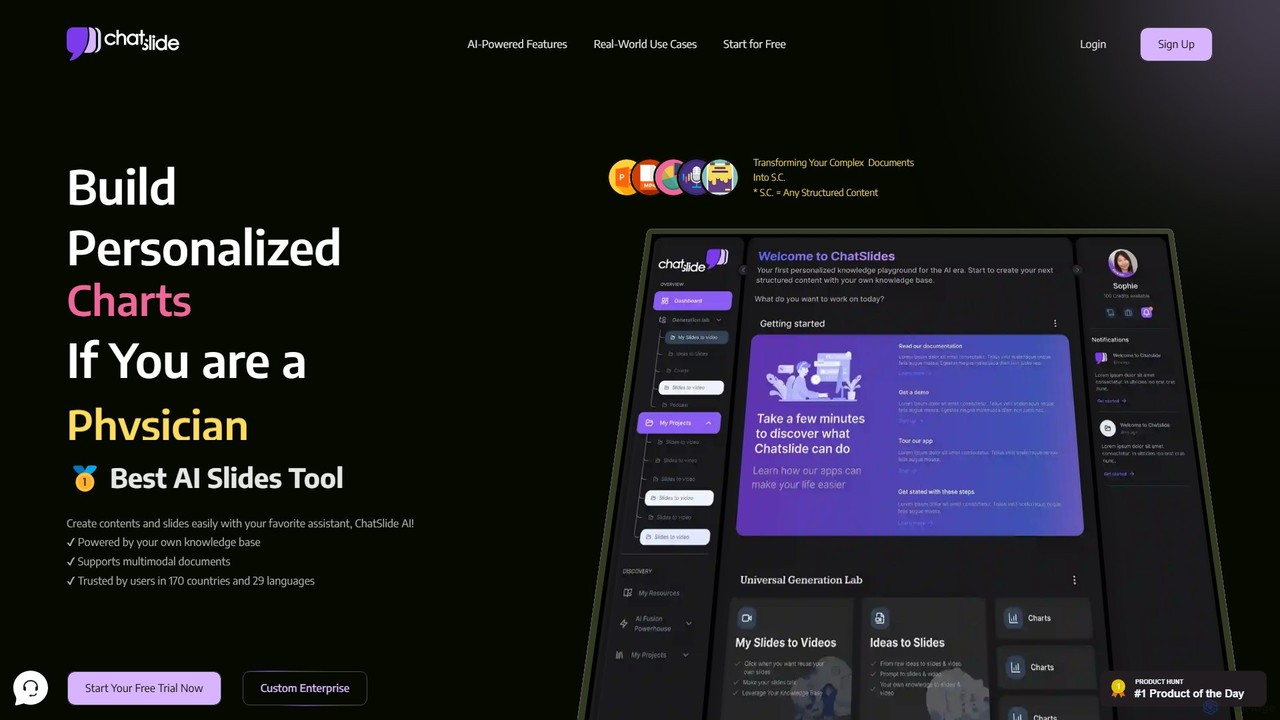
ChatSlide is an AI-powered workspace that transforms your documents and knowledge base into engaging structured content. Effortlessly create …
ChatSlide is an AI-powered workspace that transforms your documents and knowledge base into engaging structured content. Effortlessly create professional slides, videos with AI avatars, dynamic charts, posters, and podcasts to streamline knowledge sharing and communication for professionals in various fields.
About Communication
AI-powered communication tools in healthcare are specialized solutions designed to enhance interaction, information exchange, and patient engagement across various touchpoints. Leveraging natural language processing (NLP), machine learning, and virtual assistant technologies, these tools streamline patient-provider dialogue, automate administrative communication, and facilitate remote care. They aim to improve operational efficiency, reduce communication errors, and ultimately elevate the patient experience within the complex healthcare ecosystem.
Core Features
- AI Chatbots & Virtual Assistants: Provide instant, 24/7 support for patient inquiries, appointment scheduling, and basic health information.
- Secure Messaging & Collaboration: Enable encrypted, real-time communication among healthcare professionals for patient updates and team coordination.
- Multilingual Translation: Offer real-time translation services to overcome language barriers between patients and providers.
- Sentiment Analysis: Analyze patient feedback from various channels to gauge satisfaction and identify areas for improvement.
- Automated Reminders & Follow-ups: Deliver personalized alerts for appointments, medication, and post-discharge instructions.
Applicable Scenarios
These tools are vital for hospitals, clinics, and telemedicine platforms seeking to optimize patient flow and staff collaboration. They are used by administrative teams to manage patient queries, by clinicians for secure internal communication, and by patient engagement departments to deliver personalized health information. Their application spans from routine administrative tasks to critical patient support, ensuring seamless and efficient communication.
How to Choose
When selecting AI communication tools for healthcare, prioritize solutions with robust data security and HIPAA/GDPR compliance to protect sensitive patient information. Evaluate integration capabilities with existing Electronic Health Record (EHR) systems for seamless data flow. Consider the tool's scalability, language support options, and customization potential to meet specific organizational needs. User-friendliness for both patients and staff is also crucial for successful adoption.
CommunicationUse Cases
Automated Patient Inquiry Handling
Hospital administrative staff and patient support teams can deploy AI chatbots to manage a high volume of routine patient inquiries. These chatbots provide instant answers regarding appointment availability, billing procedures, visiting hours, and common symptom questions, significantly reducing the workload on human staff. This leads to faster response times for patients and allows human agents to focus on more complex cases, improving overall service efficiency and patient satisfaction.
Enhancing Telemedicine Consultations
Doctors and specialists conducting virtual consultations can utilize AI communication tools for real-time transcription and translation. This ensures clear understanding between patients and providers, especially across language barriers, and accurately documents the consultation for medical records. AI can also analyze vocal cues to assist providers in understanding patient sentiment, leading to more empathetic and effective remote care interactions and better diagnostic accuracy.
Streamlining Internal Healthcare Team Coordination
Nurses, doctors, and administrative staff within a hospital can use AI-driven secure messaging platforms to facilitate rapid and accurate internal communication. These tools enable secure sharing of patient updates, urgent alerts, and task assignments, often with smart routing capabilities that direct messages to the most relevant team member. This reduces communication delays, minimizes errors in patient care, and improves overall operational efficiency in fast-paced clinical environments.
Personalized Health Information Delivery
Healthcare organizations can leverage AI-powered personalized messaging systems to deliver tailored health advice, medication reminders, and post-discharge follow-up instructions to patients. Based on individual patient profiles and treatment plans, these systems ensure that patients receive relevant and timely information. This proactive communication strategy helps improve patient adherence to treatment, reduces readmission rates, and empowers patients to better manage their health conditions.
Multilingual Patient Support
For healthcare providers serving diverse patient populations or international clients, AI communication tools offer real-time multilingual translation for both text and voice interactions. This capability breaks down critical language barriers in emergency situations, during consultations, or for administrative processes. By ensuring effective communication regardless of language, these tools enhance accessibility, build trust, and provide equitable care to all patients, improving safety and satisfaction.
Analyzing Patient Feedback and Sentiment
Hospital management and patient experience teams can utilize AI sentiment analysis tools to process vast amounts of patient feedback from surveys, online reviews, and call center transcripts. These tools identify recurring themes, emotional tones, and key areas of concern or satisfaction. By quickly pinpointing trends and sentiments, healthcare providers can make data-driven decisions to improve service quality, address patient grievances proactively, and enhance their overall reputation and patient loyalty.