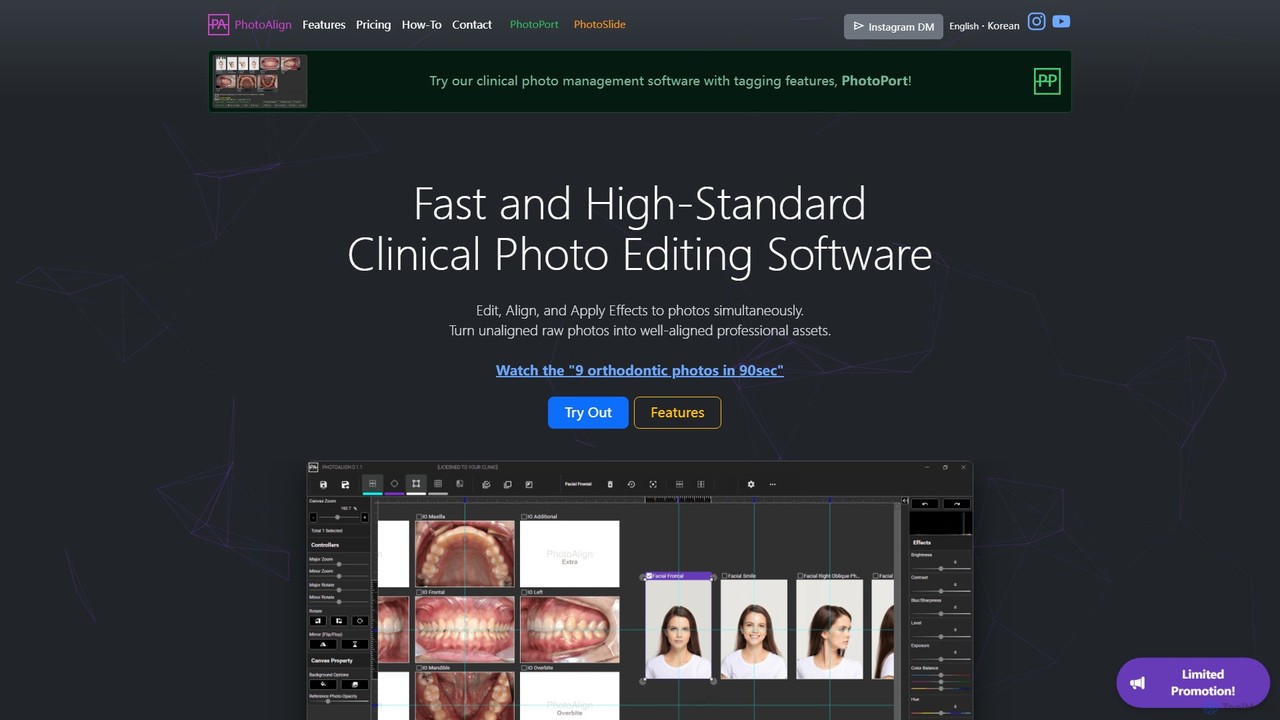
AI Dental tools are a specialized category of healthcare AI that use machine learning and computer vision to analyze dental data. These tools process medical imagery such as X-rays, CBCT scans, and intraoral scans to identify pathologies, plan treatments, and automate clinical workflows. Their primary value lies in enhancing diagnostic accuracy, improving treatment predictability, and increasing the operational efficiency of dental practices. By providing data-driven insights, they support clinicians in making more informed decisions for patient care.
Core Features
- Diagnostic Image Analysis: Automatically detects and highlights potential issues like caries, bone loss, and periapical lesions on radiographs and 3D scans.
- Treatment Planning & Simulation: Assists in designing crowns, implants, and orthodontic aligners by generating precise proposals and simulating treatment outcomes.
- Practice Management Automation: Optimizes patient scheduling, automates insurance claim processing, and manages patient communication.
- Predictive Analytics: Forecasts treatment success rates and identifies patients at high risk for specific dental conditions based on historical data.
Use Cases
These tools are primarily used by dentists, orthodontists, periodontists, dental lab technicians, and clinic administrators. Common applications include early caries detection during routine check-ups, planning complex implant placements, designing custom prosthetics, and streamlining the administrative tasks of a busy dental office.
How to Choose
When selecting an AI Dental tool, consider its specific clinical application (e.g., orthodontics, periodontics). Evaluate its integration capabilities with your existing PACS and practice management software. Verify its regulatory compliance (e.g., FDA, CE marking) and review clinical studies that validate its accuracy and effectiveness. Finally, assess the user interface for ease of use within your clinical team's workflow.