kamihome
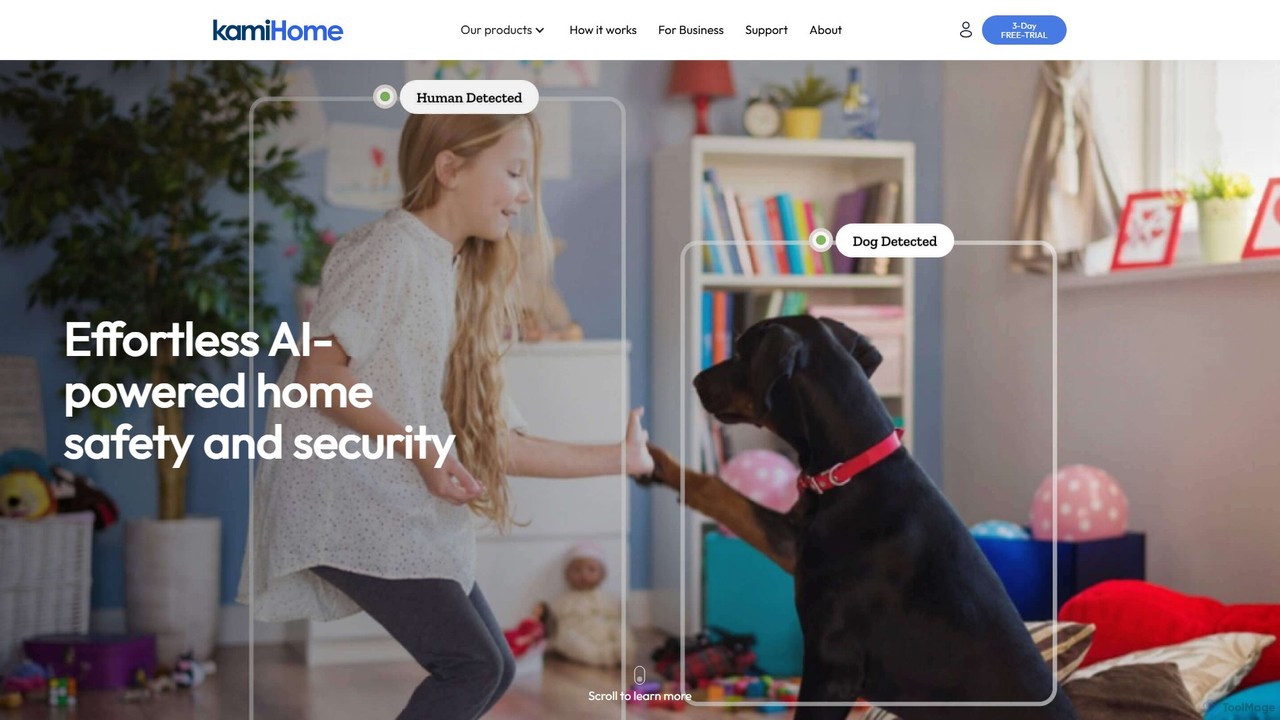
Kami Home is an AI-powered home security platform that acts as a co-pilot for your safety. It offers …
Kami Home is an AI-powered home security platform that acts as a co-pilot for your safety. It offers smart security cameras and subscription services like secure cloud storage, 24/7 professional monitoring with emergency dispatch, and a specialized AI fall detection system for senior care. Through its mobile app, users can receive intelligent alerts for people, vehicles, or falls, view live feeds, and manage their security from anywhere, ensuring peace of mind for homeowners, renters, and caregivers alike.
About Elder Care
AI Elder Care tools are specialized applications using artificial intelligence to enhance the safety, health, and well-being of older adults. These tools leverage sensors, machine learning, and natural language processing to monitor vital signs, detect emergencies like falls, and provide cognitive support. Their primary value lies in enabling seniors to live independently for longer while offering peace of mind to families and caregivers. Many systems focus on proactive and preventative care by identifying potential health issues before they become critical.
Core Features
- Remote Health Monitoring: Continuously tracks vital signs, sleep patterns, and activity levels, alerting caregivers to significant changes.
- Fall Detection & Emergency Alerts: Uses sensors or computer vision to automatically detect falls and notify emergency contacts or services.
- Medication Management: Provides intelligent reminders, tracks adherence, and can dispense correct dosages at scheduled times.
- Cognitive & Social Engagement: Offers AI-powered companions, memory games, and simplified communication tools to combat loneliness and cognitive decline.
- Caregiver Support Platforms: Helps caregivers manage schedules, log observations, and receive AI-driven insights into a senior's condition.
Use Cases
These tools are widely used in home care settings, assisted living facilities, and nursing homes. They are essential for family members caring for relatives at a distance, professional home health aides seeking to improve efficiency, and seniors who wish to maintain their independence safely.
How to Choose
When selecting an AI Elder Care tool, prioritize accuracy and reliability, especially for emergency functions. Evaluate the user interface for simplicity and accessibility for seniors. Scrutinize the provider's data privacy and security policies. Finally, consider its integration capabilities with other healthcare platforms or emergency response systems.
Elder CareUse Cases
Automated Fall Detection for Independent Living
An elderly individual living alone wears a smart device equipped with AI-powered fall detection. If a fall occurs, the device's algorithm analyzes the motion data to confirm the event and minimize false alarms. It then automatically sends an alert with the user's location to pre-selected family members and emergency medical services. This provides a critical safety net, enabling seniors to maintain their independence with confidence, knowing that help will be dispatched immediately in an emergency.
Intelligent Medication Adherence Monitoring
A family caregiver uses an AI-powered medication management system for a parent with a complex medication schedule. The system includes a smart pill dispenser that releases the correct pills at the right time. If a dose is missed, the system sends a notification to both the parent's phone and the caregiver's app. The AI platform tracks adherence over time, generating reports that can be shared with a doctor to optimize the treatment plan, thereby reducing the risk of medication errors and improving health outcomes.
AI Companionship to Reduce Social Isolation
An assisted living facility deploys AI companion robots or voice assistants in residents' rooms. These devices engage seniors in conversation, play their favorite music, read audiobooks, and provide reminders for daily activities. The AI can learn individual preferences and initiate interactions, helping to alleviate feelings of loneliness. It also simplifies technology, allowing residents to easily make video calls to family, thereby strengthening social connections and improving overall mental well-being.
Remote Vitals Monitoring for Chronic Conditions
A healthcare provider equips a patient with a chronic condition like hypertension with non-invasive, AI-connected sensors (e.g., a blood pressure cuff, wearable tracker). The system collects data daily and an AI algorithm analyzes trends and flags any readings that deviate from the patient's baseline. This allows the clinical team to intervene proactively, adjusting medication or scheduling a telehealth consultation before a minor issue escalates into a serious health event, improving patient outcomes and reducing hospital readmissions.
Cognitive Training and Memory Support
An individual experiencing mild cognitive impairment uses an AI-powered app on a tablet. The app provides a personalized regimen of brain games and activities designed to stimulate memory, attention, and problem-solving skills. The AI adjusts the difficulty level based on performance to keep the user engaged but not frustrated. It also functions as a memory aid, providing voice-activated reminders for appointments, names of visitors, or steps for a daily routine, helping to maintain cognitive function and daily independence.
Streamlining Caregiver Reporting and Coordination
A home care agency uses an AI platform to manage its caregiver team. Caregivers use a mobile app to dictate visit notes, which the AI transcribes and analyzes for key information, such as changes in mood or mobility issues. The platform provides a centralized dashboard for care managers and family members to view real-time updates and trend reports. This automates administrative tasks, reduces paperwork, and ensures that all stakeholders have a consistent, up-to-date understanding of the senior's condition, leading to more coordinated and effective care.