Healthcare Best in category 1 results Medical Records AI Tool

Popular AI tools in the Medical Records field of Healthcare include Pieces Technologies, etc., helping you quickly improve efficiency.

Pieces Technologies

Pieces Technologies

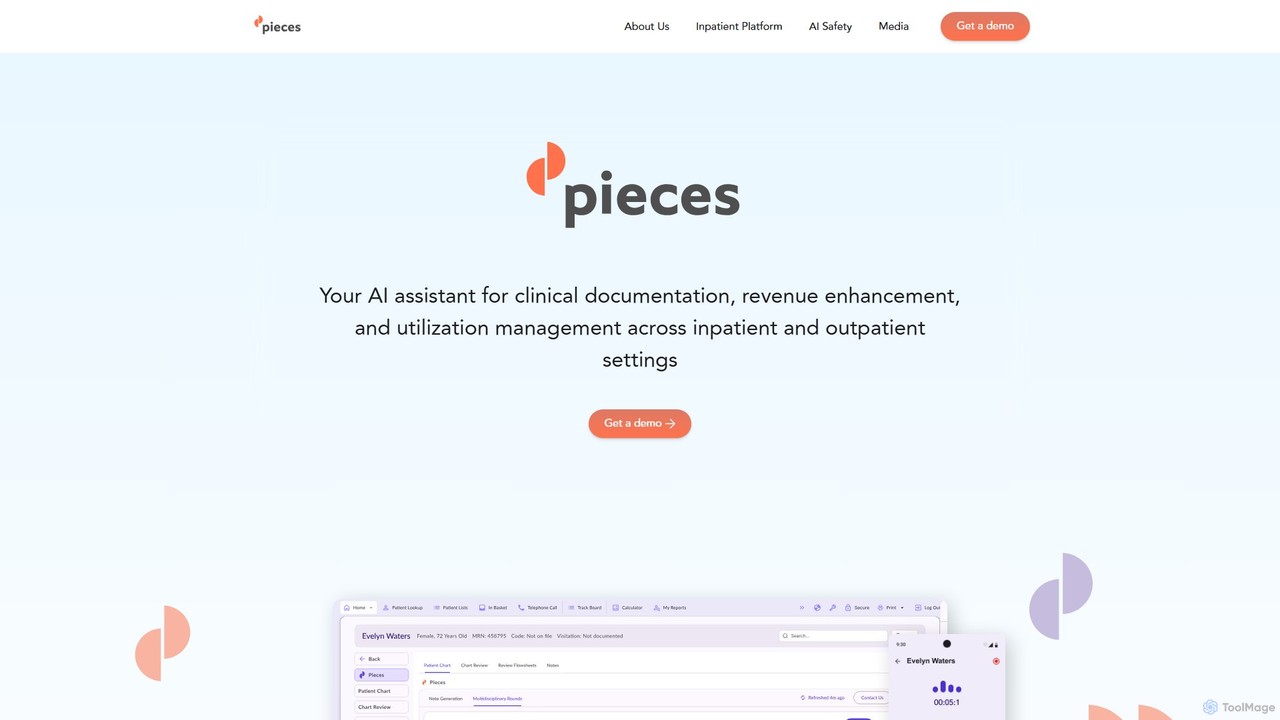
Pieces Technologies is a physician-led AI company providing a secure, generative AI assistant for clinical documentation. It helps …

4.5K

About Medical Records

Medical Records AI tools are specialized solutions designed to automate and enhance the management, analysis, and security of patient health information. Leveraging advanced natural language processing (NLP), machine learning, and computer vision, these tools convert unstructured clinical data into structured, actionable insights. They significantly improve data accuracy, streamline administrative workflows, and support better clinical decision-making within the broader healthcare ecosystem.

Core Features

  • Automated Data Extraction: Accurately extracts key information like diagnoses, medications, and procedures from clinical notes, reports, and scanned documents.
  • Structured Data Conversion: Transforms free-text clinical narratives into standardized, coded formats compatible with Electronic Health Records (EHR) systems.
  • Privacy and Compliance Management: Implements robust security protocols and anonymization techniques to ensure adherence to regulations like HIPAA and GDPR.
  • Clinical Decision Support: Analyzes patient history and current data to flag potential risks, suggest diagnoses, or recommend personalized treatment pathways.

Applicable Scenarios

These tools are indispensable for hospitals, clinics, and research institutions. They are used by healthcare providers to reduce documentation burden, by medical coders to optimize billing accuracy, and by researchers to efficiently abstract data for clinical trials and epidemiological studies. They also assist administrators in maintaining robust compliance and improving overall data governance.

How to Choose

When selecting an AI medical records tool, prioritize solutions with proven accuracy in NLP and data extraction, strong data security and compliance certifications (e.g., HIPAA, ISO 27001), and seamless integration capabilities with existing EHR or hospital information systems. Evaluate the scalability of the platform, the level of customization offered, and the quality of vendor support to ensure long-term operational efficiency and data integrity.

Medical RecordsUse Cases

1

Automating Clinical Documentation for Physicians

Physicians can use AI medical records tools to significantly reduce the time spent on administrative tasks. During or after patient consultations, the AI can transcribe spoken notes, extract relevant medical terms, and automatically populate sections of the Electronic Health Record (EHR) with structured data, such as diagnoses, prescribed medications, and treatment plans. This allows doctors to focus more on patient care and less on manual data entry, improving efficiency by up to 30%.

2

Enhancing Medical Coding and Billing Accuracy

Medical coders and billing specialists leverage these AI tools to improve the precision and speed of their work. The AI analyzes clinical notes and reports, identifying all relevant diagnoses, procedures, and services, and suggests appropriate CPT, ICD-10, or other coding standards. This automation minimizes human error, reduces claim denials, and accelerates the revenue cycle, leading to a 15-20% increase in coding efficiency and accuracy.

3

Facilitating Clinical Research Data Abstraction

Researchers often need to extract specific data points from vast quantities of patient records for clinical trials, epidemiological studies, or public health initiatives. AI medical records tools can rapidly scan and abstract structured and unstructured data (e.g., lab results, patient demographics, treatment outcomes) from thousands of records, identifying cohorts and trends that would be impractical to find manually. This accelerates research timelines and enhances the scope of studies.

4

Improving Patient Data Interoperability and Exchange

Healthcare organizations face challenges in sharing patient data securely and efficiently across different systems and providers. AI tools can standardize diverse medical record formats, ensuring semantic interoperability. They can convert data from one EHR system to another, or anonymize records for secure sharing with external specialists or research partners, thereby improving care coordination and reducing data silos.

5

Proactive Compliance Monitoring and Risk Assessment

Healthcare administrators utilize AI medical records tools for continuous monitoring of data privacy and regulatory compliance. The AI can audit records for unauthorized access patterns, identify incomplete or non-compliant documentation, and flag potential breaches of regulations like HIPAA. This proactive approach helps organizations maintain high standards of data governance, mitigate legal risks, and prepare for audits more effectively.

6

Personalized Treatment Pathway Recommendations

Clinicians can employ AI to analyze a patient's comprehensive medical history, including past diagnoses, treatments, allergies, and genetic information, all stored within their medical records. The AI identifies patterns and correlations, comparing the patient's profile against vast medical knowledge bases to suggest personalized treatment pathways, potential drug interactions, or early indicators of disease progression, thereby enhancing precision medicine.

Medical RecordsFrequently Asked Questions