ToolMage
Sign in

Best 3 Medical Technology AI tools for Healthcare

Popular Medical Technology AI tools in Healthcare include Furhat Robotics, bihilo, and rain, helping you work more efficiently.

rain
Paid

rain

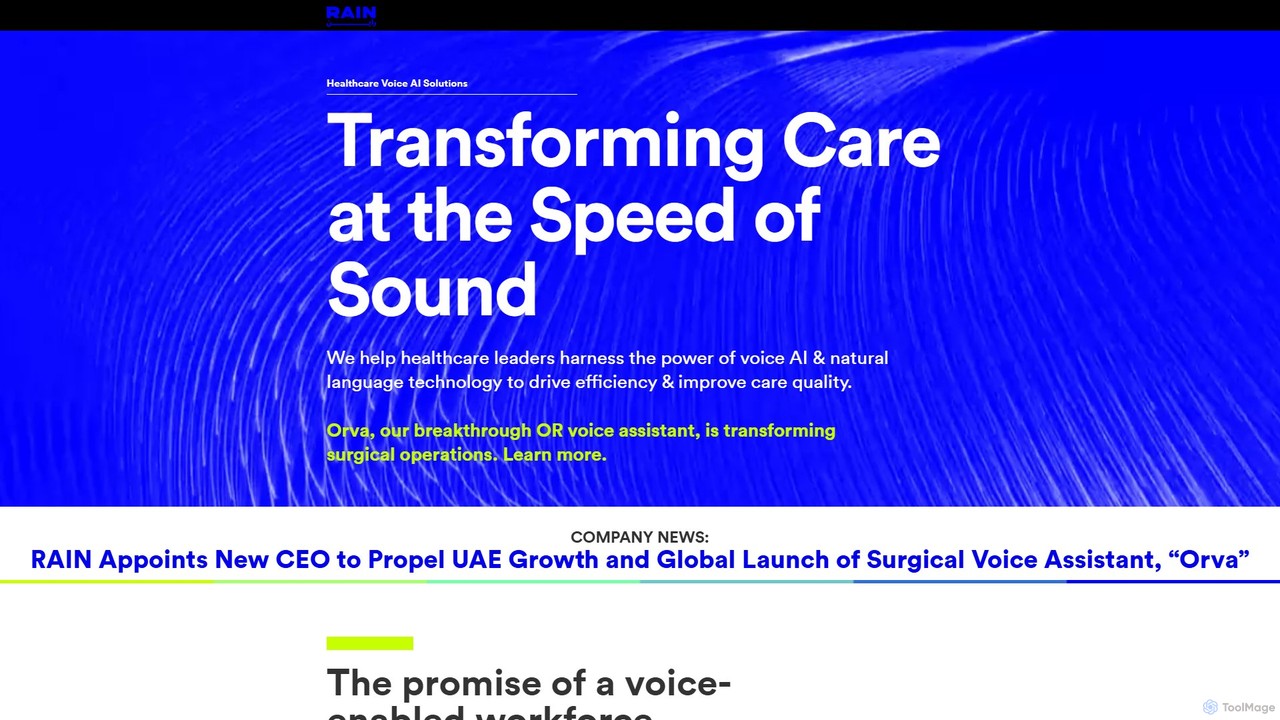
RAIN is a leading voice and conversational AI agency that designs and builds custom AI-powered solutions for enterprises. Specializing in enhancing productivity for the deskless workforce, they create bespoke voice assistants and platforms for industries like healthcare, automotive, and retail, transforming complex data into accessible, voice-activated knowledge.

Voice Solutions
Visits 6.1KFavorites 134Likes 149
Furhat Robotics
Paid

Furhat Robotics

Furhat Robotics provides the world's most advanced social robotics and conversational AI platform. It features a physically present robot with an expressive, back-projected face, designed for natural human-robot interaction. The platform is used globally in research, education, healthcare, and enterprise applications to create socially aware and engaging experiences.

Virtual Assistant
Visits 14.4KFavorites 114Likes 110
bihilo
Paid

bihilo

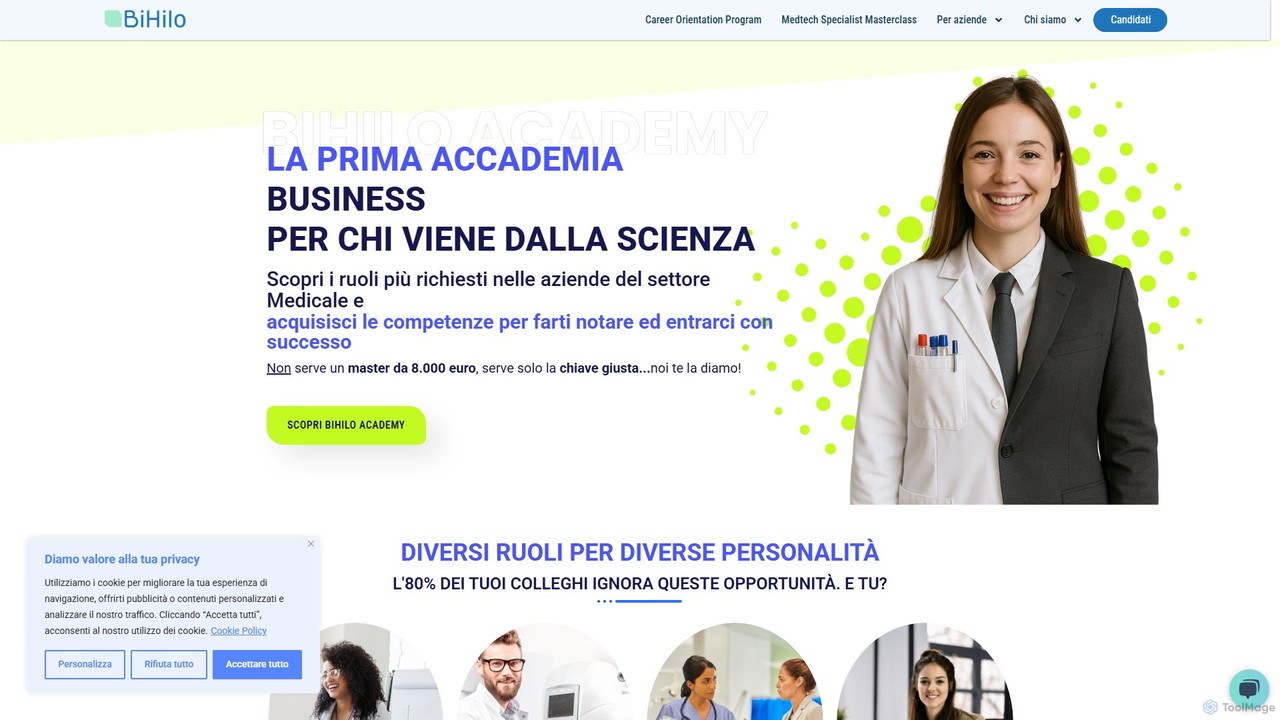
Bihilo is a specialized educational and consulting platform for the MedTech and Life Sciences industry. It provides expert-led training for individuals seeking to enter the sector and offers customized B2B services to enhance the performance of corporate sales and marketing teams.

Consulting
Visits 6.6KFavorites 155Likes 158

About Medical Technology

AI Medical Technology tools are a specialized class of software that applies machine learning and data analysis to clinical and research data for diagnostics, treatment, and discovery. These tools leverage complex algorithms to analyze medical imaging, genomic sequences, and patient records to identify patterns imperceptible to humans. Their primary value lies in enhancing diagnostic accuracy, personalizing treatment plans, and accelerating biomedical research. They represent a critical component of modern healthcare, moving beyond administrative tasks to directly impact clinical outcomes.

Core Features

  • Medical Image Analysis: Automatically detects and highlights anomalies in X-rays, CT scans, and MRIs to assist radiologists.
  • Predictive Diagnostics: Analyzes patient data to forecast disease risk and progression, enabling early intervention.
  • Genomic Data Processing: Interprets vast amounts of genetic information to identify markers for diseases and guide personalized medicine.
  • Drug Discovery Acceleration: Simulates molecular interactions to identify promising new drug candidates and shorten research cycles.
  • Surgical Assistance: Provides real-time data analysis and guidance during robotic-assisted surgeries for enhanced precision.

Use Cases

These tools are primarily used by healthcare professionals and researchers. For instance, radiologists use them for faster, more accurate scan interpretations. Oncologists leverage them to create personalized cancer treatment plans based on a patient's genetic profile. In pharmaceuticals, researchers use these tools to significantly speed up the identification of viable compounds for new drugs.

How to Choose

When selecting an AI Medical Technology tool, prioritize regulatory compliance (e.g., FDA approval, HIPAA). Evaluate the tool's clinical validation and accuracy rates through peer-reviewed studies. Assess its integration capabilities with existing hospital systems like EHR and PACS. Finally, consider the model's specificity to your required task, whether it's for a specific type of imaging, disease, or research area.

Medical Technology use cases

1

Automated Medical Image Analysis for Radiologists

A radiologist in a busy hospital department uses an AI medical technology tool to analyze hundreds of chest X-rays daily. The AI system automatically screens each image, highlighting potential nodules, fractures, or other anomalies that require closer inspection. This pre-screening process allows the radiologist to prioritize critical cases and reduces the risk of missing subtle findings due to fatigue. The tool integrates directly with the hospital's Picture Archiving and Communication System (PACS), streamlining the workflow and reducing report turnaround time by an estimated 30%.

2

Accelerating Drug Discovery in Pharmaceutical Research

A team of biochemists at a pharmaceutical company uses an AI platform to accelerate the early stages of drug discovery. Instead of manually testing thousands of compounds, they input a target protein structure into the AI. The system then simulates interactions with millions of virtual molecules, predicting their binding affinity and potential efficacy. This process identifies a shortlist of the most promising candidates for laboratory synthesis and testing in a matter of days, a task that would traditionally take months or years. This significantly reduces R&D costs and shortens the timeline for bringing new therapies to market.

3

Personalized Cancer Treatment Planning

An oncologist uses an AI-powered clinical decision support system to devise a treatment plan for a patient with a rare form of cancer. The system analyzes the patient's genomic data, pathology reports, and medical history, comparing it against a vast database of clinical trials, research papers, and treatment outcomes. It then suggests a personalized combination of therapies, including targeted drugs and immunotherapies, ranked by their predicted effectiveness for the patient's specific genetic mutations. This provides the oncologist with evidence-based options that might not be immediately apparent, enhancing the standard of care.

4

Predicting Disease Outbreaks with Public Health Data

A public health agency employs an AI model to predict potential flu outbreaks. The tool analyzes a combination of real-time data streams, including anonymized hospital admission records, search engine queries for flu symptoms, and climate data. By identifying correlations and early warning signs, the model generates a risk map that highlights regions with a high probability of an impending outbreak. This allows the agency to proactively allocate resources, such as vaccines and public health announcements, to the most vulnerable areas, mitigating the spread and impact of the disease.

5

Enhancing Precision in Robotic Surgery

During a complex minimally invasive surgery, a surgeon utilizes a robotic surgical system enhanced with AI. The AI software analyzes real-time video feeds from the endoscopic camera, overlaying 3D anatomical models onto the surgeon's view. It can automatically identify critical structures like nerves and blood vessels, providing alerts to avoid accidental damage. The system also filters out hand tremors, translating the surgeon's movements into steadier, more precise actions by the robotic arms. This fusion of human expertise and AI precision leads to reduced complications, smaller incisions, and faster patient recovery times.

6

Optimizing Clinical Trial Recruitment

A clinical research organization (CRO) is struggling to find eligible participants for a trial on a new Alzheimer's drug. They deploy an AI tool that scans millions of anonymized electronic health records (EHRs) from partner hospitals. The AI uses natural language processing to understand doctors' notes and lab results, identifying patients who meet the complex inclusion criteria for the trial. It generates a ranked list of potential candidates for clinicians to review, dramatically accelerating the recruitment process from months to weeks and increasing the likelihood of a successful trial.

Medical Technology FAQ

What is AI Medical Technology?

AI Medical Technology refers to software and systems that use artificial intelligence, particularly machine learning, to analyze complex medical and healthcare data. Unlike general healthcare AI which may focus on administrative tasks, these tools are specifically designed for clinical applications like diagnosing diseases from images, predicting patient outcomes, personalizing treatments based on genetics, and accelerating drug discovery. Their core purpose is to augment the capabilities of clinicians and researchers to improve patient care and advance medical science.

How to choose the right AI Medical Technology tool?

Choosing the right tool requires careful consideration of several critical factors. First, verify its regulatory status, such as FDA clearance or CE marking, and ensure it complies with data privacy laws like HIPAA. Second, evaluate the clinical evidence supporting its performance; look for peer-reviewed publications demonstrating its accuracy and effectiveness. Third, assess its technical integration capabilities with your existing infrastructure (e.g., EHR, PACS). Finally, ensure the tool is designed for your specific clinical need, whether it's for oncology, radiology, or another specialty.

What's the difference between AI Medical Technology and general Healthcare AI?

The primary difference lies in their application focus. AI Medical Technology is directly involved in clinical decision-making and patient care. It deals with complex biomedical data for tasks like diagnosis, treatment planning, and research. Examples include analyzing MRIs or genomic data. General Healthcare AI, on the other hand, often focuses on operational and administrative efficiency. This includes tools for patient scheduling, billing automation, hospital management, and supply chain optimization. While both aim to improve healthcare, Medical Technology AI has a direct impact on clinical outcomes, whereas general Healthcare AI improves the processes surrounding care delivery.

What are the key functions of AI Medical Technology tools?

AI Medical Technology tools perform several key functions that directly impact clinical work. The most common include:

  • Diagnostic Assistance: Analyzing medical images (like X-rays or pathology slides) or lab results to detect signs of disease earlier and more accurately.
  • Prognosis Prediction: Using patient data to forecast disease progression, survival rates, or the likelihood of responding to a particular treatment.
  • Treatment Recommendation: Suggesting personalized treatment plans by analyzing a patient's unique genetic makeup and clinical history against vast medical knowledge bases.
  • Research Acceleration: Identifying patterns in large datasets to discover new drug targets, understand disease mechanisms, or find candidates for clinical trials.

Who are the primary users of AI Medical Technology?

The primary users are highly specialized professionals within the healthcare and life sciences sectors. This includes:

  • Clinicians: Radiologists, pathologists, and oncologists use these tools for diagnostic support and treatment planning. Surgeons use them for robotic-assisted procedures.
  • Medical Researchers: Scientists in academia and pharmaceutical companies use AI to analyze complex datasets for drug discovery and to understand diseases.
  • Hospital Administrators: While their focus is often operational, they use predictive models to manage patient flow, predict admission rates, and allocate resources effectively.
  • Geneticists and Bioinformaticians: These specialists use AI to process and interpret vast amounts of genomic and proteomic data.