Healthcare Best in category 4 results Revenue Cycle Management AI Tool

Popular AI tools in the Revenue Cycle Management field of Healthcare include Collectly、Candid Health、Sohar Health、Thoughtful, etc., helping you quickly improve efficiency.

Thoughtful

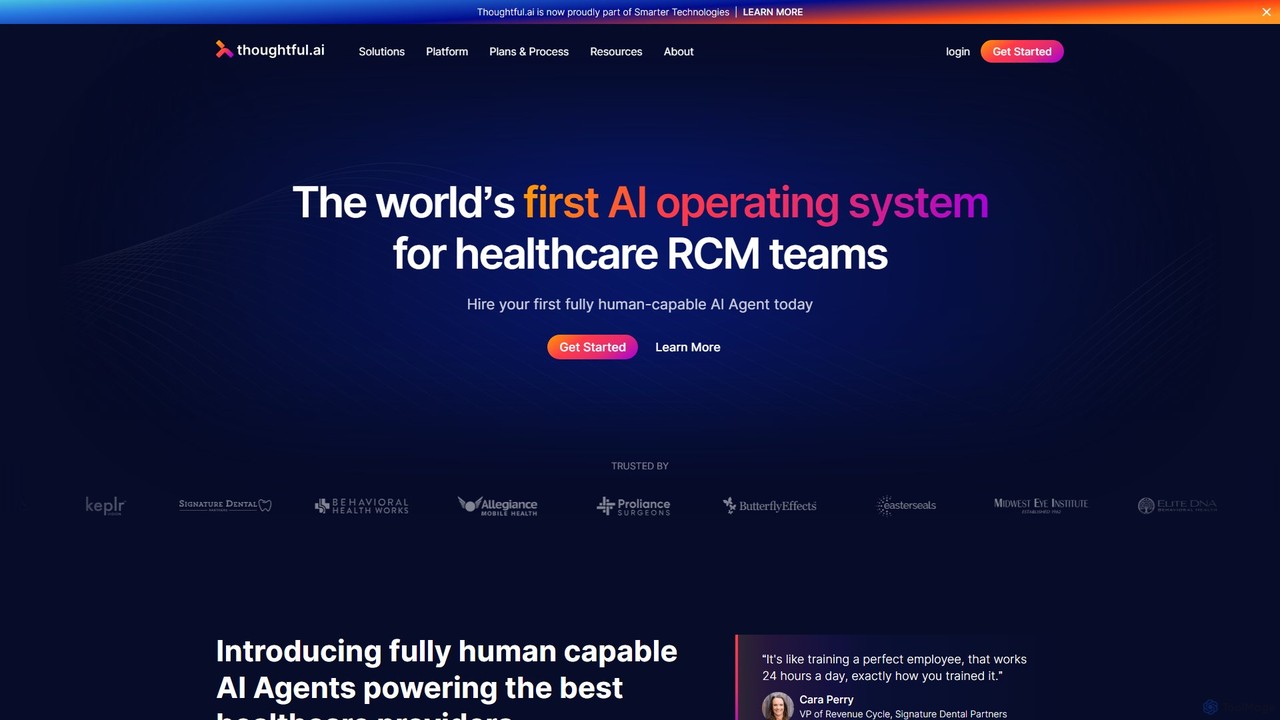
Thoughtful

Thoughtful is an AI-powered platform for the healthcare industry, automating the entire Revenue Cycle Management (RCM) process. It …

5.4K
Candid Health

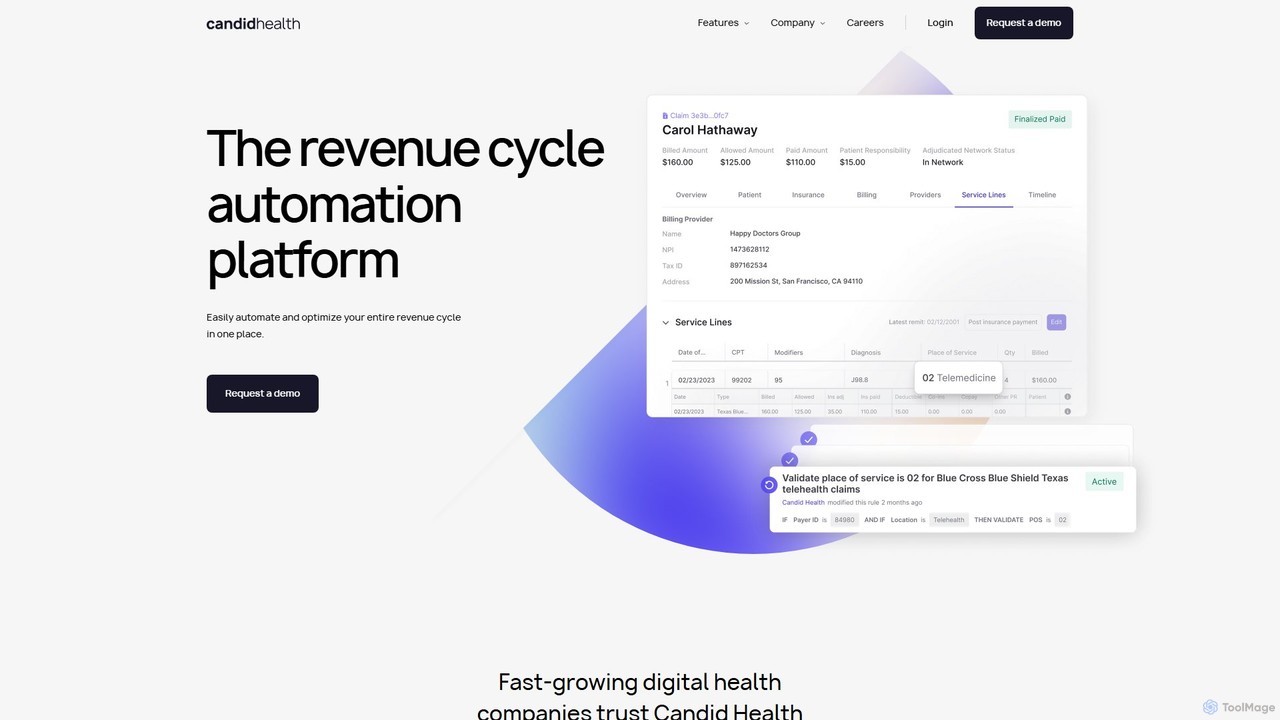
Candid Health

Candid Health is an AI-powered revenue cycle automation platform designed for healthcare providers. It streamlines the entire medical …

11.5K
Sohar Health

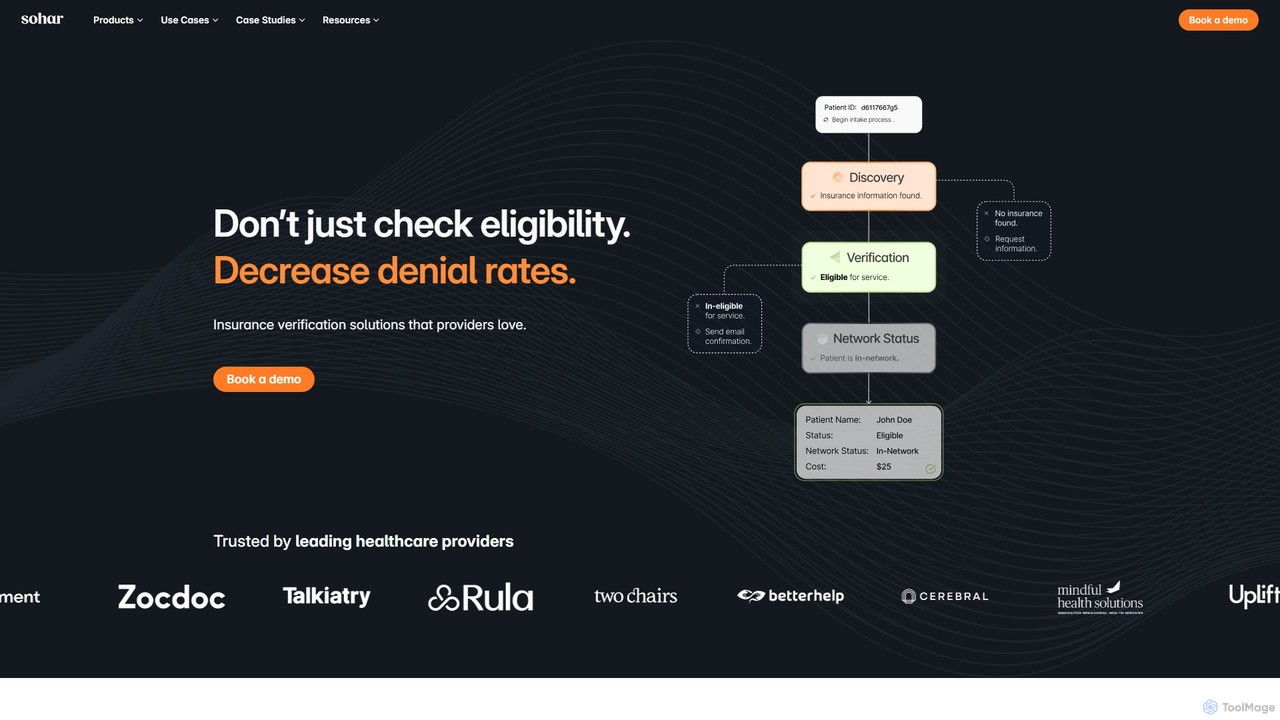
Sohar Health

Sohar Health offers an AI-powered API for healthcare providers to automate and streamline patient insurance verification. It provides …

7.1K
Collectly

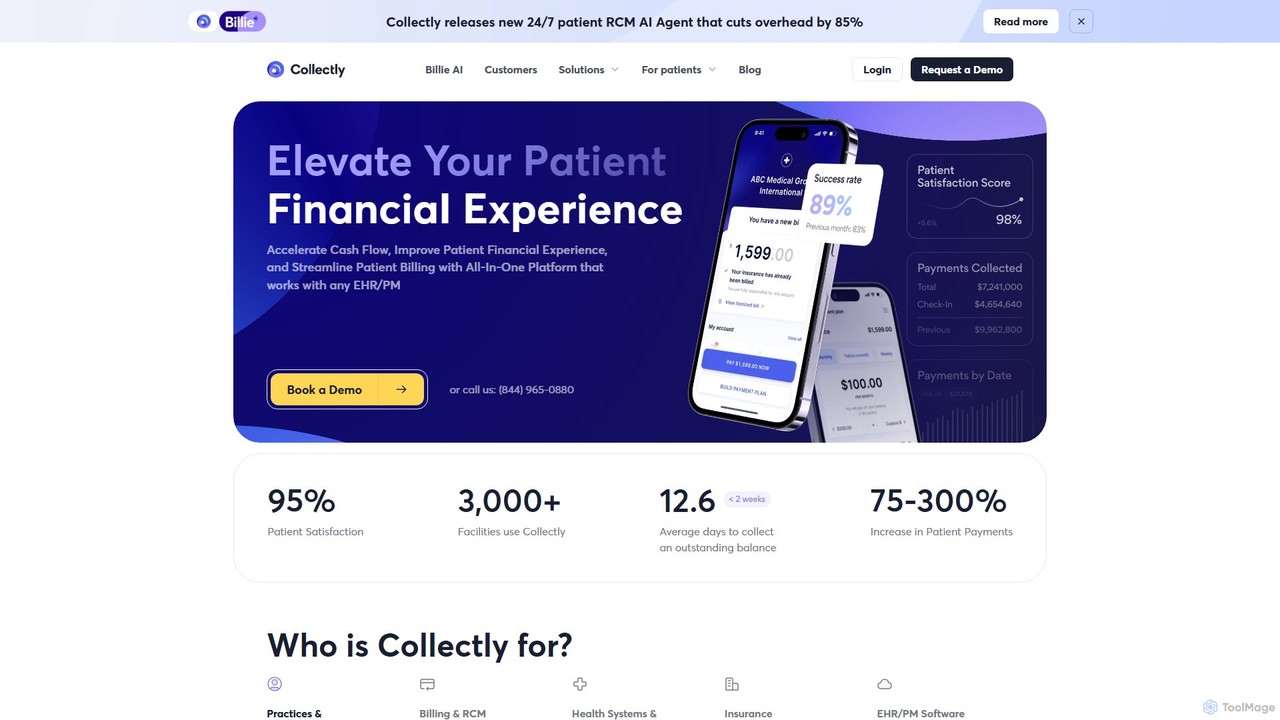
Collectly

Collectly is an AI-powered, all-in-one platform designed to revolutionize the patient financial experience for healthcare providers. It streamlines …

52.8K

About Revenue Cycle Management

Revenue Cycle Management (RCM) tools are AI-powered platforms designed to automate and optimize the financial lifecycle within healthcare organizations. Leveraging machine learning and natural language processing (NLP), these systems analyze clinical documentation, streamline billing workflows, and predict payment outcomes. Their primary purpose is to increase revenue, reduce claim denials, and accelerate cash flow, from patient registration to final payment. By automating complex tasks like medical coding and prior authorization, AI RCM tools enable providers to minimize administrative overhead and focus on patient care.

Core Features

  • Automated Medical Coding: Utilizes NLP to analyze unstructured clinical notes and suggest accurate ICD-10 and CPT billing codes, reducing human error.
  • Predictive Denial Management: Identifies high-risk claims before submission and predicts the likelihood and reason for potential denials.
  • Prior Authorization Automation: Automatically verifies insurance eligibility and submits authorization requests to payers, minimizing delays in care.
  • Intelligent Charge Capture: Scans electronic health records (EHR) to ensure all billable services, procedures, and supplies are accurately captured and billed.

Applicable Scenarios

These tools are crucial for healthcare providers of all sizes, including hospitals, specialty clinics, and large medical groups. Roles such as RCM managers, medical coders, and billing specialists use them to improve efficiency and accuracy. Chief Financial Officers (CFOs) also rely on these platforms for enhanced revenue forecasting and detailed financial performance analysis.

Selection Criteria

When selecting an AI RCM tool, prioritize its ability to integrate seamlessly with your existing Electronic Health Record (EHR) system. Assess the accuracy and validation process of its AI models for coding and denial prediction. Also, consider the scope of automation—whether it's an end-to-end solution or a point solution for a specific task—and confirm its strict compliance with healthcare regulations like HIPAA.

Revenue Cycle ManagementUse Cases

1

Automating Medical Coding from Clinical Notes

A medical coding specialist at a large hospital is tasked with reviewing hundreds of patient charts daily to assign accurate billing codes. Using an AI RCM tool, the system automatically reads unstructured physician notes, discharge summaries, and lab results via Natural Language Processing (NLP). It then suggests the most appropriate ICD-10 and CPT codes with a high confidence score, highlighting the supporting text. This allows the specialist to review and validate codes in a fraction of the time, significantly reducing manual effort, minimizing coding errors, and accelerating the submission of claims.

2

Proactive Claim Denial Prevention

An RCM manager for a multi-specialty clinic needs to reduce a high rate of claim denials. The AI RCM platform analyzes historical claim data to identify patterns that lead to denials, such as mismatched diagnosis and procedure codes or missing documentation. Before a new claim is submitted, the AI engine screens it against these predictive models. It flags potentially problematic claims and provides specific, actionable alerts to the billing team, for example, 'Procedure code requires modifier 25 based on patient history.' This proactive approach allows the team to correct errors before submission, drastically lowering the denial rate and improving cash flow.

3

Streamlining Prior Authorization Processes

The administrative staff at a surgical center spends hours each day on manual prior authorizations, calling insurance companies and navigating complex payer portals. An AI RCM tool automates this entire workflow. It integrates with the EHR to pull patient and procedure data, automatically determines if an authorization is required based on payer rules, and submits the request electronically. The AI can also track the status of submissions in real-time and flag any that require follow-up. This automation reduces the administrative burden by over 80%, minimizes scheduling delays for patients, and ensures financial clearance before services are rendered.

4

Optimizing Patient Collections Strategy

A hospital's finance department struggles with collecting patient-responsible balances. An AI RCM tool analyzes patient demographic, financial, and payment history data to segment patients based on their likelihood to pay. For high-propensity patients, it automates gentle reminders via text or email. For those with lower propensity, it can suggest tailored payment plans or flag the account for a human agent to contact personally. This data-driven approach personalizes the collections process, improving the patient financial experience while significantly increasing the collection rate of outstanding balances and reducing the costs associated with manual follow-ups.

5

Auditing and Recovering Payer Underpayments

A medical billing company manages accounts for several clinics and suspects they are being underpaid by insurance companies based on complex contract terms. The AI RCM tool automates contract management by digitizing payer contracts and fee schedules. When a payment is received, the AI automatically compares the reimbursed amount against the contracted rate. It instantly flags any discrepancies, such as incorrect adjustments or payments below the agreed-upon fee. The system can then automatically generate and submit an appeal for the underpaid amount, ensuring the clinics receive the full reimbursement they are entitled to and recovering significant lost revenue.

6

Improving Charge Capture Accuracy in Surgery

A hospital's surgical department often misses billing for disposable supplies or ancillary services due to manual and fragmented charge capture processes. An AI RCM tool with intelligent charge capture capabilities integrates with the EHR and operating room systems. It analyzes surgical logs, nursing notes, and inventory usage data in real-time. The AI identifies all billable items—from specific implants used to the duration of anesthesia—and ensures they are added to the patient's bill. This prevents revenue leakage by ensuring comprehensive and accurate billing for every procedure, capturing millions in previously lost revenue.

Revenue Cycle ManagementFrequently Asked Questions