SmileDial
SmileDial is an AI-powered, 24/7 dental receptionist designed for Canadian dental practices. It handles appointment booking, sends automated …
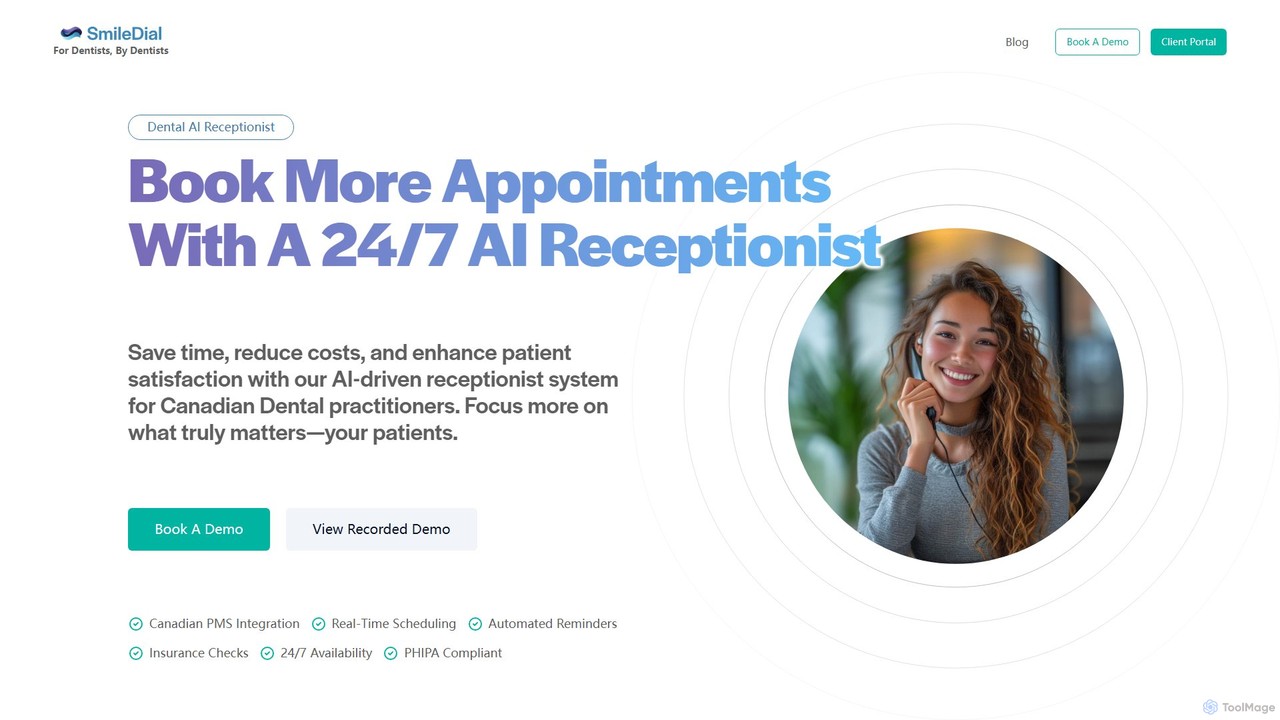
SmileDial is an AI-powered, 24/7 dental receptionist designed for Canadian dental practices. It handles appointment booking, sends automated reminders, verifies insurance, and integrates with existing Patient Management Systems. This PHIPA-compliant tool helps clinics save time, reduce no-shows, increase revenue, and enhance patient satisfaction by ensuring no call is ever missed.
About Virtual Assistant
A Healthcare Virtual Assistant is a specialized AI tool designed to automate administrative and clinical support tasks within medical environments. Leveraging Natural Language Processing (NLP) and machine learning, these assistants can understand patient inquiries, manage schedules, and process medical documentation. Their primary value lies in reducing the administrative burden on healthcare professionals, enabling them to focus more on direct patient care. Many are built with robust security protocols, such as HIPAA compliance, to handle sensitive health information securely.
Core Features
- Automated Appointment Scheduling: Manages bookings, sends reminders, and handles cancellations 24/7 via voice or chat.
- Patient Intake and Triage: Gathers patient history, symptoms, and insurance details prior to a consultation.
- Medical Scribing: Transcribes doctor-patient conversations in real-time into structured clinical notes (EHR/EMR).
- Billing and Insurance Inquiry: Provides automated answers to common patient questions about bills and coverage.
- Post-Visit Follow-up: Automates the process of sending follow-up instructions, medication reminders, and satisfaction surveys.
Use Cases
Healthcare Virtual Assistants are widely used in hospitals, private clinics, dental offices, and telehealth platforms. They assist receptionists, nurses, and physicians by automating repetitive tasks like scheduling, data entry, and patient communication, thus improving operational efficiency and patient experience.
How to Choose
When selecting a Healthcare Virtual Assistant, consider its integration capabilities with your existing Electronic Health Record (EHR) system. Verify its compliance with data privacy regulations like HIPAA or GDPR. Evaluate the accuracy of its medical transcription and NLP capabilities, and assess its scalability to support your practice's growth.

Virtual AssistantUse Cases
Automating Patient Appointment Scheduling
Clinic administrators in a busy medical practice often spend significant time on phone calls to schedule, reschedule, and confirm appointments. A Healthcare Virtual Assistant automates this entire workflow. It integrates with the clinic's calendar and can interact with patients 24/7 via phone or a website chatbot to find available slots, book appointments, and send automated SMS or email reminders. This reduces administrative workload and can decrease patient no-show rates by over 25%.
Streamlining Pre-Visit Patient Intake
Before a patient's first visit, staff must collect extensive information, including medical history, insurance details, and consent forms, which is time-consuming and prone to errors. A Healthcare Virtual Assistant can automate this by sending a secure digital form to the patient via email or SMS. The assistant guides the patient through the questions, validates the information, and automatically uploads the completed data directly into the patient's Electronic Health Record (EHR). This ensures data accuracy and saves up to 15 minutes of staff and patient time per visit.
AI-Powered Medical Scribing for Physicians
Physicians often face burnout due to extensive documentation requirements, spending hours after appointments updating patient records. An AI Medical Scribe, a type of healthcare virtual assistant, listens to the doctor-patient conversation during a consultation. It uses advanced speech recognition and NLP to accurately transcribe the dialogue and identify key medical information, such as symptoms, diagnoses, and prescriptions. The assistant then structures this information into a clinical note format, ready for the physician to review and approve, significantly reducing documentation time.
Answering Patient Billing and Insurance Queries
Hospital administrative departments receive a high volume of calls from patients with routine questions about billing statements, payment options, and insurance coverage. A Healthcare Virtual Assistant can be deployed on the hospital's phone line or website to handle these inquiries. It can access billing information securely, explain charges, provide payment links, and check insurance eligibility in real-time. This frees up human agents to manage more complex cases, improves patient satisfaction, and accelerates the revenue cycle.
Automating Post-Discharge Patient Follow-up
Hospitals and clinics need to ensure patients adhere to post-discharge care plans to prevent readmissions. A Healthcare Virtual Assistant can automate this communication. It can send scheduled text messages or make automated calls to check on the patient's recovery, remind them to take medications, and ask about any adverse symptoms. Based on the patient's responses, the assistant can provide standard information or flag the case for a nurse to review, ensuring timely intervention and improving patient outcomes.
Providing 24/7 Symptom Checking and Triage
For telehealth providers or large healthcare systems, offering initial guidance to patients outside of office hours is a challenge. A Healthcare Virtual Assistant can act as a first point of contact. Patients can describe their symptoms to a chatbot, which uses a clinical knowledge base and algorithms to assess the severity and suggest appropriate next steps. This could range from recommending self-care for minor issues to advising a visit to an urgent care center or the emergency room for serious conditions, ensuring patients receive the right level of care promptly.