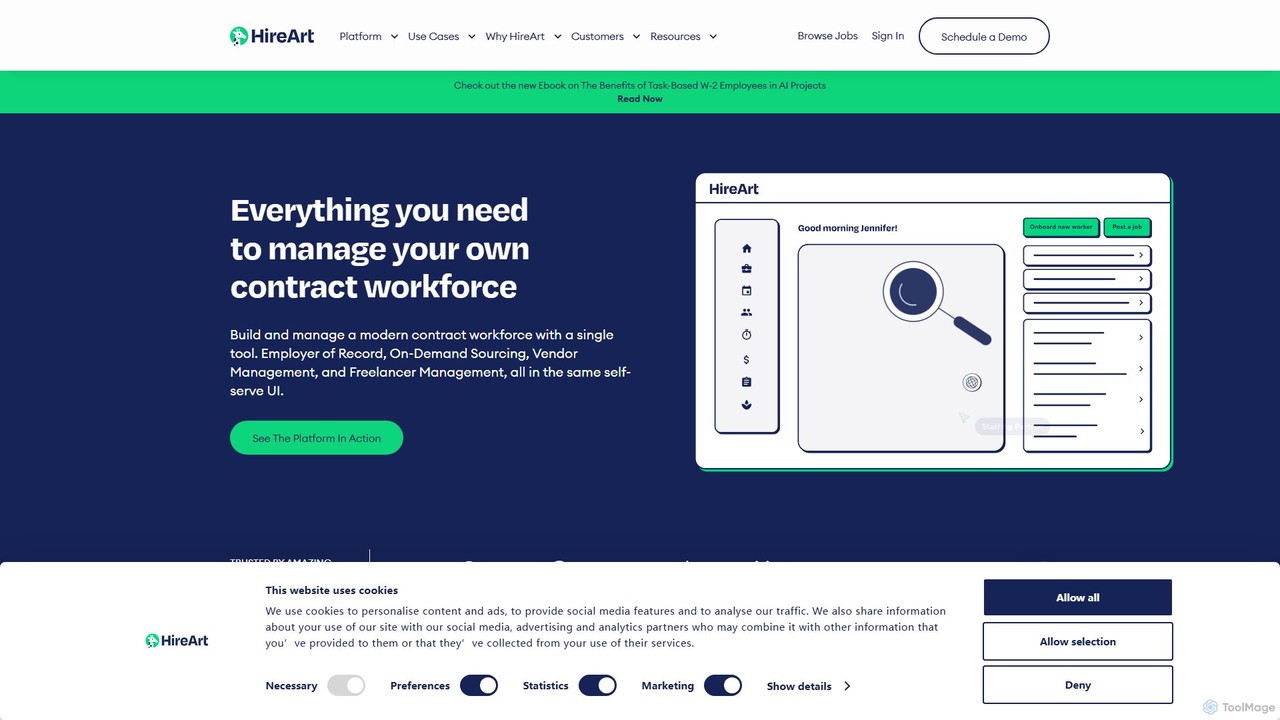
Contingent Workforce Management tools are AI-powered platforms designed to streamline the entire lifecycle of non-permanent workers, including freelancers, contractors, and temporary staff. These solutions leverage AI to automate sourcing, onboarding, compliance, time tracking, and payment processes, enabling organizations to efficiently manage their flexible talent pool. They provide a centralized system for visibility and control over a dynamic workforce, distinct from traditional full-time employees, falling under the broader Human Resources category.
Core Features
- Automated Sourcing & Matching: AI algorithms identify and match qualified contingent workers with project requirements based on skills, experience, and availability.
- Streamlined Onboarding: Digital workflows automate contract generation, background checks, and compliance documentation for rapid worker integration.
- Time & Expense Tracking: AI-driven systems accurately record hours worked, project milestones, and expenses, ensuring precise billing and payment.
- Compliance Management: Tools monitor regulatory requirements, tax classifications, and labor laws to mitigate risks associated with contingent worker engagement.
- Performance & Feedback: Facilitates tracking project progress and gathering feedback to optimize future contingent talent selection and engagement.
Use Cases
Organizations with fluctuating project demands or specialized skill needs frequently utilize Contingent Workforce Management tools. This includes tech companies scaling up for new product launches, marketing agencies managing diverse creative projects, or consulting firms engaging specialized experts for client assignments. These tools ensure efficient resource allocation and compliance across various non-traditional employment models.
How to Choose
When selecting a Contingent Workforce Management solution, consider its integration capabilities with existing HRIS and financial systems, the breadth of its compliance features across different geographies, and its scalability to accommodate varying workforce sizes. Evaluate the user experience for both managers and contingent workers, and assess the reporting and analytics functionalities for workforce insights.