
ToolMage
Sign in

Best 1 Freelance Platform for Human Resources

Popular Freelance Platform in Human Resources include Project Mela, helping you work more efficiently.

Project Mela
Freemium

Project Mela

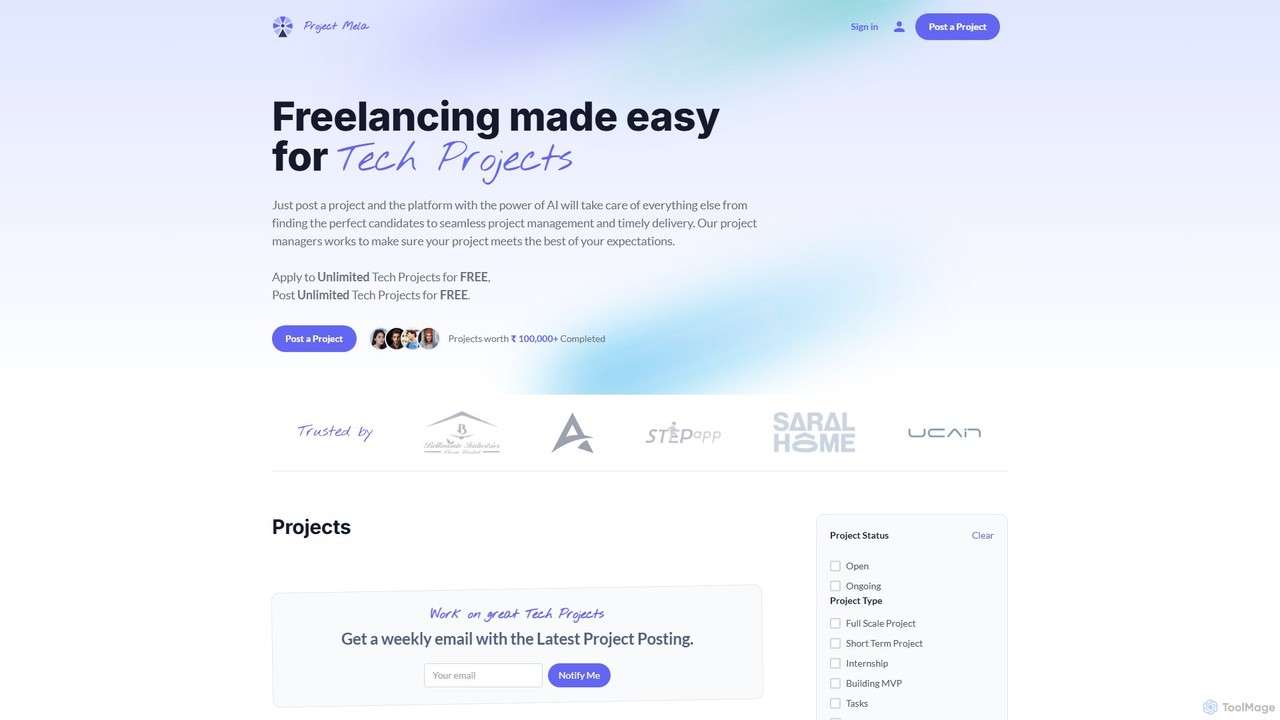
Project Mela is an AI-powered freelance platform that simplifies hiring tech talent. It uses AI to match clients with ideal freelancers for projects, streamlining the entire process from candidate discovery and project management to timely delivery, making it easy for both businesses to build and freelancers to find work.

Recruiting
Visits 5.3KFavorites 95Likes 103

About Freelance Platform

Freelance Platforms are digital marketplaces that connect businesses and individuals with independent professionals for project-based work. These platforms leverage advanced matching algorithms and secure payment systems to streamline the hiring process, offering a flexible solution for both talent acquisition and work opportunities. They serve as a vital component of modern human resources, enabling access to a global pool of specialized skills on demand.

Core Features

  • Talent Matching: Advanced algorithms connect clients with suitable freelancers based on skills, experience, and project requirements.
  • Secure Payments: Integrated escrow services and payment gateways ensure secure transactions and protect both parties.
  • Project Management Tools: Built-in features for communication, file sharing, and milestone tracking to manage projects efficiently.
  • Rating and Review Systems: Transparent feedback mechanisms help build trust and inform future hiring decisions.
  • Dispute Resolution: Mediation services are often available to resolve conflicts between clients and freelancers.

Use Cases

Freelance platforms are indispensable for startups seeking specialized skills without the overhead of full-time hires, small businesses needing flexible support for marketing or IT, and individuals looking to outsource specific tasks. They are also crucial for freelancers to find diverse projects, manage their portfolio, and secure payments from clients worldwide.

How to Choose

When selecting a freelance platform, consider the platform's fee structure for both clients and freelancers, the quality and specialization of its talent pool, and the robustness of its project management and communication tools. Evaluate the platform's dispute resolution process and the security of its payment system to ensure a reliable and trustworthy experience.

Freelance Platform use cases

1

Hiring Specialized AI Developers for Short-Term Projects

A tech startup needs an expert in a niche AI field, such as natural language processing or computer vision, for a three-month project. By using a freelance platform, the startup can quickly access a global pool of highly skilled AI developers, review their portfolios and past project success, and onboard them without the lengthy recruitment process and overhead costs associated with full-time hires. This allows for rapid project iteration and access to cutting-edge expertise on demand.

2

Scaling Content Creation for Marketing Campaigns

A marketing agency launching a new product needs to rapidly produce a high volume of diverse content, including blog posts, social media graphics, and video scripts. Instead of hiring multiple full-time content creators, the agency utilizes a freelance platform to find specialized writers, graphic designers, and video editors globally. This approach allows them to scale their content production quickly, maintain brand consistency across various media, and manage costs by paying per project, ensuring timely delivery for their campaign launch.

3

Obtaining Expert Business Consulting on Demand

A small business owner faces a specific challenge, such as developing a new market entry strategy or optimizing supply chain logistics, but cannot afford a full-time consultant. Through a freelance platform, they can engage a seasoned business consultant with relevant industry experience for a short-term engagement. This provides access to high-level strategic advice and actionable insights, helping the business navigate complex decisions and achieve specific goals without a long-term financial commitment, proving cost-effective and efficient.

4

Streamlining Administrative Support for Busy Professionals

A busy executive or small business owner often struggles with managing emails, scheduling appointments, and organizing documents, consuming valuable time that could be spent on core business activities. By utilizing a freelance platform, they can hire a virtual assistant (VA) to handle these administrative tasks remotely. This allows the professional to delegate routine work, improve their time management, and focus on strategic initiatives, significantly boosting productivity and reducing operational stress without the need for an in-house administrative team.

5

Accessing Global Language Translation Services

A company expanding into international markets needs to translate its website, marketing materials, and legal documents into multiple languages. Instead of relying on expensive translation agencies or in-house multilingual staff, they use a freelance platform to connect with professional translators specializing in various language pairs and industry-specific terminology. This provides a cost-effective and scalable solution for high-quality localization, ensuring cultural relevance and accuracy, which is crucial for successful global market penetration and communication.

6

Developing Custom Software Solutions for Startups

A startup requires a unique software application or a specific feature for their product but lacks the in-house development team or budget for a traditional software house. By leveraging a freelance platform, they can hire experienced software engineers, UI/UX designers, and quality assurance testers on a project basis. This allows the startup to build tailored solutions, iterate quickly, and control development costs, gaining a competitive edge by bringing innovative products to market faster with specialized, flexible talent.

Freelance Platform FAQ

What are Freelance Platforms?

Freelance Platforms are online marketplaces that connect clients with independent professionals for project-based work. They typically feature tools for posting jobs, searching for talent, secure communication, and integrated payment systems. These platforms enable businesses to access a global talent pool on demand and offer freelancers flexible work opportunities, streamlining the entire process from hiring to project completion and payment.

How do Freelance Platforms ensure project quality and security?

Freelance platforms employ several mechanisms to ensure project quality and security. These include secure payment systems, often using escrow services that hold funds until project milestones are met. They also feature robust rating and review systems, allowing clients to assess a freelancer's past performance and reputation. Additionally, many platforms offer dispute resolution services, identity verification for users, and communication tools that keep all project-related interactions documented, fostering transparency and accountability.

What's the difference between a general Freelance Platform and a niche one?

The primary difference lies in their scope and specialization. General freelance platforms, like Upwork or Fiverr, offer a vast array of services across numerous categories, catering to a wide range of skills from writing to web development. Niche platforms, such as Toptal for top-tier developers or 99designs for graphic design, focus on specific industries or skill sets. Niche platforms often provide a more curated talent pool, higher quality control, and specialized tools relevant to their specific domain, while general platforms offer broader accessibility and more diverse options.

Who benefits most from using Freelance Platforms?

Both clients and freelancers benefit significantly. Clients, especially small businesses, startups, and individuals, gain access to specialized skills on demand without the commitment of full-time employment, allowing for cost-effective project completion and scalability. Freelancers, on the other hand, benefit from flexible work arrangements, access to a global client base, diverse project opportunities, and secure payment systems, enabling them to build their careers and manage their work-life balance effectively. It's a win-win for flexible work ecosystems.

What are the typical fees associated with Freelance Platforms?

Fees on freelance platforms vary but generally fall into a few categories. Clients might pay a small service fee on top of the freelancer's rate or a subscription fee for premium features like advanced search. Freelancers typically pay a commission on their earnings, which can range from 5% to 20% or more, often decreasing with higher earnings on some platforms. Some platforms also offer optional paid upgrades for freelancers to boost visibility or access more project leads. It's crucial to review each platform's specific fee structure before committing.