
Project Mela
Project Mela is an AI-powered freelance platform that simplifies hiring tech talent. It uses AI to match clients …
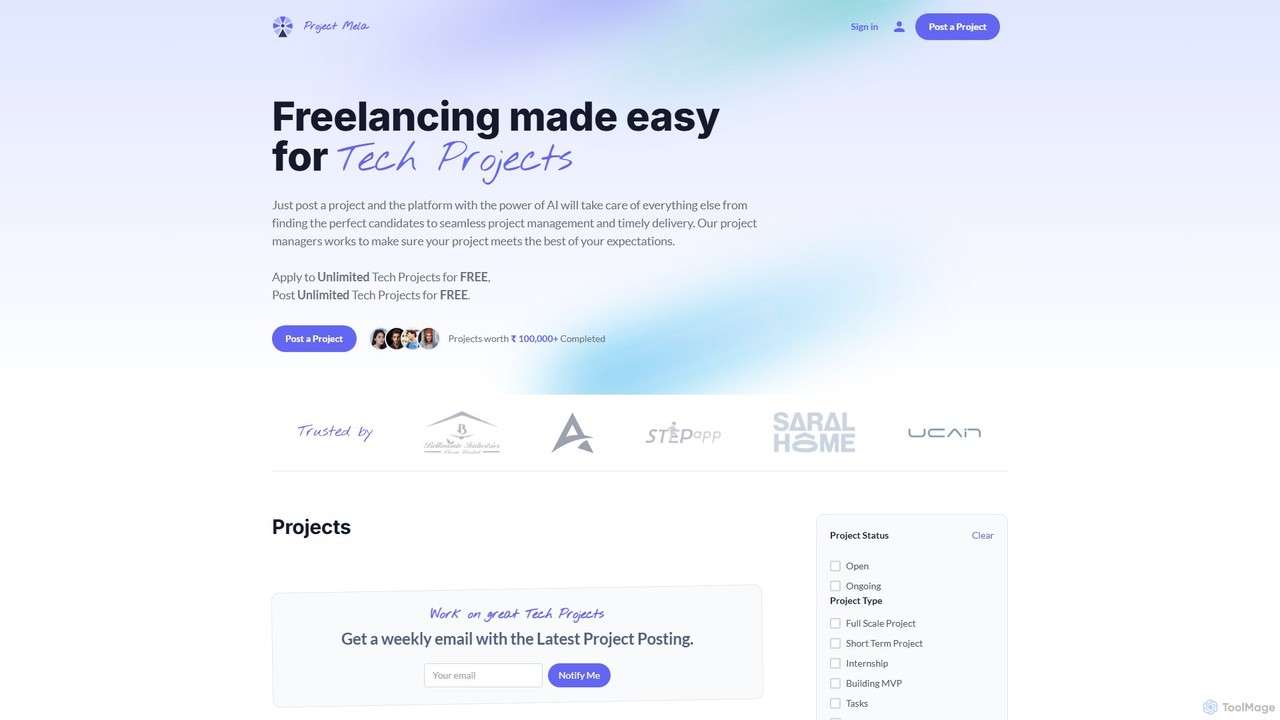
Project Mela is an AI-powered freelance platform that simplifies hiring tech talent. It uses AI to match clients with ideal freelancers for projects, streamlining the entire process from candidate discovery and project management to timely delivery, making it easy for both businesses to build and freelancers to find work.
About Recruiting
Recruiting AI tools are specialized platforms that leverage artificial intelligence to automate and enhance various stages of the hiring process. These tools utilize machine learning, natural language processing, and data analytics to streamline tasks from candidate sourcing and screening to interview scheduling and engagement. Their primary value lies in improving efficiency, reducing bias, and identifying best-fit candidates more effectively, ultimately transforming talent acquisition strategies for businesses.
Core Features
- Automated Resume Screening: AI algorithms analyze resumes for keywords, skills, and experience, ranking candidates based on job requirements.
- AI-Powered Candidate Sourcing: Tools scour databases, social media, and professional networks to identify passive and active candidates matching specific criteria.
- Intelligent Interview Scheduling: AI automates the coordination of interviews, finding optimal times for candidates and hiring managers across multiple calendars.
- Candidate Engagement Chatbots: AI-driven chatbots provide instant answers to candidate queries, guide them through application processes, and offer personalized updates.
- Skill Assessment & Predictive Analytics: AI evaluates candidate skills through tests or simulations and predicts hiring success based on historical data.
Applicable Scenarios
Talent acquisition teams use these tools to manage high volumes of applications, HR departments to standardize hiring processes, and hiring managers to quickly identify qualified candidates. Recruitment agencies leverage AI for efficient candidate matching and outreach, while large enterprises utilize them to scale their global hiring efforts and ensure diversity.
How to Choose
When selecting Recruiting AI tools, consider their integration capabilities with existing Applicant Tracking Systems (ATS) and HRIS. Evaluate the accuracy and fairness of their AI algorithms in screening and matching, ensuring bias mitigation. Look for customizable features that align with your specific hiring workflows and branding, and assess data privacy and security protocols. User experience for both recruiters and candidates is also crucial.
RecruitingUse Cases
Automated Resume Pre-screening for High-Volume Roles
For large organizations or roles receiving hundreds of applications, AI tools automatically scan and rank resumes based on predefined criteria, filtering out unqualified candidates. This allows recruiters to focus on a smaller, highly relevant pool, significantly reducing manual review time and accelerating the initial screening phase.
AI-Driven Sourcing of Passive Candidates
Talent acquisition specialists use AI to proactively identify and engage passive candidates across various online platforms, including LinkedIn, GitHub, and industry-specific forums. The AI analyzes profiles for skills, experience, and cultural fit, then suggests personalized outreach messages, expanding the talent pool beyond active applicants.
Optimizing Interview Scheduling and Logistics
Hiring coordinators leverage AI-powered scheduling tools to automate the complex process of coordinating multiple interview rounds with various interviewers and candidates. The AI finds optimal time slots, sends calendar invites, and manages rescheduling, eliminating manual back-and-forth and reducing time-to-hire.
Personalized Candidate Communication and FAQ Handling
Recruiters deploy AI chatbots on career pages or via email to provide instant, personalized responses to candidate inquiries about job descriptions, company culture, or application status. This enhances the candidate experience by offering 24/7 support and frees up recruiters to focus on strategic tasks.
Bias Reduction in Candidate Evaluation
HR professionals utilize AI tools designed to anonymize candidate data or analyze language in job descriptions and resumes for potential biases. These tools help ensure a more objective evaluation process, promoting diversity and inclusion by focusing solely on skills and qualifications, rather than demographic factors.
Predictive Analytics for Hiring Success
Companies use AI to analyze historical hiring data, including candidate profiles, assessment results, and post-hire performance metrics. The AI identifies patterns and predicts which candidates are most likely to succeed in specific roles, enabling more data-driven hiring decisions and reducing turnover rates.