
ToolMage
Sign in

Best 1 Global Mobility AI tools for Human Resources

Popular Global Mobility AI tools in Human Resources include Jobbatical, helping you work more efficiently.

Jobbatical
Paid

Jobbatical

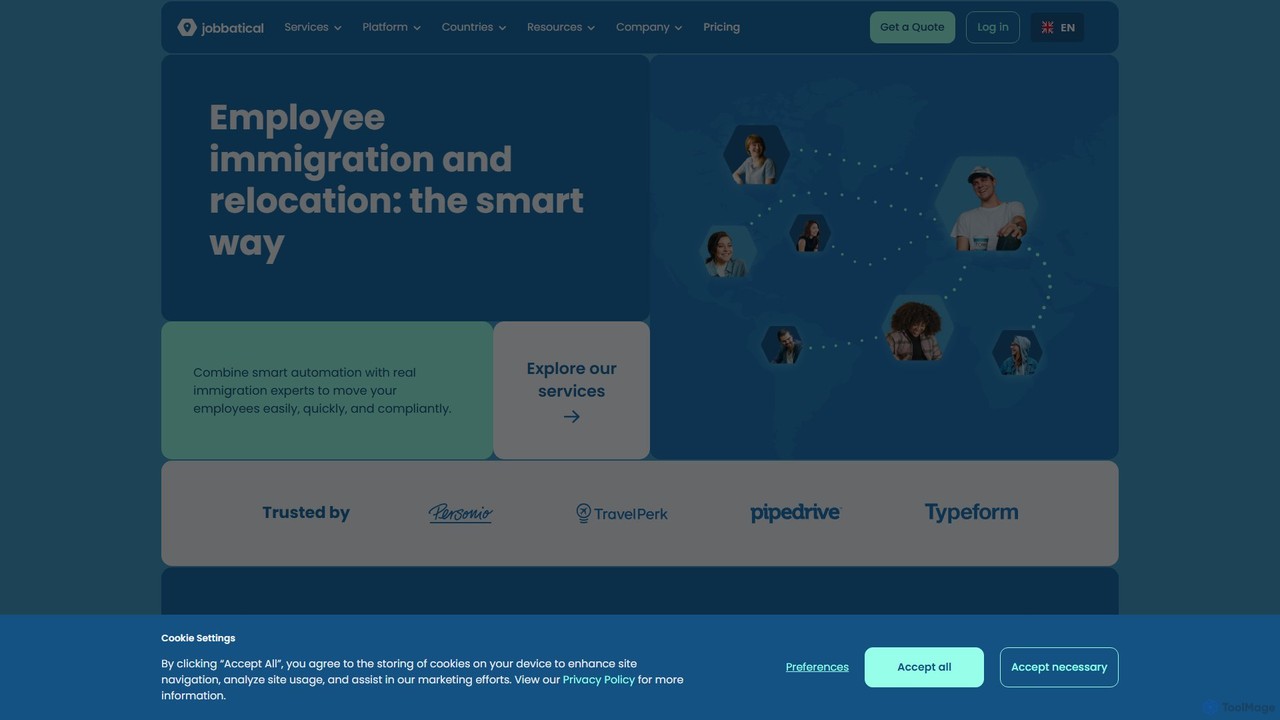
Jobbatical is an AI-powered platform designed for businesses to streamline and automate employee immigration and relocation. It combines smart technology with a network of immigration experts to manage visas, permits, and compliance across 30+ countries, making global mobility simple, fast, and affordable.

Global Mobility
Visits 151KFavorites 117Likes 123

About Global Mobility

Global Mobility tools are specialized AI-powered platforms designed to manage the entire lifecycle of international employee assignments. These tools leverage AI to automate complex processes such as visa applications, tax compliance, and relocation logistics. They provide a centralized system for HR teams to ensure legal adherence, control costs, and offer a seamless experience for employees moving across borders. This automation significantly reduces manual administrative work and mitigates the risks associated with global workforce management.

Core Features

  • Immigration & Visa Automation: Streamlines the generation and tracking of visa applications and work permits, ensuring compliance with local regulations.
  • Tax & Payroll Compliance: Calculates tax equalization, shadow payroll, and manages cross-border compensation complexities to maintain compliance.
  • Relocation Management: Coordinates logistics like household goods shipment, temporary housing, and travel arrangements through a unified dashboard.
  • Cost Projection & Budgeting: Uses AI to accurately forecast the total cost of an international assignment, including all allowances and expenses.
  • Expatriate Self-Service Portal: Offers employees a central hub to access documents, track their relocation progress, and find destination-specific information.

Use Cases

These tools are primarily used by multinational corporations, technology companies with distributed teams, and consulting firms. They are essential for HR departments, specifically Global Mobility managers and Compensation & Benefits specialists, who handle frequent international transfers, new market entries, or manage a large expatriate population. The platforms help standardize processes and ensure a consistent employee experience globally.

How to Choose

When selecting a Global Mobility tool, consider its country coverage and the depth of its compliance database. Evaluate its integration capabilities with your existing HRIS and payroll systems. Assess the user experience for both HR administrators and the relocating employees. Finally, examine the platform's reporting and analytics features for cost tracking and strategic workforce planning.

Featured tool rankings

Global Mobility use cases

1

Automating Visa Applications for International Hires

An HR specialist at a multinational tech company needs to relocate a software engineer from India to their German office. Using a Global Mobility platform, they initiate the visa process. The tool automatically populates the required forms with employee data from the HRIS, provides a checklist of necessary documents, and sets automated reminders for deadlines. The platform's dashboard allows both the HR specialist and the employee to track the application status in real-time, reducing manual follow-ups and ensuring all immigration requirements are met on time.

2

Calculating Compensation Packages for Expatriates

A compensation manager is creating a package for an executive moving from New York to Singapore. The Global Mobility tool's AI-powered cost projection feature analyzes real-time data on housing, taxes, goods and services, and currency exchange rates. It generates a detailed cost-of-living analysis and recommends a competitive salary, housing allowance, and other benefits to ensure the employee's purchasing power is maintained. This data-driven approach replaces manual research and spreadsheets, leading to more accurate and equitable compensation packages.

3

Managing Logistics for a Group Relocation

A company is opening a new office in Lisbon and needs to relocate a 15-person project team from London. The Global Mobility Manager uses the platform to coordinate the entire move. They create a master project plan, assign tasks to vendors (movers, housing agents), and track progress through a central dashboard. The tool provides each employee with a personalized portal to manage their own relocation checklist, submit expenses, and access city guides. This centralizes communication and logistics, ensuring a smooth and organized group move.

4

Ensuring Tax Compliance for Business Travelers

A consulting firm has employees who frequently travel for short-term projects across Europe. The finance team uses a Global Mobility tool to track each employee's days spent in different countries. The system automatically flags potential tax liabilities and social security obligations based on pre-configured thresholds for each jurisdiction. This proactive monitoring helps the firm avoid permanent establishment risks and ensures compliance with complex cross-border tax laws, preventing costly penalties and legal issues.

5

Streamlining Expatriate Onboarding Experience

An employee is relocating from Canada to the UK. Upon accepting the assignment, they receive access to a personalized self-service portal via the Global Mobility tool. Here, they can find a detailed timeline, upload required documents securely, book temporary housing from a list of vetted providers, and access cultural training modules. The portal also features a direct messaging system to the mobility specialist. This centralized, user-friendly experience reduces the employee's stress and anxiety, allowing them to focus on their new role rather than administrative hurdles.

6

Budgeting and Forecasting Annual Mobility Costs

A Global Mobility Director is planning the budget for the next fiscal year. They use the platform's analytics dashboard to review historical spending on all international assignments. The AI analyzes trends in relocation costs, visa fees, and tax expenditures by country and assignment type. Based on this data and projected moves, the tool generates an accurate forecast of the total mobility budget required. This allows for more strategic financial planning and helps justify the department's budget to senior leadership with concrete data.

Global Mobility FAQ

What are AI Global Mobility tools?

AI Global Mobility tools are specialized software platforms that help companies manage employees on international assignments. They use artificial intelligence to automate and streamline complex tasks like visa processing, tax compliance, relocation logistics, and cost forecasting. Unlike general HR software, they are built specifically to handle the unique legal, financial, and logistical challenges of moving talent across borders, ensuring compliance and improving the employee experience.

How to choose the right Global Mobility platform?

When selecting a Global Mobility platform, consider these key factors:

  • Country Coverage: Ensure the platform has robust, up-to-date compliance information (tax, immigration) for all countries you operate in or plan to enter.
  • Integration Capabilities: Check if it can seamlessly integrate with your existing Human Resources Information System (HRIS) and payroll software to avoid data silos.
  • User Experience: Evaluate the interface for both HR managers and relocating employees. A good platform should be intuitive and provide a self-service portal for employees.
  • Vendor Support & Expertise: Assess the provider's level of customer support and their network of in-country experts for complex cases.
What's the difference between Global Mobility tools and general HRIS platforms?

The primary difference is specialization. A general Human Resources Information System (HRIS) manages the entire employee lifecycle (recruiting, onboarding, performance, payroll) within a domestic context. Global Mobility tools are highly specialized platforms built to handle the unique complexities of cross-border employment. They focus on international-specific functions like immigration case management, tax equalization, cost-of-living calculations, and relocation logistics, which are typically not covered in depth by a standard HRIS.

What key problems do Global Mobility tools solve?

Global Mobility tools address several critical challenges for companies with an international workforce. They primarily solve:

  • Compliance Risks: They automate tracking and adherence to complex, ever-changing immigration and tax laws in multiple countries, reducing the risk of fines and legal penalties.
  • Administrative Burden: They replace manual processes and spreadsheets with automated workflows for tasks like document collection, vendor coordination, and expense tracking, saving HR teams significant time.
  • Inaccurate Costing: AI-powered forecasting provides accurate budget estimates for assignments, preventing unexpected costs and improving financial planning.
  • Poor Employee Experience: They offer a centralized, transparent portal for relocating employees, reducing stress and improving satisfaction during a critical transition.
Who typically uses Global Mobility software?

Global Mobility software is primarily used by professionals within multinational organizations who are responsible for managing international assignments. Key users include:

  • Global Mobility Managers/Specialists: They use the platform for day-to-day management of all relocations, from initiation to repatriation.
  • HR Business Partners (HRBPs): They use it to understand the costs and processes involved when proposing an international move for an employee in their business unit.
  • Compensation & Benefits Teams: They rely on the tool for accurate cost-of-living data and tax calculations to create fair compensation packages.
  • Finance and Payroll Departments: They use it to manage cross-border payroll, track expenses, and ensure tax compliance.