ToolMage
Sign in

Best 1 Recruiting Automation AI tools for Human Resources

Popular Recruiting Automation AI tools in Human Resources include HireQuotient, helping you work more efficiently.

HireQuotient
Paid

HireQuotient

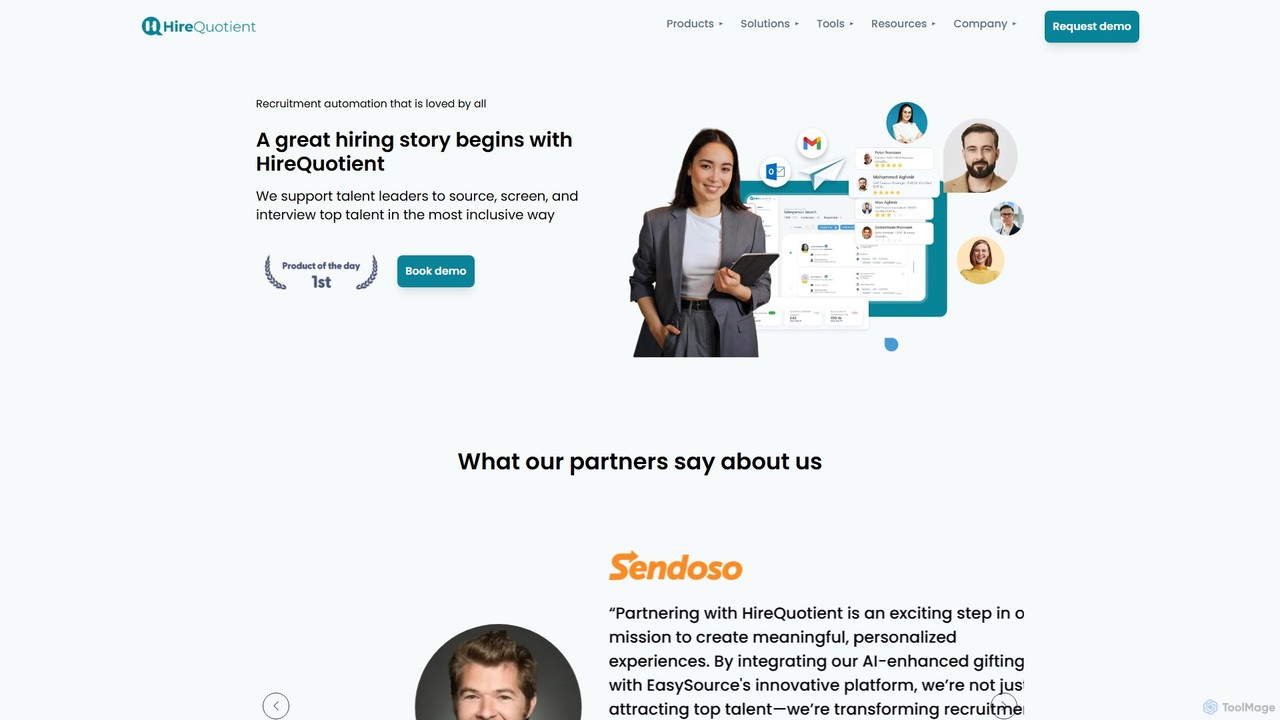
HireQuotient is an end-to-end recruitment automation platform designed for non-tech hiring. It leverages AI to streamline the entire hiring process, from sourcing and screening to interviewing. With modules like EasySource for automated talent discovery and EasyAssess for skills evaluation, it helps HR teams reduce time-to-fill, lower costs, and improve the quality of hires for roles in sales, marketing, and customer success.

Candidate Screening
Visits 85.7KFavorites 128Likes 131

About Recruiting Automation

Recruiting Automation tools are AI-powered solutions designed to streamline and optimize various stages of the hiring process. These tools leverage artificial intelligence, machine learning, and natural language processing to automate repetitive tasks, from candidate sourcing and screening to interview scheduling and initial engagement. They help organizations enhance efficiency, reduce time-to-hire, and improve candidate experience within the broader Human Resources domain. By automating routine administrative burdens, recruiting teams can focus more on strategic talent acquisition and meaningful human interactions.

Core Features

  • AI-Powered Candidate Sourcing: Automatically identifies and engages potential candidates from various platforms.
  • Automated Resume Screening: Analyzes resumes against job requirements, ranking candidates based on relevance and qualifications.
  • Intelligent Interview Scheduling: Coordinates interview times between candidates and hiring managers, sending automated reminders.
  • Personalized Candidate Engagement: Delivers automated, tailored communications throughout the hiring journey.
  • Onboarding Workflow Automation: Streamlines initial paperwork and task assignments for new hires.

Applicable Scenarios

Recruiting Automation is invaluable for organizations facing high-volume hiring, rapid growth, or a need to optimize their talent acquisition funnel. This includes large enterprises managing thousands of applications, fast-growing startups scaling their teams quickly, and recruitment agencies seeking to efficiently manage multiple client mandates. It also benefits companies aiming to reduce unconscious bias and ensure a consistent, positive candidate experience.

How to Choose

When selecting a Recruiting Automation tool, consider its integration capabilities with your existing Applicant Tracking System (ATS) and HRIS. Evaluate the breadth and depth of its AI features, such as bias detection, predictive analytics, and natural language understanding. Assess its scalability to match your hiring volume, customization options for specific workflows, and the quality of candidate experience it provides. Finally, review user-friendliness, support, and pricing models to ensure alignment with your budget and team's technical proficiency.

Recruiting Automation use cases

1

Automating Candidate Sourcing & Outreach

Recruitment specialists can use AI-powered tools to automatically search vast databases, social media, and professional networks for passive candidates matching specific job criteria. The system then initiates personalized outreach messages, saving hours of manual searching and initial contact, allowing recruiters to focus on engaging qualified leads.

2

Streamlining Interview Scheduling

Hiring managers and candidates often struggle with coordinating interview times across multiple calendars and time zones. Recruiting automation tools can automatically propose available slots, send invitations, manage rescheduling requests, and send reminders, significantly reducing administrative overhead and accelerating the interview process.

3

AI-Powered Resume Screening & Shortlisting

For roles attracting hundreds of applications, AI tools can parse resumes, extract key skills and experiences, and score candidates against predefined job requirements. This automates the initial screening phase, identifying the most relevant candidates quickly and consistently, reducing human bias and ensuring a data-driven approach to shortlisting.

4

Personalized Candidate Communication

Maintaining consistent and personalized communication with candidates is crucial for a positive experience. Automation platforms can send automated updates on application status, provide relevant information about the company culture, and answer common FAQs, ensuring candidates feel informed and valued throughout their journey.

5

Automating Onboarding Workflows

Once a candidate accepts an offer, recruiting automation extends to streamlining the onboarding process. This includes automatically sending welcome packets, initiating background checks, setting up IT access requests, and assigning initial training modules, ensuring a smooth transition for new hires and reducing administrative burden on HR teams.

6

Predictive Hiring Analytics & Insights

Recruiting automation tools can collect and analyze data across the entire hiring funnel, providing insights into sourcing effectiveness, candidate drop-off rates, and time-to-hire metrics. This allows HR leaders to identify bottlenecks, optimize recruitment strategies, and make data-driven decisions to improve future hiring outcomes.

Recruiting Automation FAQ

What is Recruiting Automation?

Recruiting Automation refers to the use of artificial intelligence and software to automate repetitive and time-consuming tasks in the hiring process. It aims to enhance efficiency, improve candidate experience, and enable recruiters to focus on strategic decision-making and human interaction. Key functions include automated sourcing, screening, scheduling, and communication.

How does Recruiting Automation differ from traditional HR software?

While traditional HR software (like ATS) manages candidate data and workflows, Recruiting Automation specifically leverages AI to automate actions and intelligence. It goes beyond simple data management by actively performing tasks such as intelligent candidate matching, automated outreach, and predictive analytics, rather than just tracking manual processes.

What are the key benefits of using Recruiting Automation tools?

The primary benefits include significant time savings for recruiters by automating administrative tasks, a faster time-to-hire due to streamlined processes, improved candidate experience through consistent and personalized communication, and enhanced hiring quality by reducing bias and identifying best-fit candidates more efficiently. It also provides valuable data for optimizing recruitment strategies.

How can Recruiting Automation improve candidate experience?

Recruiting Automation improves candidate experience by ensuring timely and personalized communication, providing clear updates on application status, and simplifying processes like interview scheduling. It reduces waiting times, offers 24/7 support for common queries, and creates a more engaging and transparent journey, making candidates feel valued and informed.

What should I consider when implementing Recruiting Automation?

When implementing Recruiting Automation, consider its compatibility with your existing HR tech stack (ATS, HRIS), the specific pain points you aim to solve, and the level of customization required. Evaluate the tool's AI capabilities, data security, compliance features, and user-friendliness for both recruiters and candidates. Start with a clear strategy and pilot programs to ensure a smooth transition and maximize ROI.