SWMS AI
SWMS AI is an advanced platform that leverages artificial intelligence to generate customized safety risk assessments and compliance …
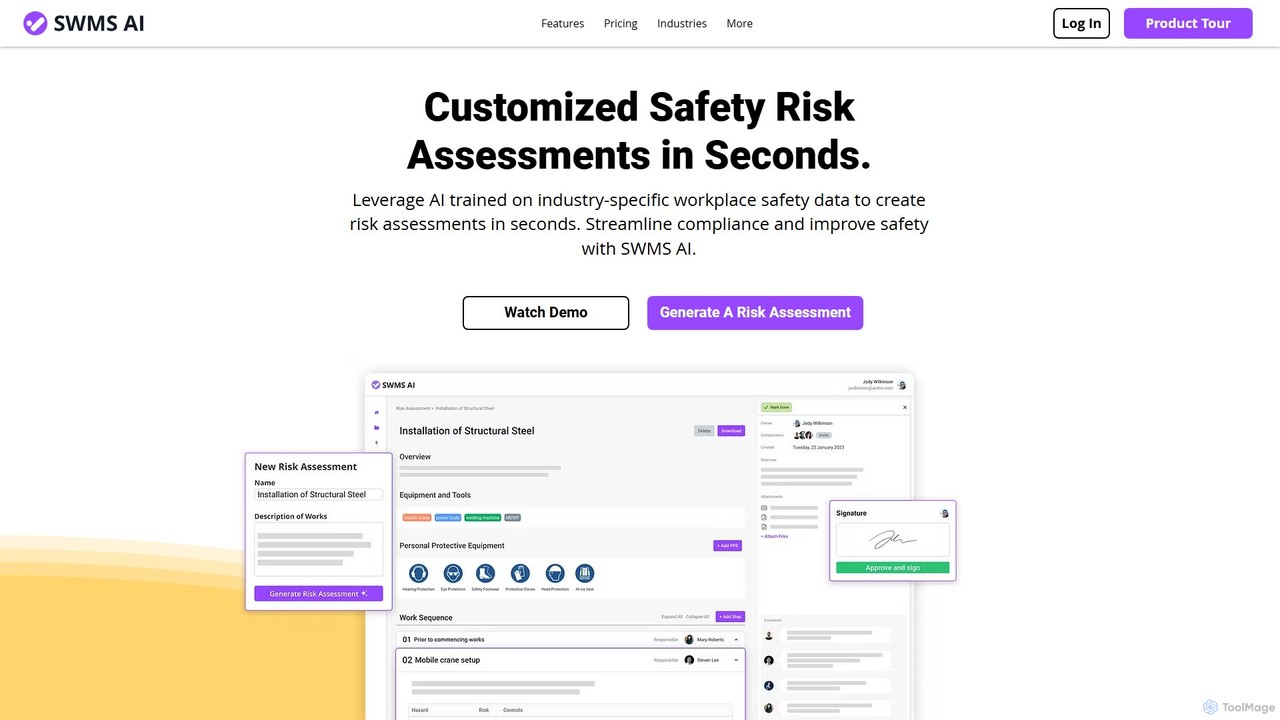
SWMS AI is an advanced platform that leverages artificial intelligence to generate customized safety risk assessments and compliance documents in seconds. Trained on extensive industry-specific data, it helps businesses in sectors like construction, mining, and logistics to streamline safety procedures, automate compliance, and reduce workplace hazards. The platform also features an AI assistant, Oscar, for instant access to critical safety knowledge.
About Workplace Safety
Workplace Safety AI tools are specialized solutions within Human Resources that leverage artificial intelligence to proactively monitor, analyze, and manage risks, ensuring employee well-being and regulatory compliance. These tools utilize advanced computer vision, machine learning, and sensor data to identify potential hazards, predict incidents, and streamline safety protocols, moving beyond traditional reactive safety measures towards a preventative approach.
Core Features
- Real-time Hazard Detection: Automatically identifies safety violations like missing PPE, unauthorized access, or unsafe conditions using cameras and sensors.
- Predictive Risk Analytics: Analyzes historical incident data, environmental factors, and operational patterns to forecast potential accident hotspots or high-risk tasks.
- Compliance Monitoring: Ensures adherence to safety regulations and standards through automated checks and alerts for non-compliance.
- Incident Management & Reporting: Streamlines the documentation, categorization, and root cause analysis of workplace incidents, facilitating faster response and prevention.
- Ergonomic Assessment: Uses AI to analyze worker posture and movement, providing recommendations to prevent musculoskeletal injuries.
Applicable Scenarios
These AI tools are crucial in high-risk environments such as manufacturing plants, construction sites, and logistics warehouses, where they monitor heavy machinery operation, ensure personal protective equipment (PPE) compliance, and detect falls or intrusions into restricted zones. They also support office environments by identifying ergonomic risks and promoting employee well-being through proactive health monitoring.
How to Choose
When selecting Workplace Safety AI tools, consider the specific hazards prevalent in your environment, the tool's ability to integrate with existing IoT devices and HR systems, and its compliance with local and international safety standards. Evaluate data privacy and security measures, the scalability of the solution, and the level of customization offered to meet unique organizational needs.

Workplace SafetyUse Cases
Real-time PPE Compliance in Industrial Settings
In manufacturing or construction, AI-powered cameras continuously monitor work zones to detect if employees are wearing required personal protective equipment (PPE) such as hard hats, safety vests, and eye protection. Upon detecting non-compliance, the system can issue immediate alerts to supervisors or the individual, significantly reducing the risk of injury from safety breaches and ensuring adherence to site regulations.
Predictive Analysis for Accident Prevention
Large organizations with extensive operational data can use AI to analyze historical accident reports, near-miss incidents, weather conditions, and shift patterns. This allows the AI to identify correlations and predict periods or areas with a higher likelihood of future incidents, enabling safety managers to implement targeted preventative measures, adjust staffing, or provide additional training before accidents occur.
Automated Hazardous Zone Intrusion Detection
In facilities with dangerous machinery or restricted access areas, AI vision systems can monitor entry points and perimeters. If an unauthorized person or object enters a designated hazardous zone, the AI immediately triggers alarms, stops machinery, or alerts security personnel. This prevents serious injuries or fatalities by enforcing strict access control and maintaining safe operational distances.
Ergonomic Risk Assessment for Office & Factory Workers
AI tools can analyze video feeds or sensor data to assess worker posture and movement patterns, both in office settings (e.g., desk setup, sitting posture) and factory environments (e.g., repetitive lifting, bending). The system identifies ergonomic risks and provides personalized recommendations for adjustments, exercises, or breaks, helping to prevent musculoskeletal disorders and long-term health issues.
Fatigue Detection for Heavy Equipment Operators
For roles involving long hours or operating heavy machinery, AI systems can monitor operators' facial expressions, eye movements, and driving patterns for signs of fatigue or distraction. When fatigue is detected, the system can issue in-cab alerts, notify supervisors, or even initiate a safe shutdown procedure, preventing accidents caused by impaired alertness and ensuring operator safety.
Streamlined Incident Reporting and Root Cause Analysis
When an incident occurs, AI-powered platforms can guide employees through a structured reporting process, collecting comprehensive data including photos, videos, and witness statements. The AI then assists safety teams by categorizing the incident, identifying potential contributing factors, and suggesting root causes, accelerating the investigation process and informing more effective preventative strategies.