Image Editing Best in category 1 results Translation AI Tool

Popular AI tools in the Translation field of Image Editing include AI Image Translator, etc., helping you quickly improve efficiency.

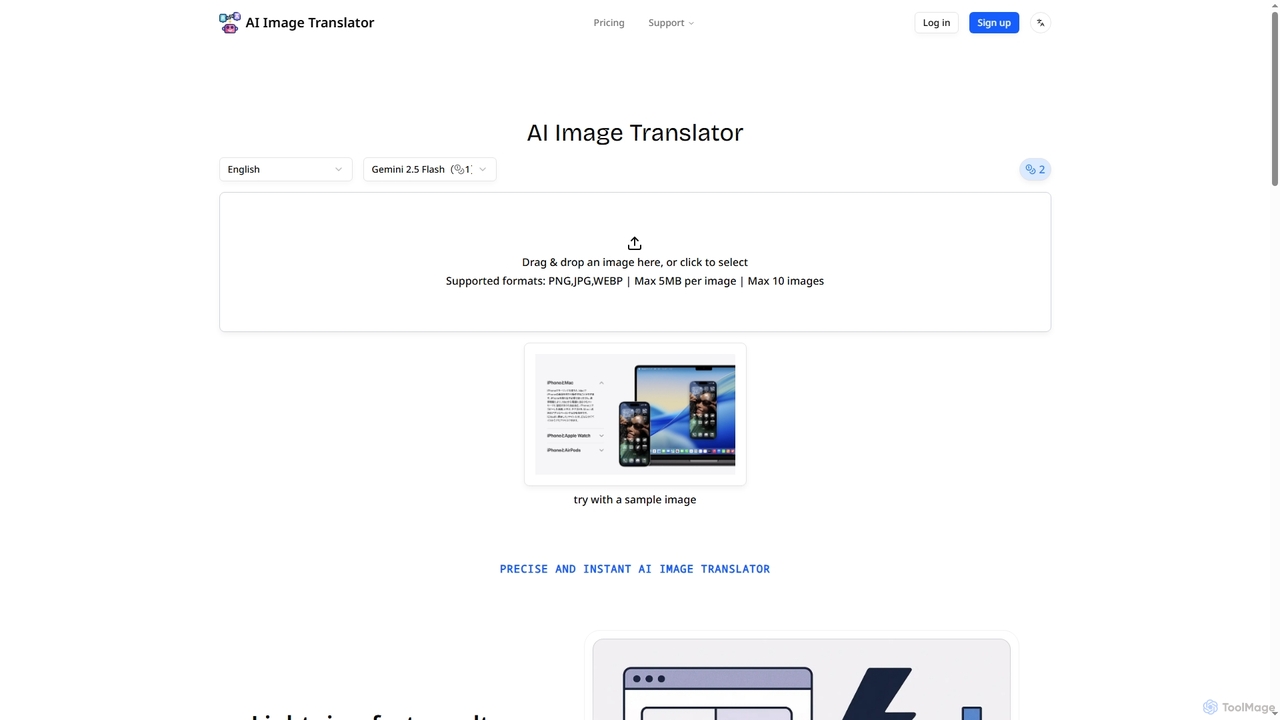
AI Image Translator

AI Image Translator

AI Image Translator is an advanced tool that precisely translates text within images into over 100 languages. It …

3.3K

About Translation

AI Translation tools, specifically within the realm of image editing, are designed to automatically detect, extract, and translate text embedded within images or to adapt visual elements for different linguistic and cultural contexts. Leveraging advanced Optical Character Recognition (OCR) and neural machine translation, these tools enable seamless localization of visual content. They are invaluable for global marketing, content localization, and cross-cultural communication, allowing users to quickly adapt images for diverse audiences while preserving visual integrity.

Core Features

  • Text Detection & Extraction: Automatically identifies and extracts textual content from various image formats.
  • Integrated Machine Translation: Translates extracted text into multiple target languages using AI models.
  • Font & Style Matching: Attempts to re-insert translated text into the image, matching the original font, size, color, and background.
  • Layout Preservation: Maintains the original layout and positioning of text within the image after translation.
  • Visual Element Adaptation: Some advanced tools can adapt non-textual visual elements to suit cultural preferences.

Applicable Scenarios

These tools are crucial for businesses and individuals operating in global markets. Marketing teams use them to localize campaign visuals, ensuring brand messages resonate across different regions. E-commerce businesses can translate product images with embedded descriptions for international storefronts. Content creators leverage them to adapt infographics and social media posts for multilingual audiences, significantly reducing manual editing time.

How to Choose

When selecting an AI Translation tool for images, consider its OCR accuracy, especially for complex fonts or low-quality images. Evaluate the quality of its integrated machine translation for your target languages and the ability to preserve original font styles and layouts. Look for features like batch processing, API integration for automated workflows, and support for various image formats. Finally, assess the pricing model and user interface for ease of use and scalability.

TranslationUse Cases

1

Localizing Marketing Graphics for Global Campaigns

A global marketing team needs to launch an advertising campaign across multiple countries. They use AI translation tools to automatically detect and translate text embedded in their banner ads, social media graphics, and promotional images into various target languages. This ensures that visual marketing materials are culturally relevant and linguistically accurate, significantly reducing manual translation time and accelerating campaign deployment.

2

Globalizing Marketing Campaigns

A marketing manager needs to launch a product in five new countries simultaneously. Using AI Translation tools, they can quickly translate website copy, social media posts, email newsletters, and ad creatives into multiple languages. This ensures consistent brand messaging across all markets, significantly reducing the time and cost associated with manual translation, and accelerating market entry.

3

Localize Marketing Campaign Visuals

Marketing managers need to launch global campaigns with consistent branding. They use AI Translation tools to automatically detect and translate text in banners, social media graphics, and advertisements into multiple target languages. The tool re-inserts the translated text, often matching original fonts and layouts, ensuring culturally relevant messaging and visual appeal across different markets, saving hours of manual graphic design work.

4

Translating Product Images and Descriptions for E-commerce

An e-commerce business expanding into new international markets faces the challenge of localizing thousands of product listings. AI translation tools are employed to translate text on product packaging images, infographics, and detailed product descriptions. This enables the business to present its products accurately and appealingly to diverse customer bases, improving conversion rates and reducing customer service inquiries related to language barriers.

5

Enhancing Multilingual Customer Support

A global e-commerce company receives customer inquiries in various languages. By integrating AI Translation tools into their customer service platform, support agents can instantly translate incoming messages and compose replies in the customer's native language. This improves customer satisfaction, reduces response times, and allows the company to serve a broader international customer base without hiring a large multilingual support team.

6

Translate Product Images for E-commerce

E-commerce businesses expanding internationally often have product images with embedded text (e.g., features, labels, instructions). AI Translation tools allow them to quickly translate this text into the languages of their target markets. This ensures product information is accessible to a wider customer base, improving conversion rates and reducing the need for separate image creation for each region.

7

Translating Infographics and Diagrams for Academic/Business Reports

Researchers or business analysts often create complex infographics and diagrams containing crucial data and explanations. When sharing these visuals with international collaborators or publishing in multilingual journals, AI translation tools can extract the text from these graphics and translate it, ensuring that the visual information remains intact while the textual content is accurately localized. This facilitates cross-cultural understanding of complex data.

8

Localizing Software and App Interfaces

A software development team is preparing to launch their application in several non-English speaking markets. They use AI Translation tools to translate all UI strings, error messages, and in-app help content. This ensures that the application is fully localized, providing a native user experience for international users and increasing adoption rates in target regions without extensive manual translation efforts.

9

Localize User Interface (UI) Screenshots

Software developers and technical writers often create documentation or tutorials using UI screenshots. To support global users, these screenshots need to be localized. AI Translation tools can automatically translate text within UI elements in screenshots, making it easier to create multilingual user manuals, help guides, and training materials without manually recreating each image for every language.

10

Creating Multilingual Social Media Content with Image Overlays

Social media managers aiming for a global audience need to adapt their visual content for different linguistic groups. AI translation tools allow them to quickly translate text overlays on images, memes, or short video captions. This capability ensures that engaging visual content can be rapidly localized and distributed, maintaining brand consistency and maximizing engagement across diverse language communities without extensive manual graphic redesign.

11

Translating Academic and Research Papers

A researcher needs to review numerous academic papers published in different languages to stay updated on global advancements in their field. AI Translation tools allow them to quickly translate abstracts, key sections, or even entire papers, providing rapid access to critical information. This accelerates literature reviews and facilitates cross-border collaboration by breaking down language barriers in scientific communication.

12

Translate Scanned Documents and Infographics

Researchers, students, or business professionals often encounter scanned documents, historical records, or complex infographics in foreign languages. AI Translation tools with robust OCR capabilities can extract text from these image-based documents, translate it, and even re-render the translated text back into the original layout. This facilitates understanding and sharing of information that would otherwise require extensive manual transcription and translation.

13

Translating Scanned Documents with Complex Layouts

Legal or medical professionals often deal with scanned documents, contracts, or reports that contain both text and visual elements like stamps, signatures, or diagrams. AI translation tools with advanced OCR can accurately extract and translate the textual content while attempting to preserve the original layout and visual integrity. This is crucial for maintaining the authenticity and readability of official documents across different languages.

14

Facilitating Multilingual Internal Communication

A large multinational corporation has employees located in various countries speaking different native languages. AI Translation tools can be integrated into internal communication platforms (e.g., Slack, Microsoft Teams) to enable real-time translation of messages, documents, and meeting transcripts. This fosters better understanding, improves team collaboration, and ensures all employees are aligned, regardless of their linguistic background.

15

Create Multilingual Social Media Content

Social media managers aim to engage diverse global audiences. They use AI Translation tools to quickly adapt visual content, such as memes, quotes, or event announcements embedded in images, for different linguistic groups. This allows for rapid deployment of localized content across various platforms, increasing reach and engagement without the need for graphic designers to manually edit text for each language version.

16

Localizing Website Image Alt Text and Captions for SEO

Website administrators and SEO specialists need to optimize visual content for international search engines. AI translation tools can be used to efficiently translate image alt text, captions, and descriptions into multiple languages. This improves the discoverability of images in global search results, enhances accessibility for visually impaired users, and contributes to overall multilingual SEO strategy, driving more organic traffic from diverse linguistic regions.

17

Translating Legal and Compliance Documents

A legal firm or compliance department frequently deals with contracts, regulations, and legal briefs from various international jurisdictions. AI Translation tools, especially those with specialized legal NMT models and custom glossary support, can rapidly translate these complex documents. This ensures accurate understanding of legal terms, speeds up due diligence processes, and helps maintain compliance across different legal frameworks, reducing risks associated with misinterpretation.

18

Translate Gaming UI and In-Game Textures

Game developers and localization teams face the challenge of translating text embedded directly into game assets, such as UI elements, signs, or item descriptions on textures. AI Translation tools can automate the extraction and translation of this text, and in some cases, even assist in re-rendering it back onto the textures or UI, significantly speeding up the localization pipeline for games and ensuring a consistent experience for players worldwide.

TranslationFrequently Asked Questions