PowerSpect
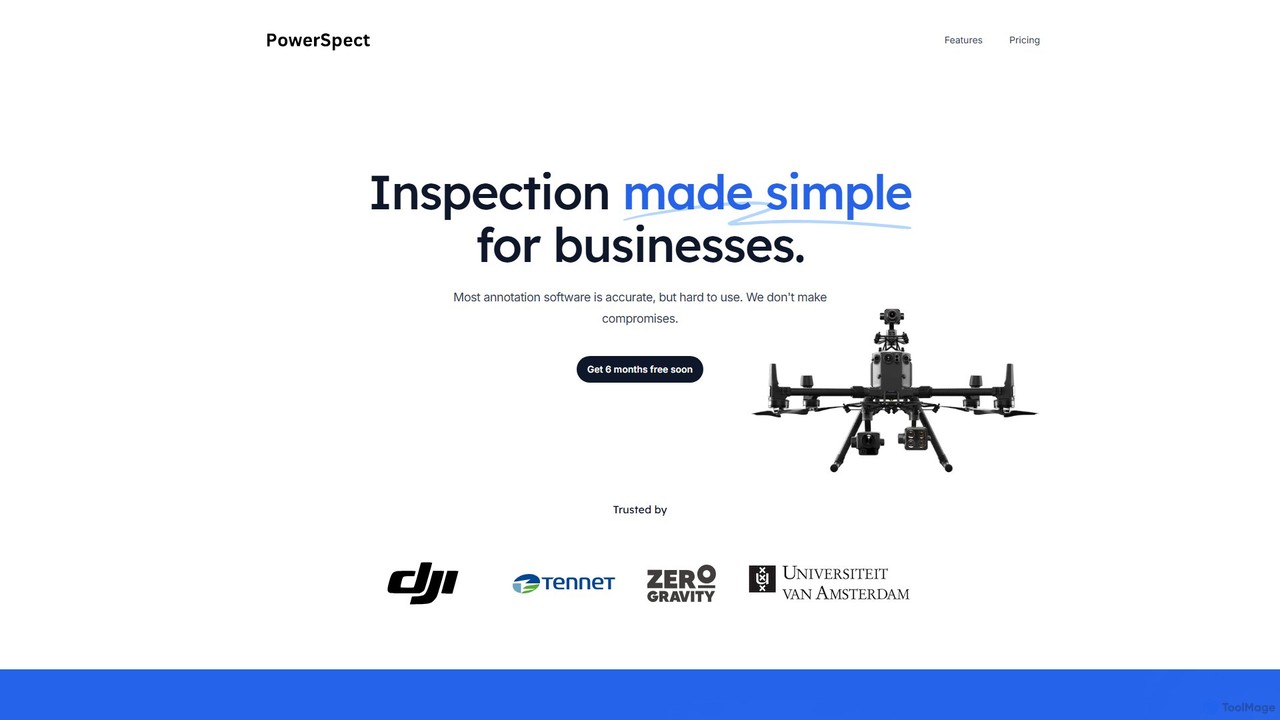
PowerSpect is an AI-powered platform that simplifies and automates infrastructure inspection. It utilizes advanced computer vision, 3D modeling, …
PowerSpect is an AI-powered platform that simplifies and automates infrastructure inspection. It utilizes advanced computer vision, 3D modeling, and predictive analytics to analyze data from images and sensors. Designed for industries like energy and utilities, it helps detect potential issues, forecast maintenance needs, and ensure the safety and reliability of critical assets like transmission towers.
About Inspection
AI Inspection tools are a class of software that uses computer vision and machine learning to automate the detection of defects, anomalies, and compliance issues. These tools analyze visual data from cameras, drones, or sensors to identify patterns that deviate from a predefined standard of quality or safety. Their primary value lies in increasing the speed, accuracy, and consistency of inspection processes, significantly reducing human error and operational costs in critical infrastructure and manufacturing sectors. This technology enables scalable, real-time monitoring that surpasses the limitations of manual checks.
Core Features
- Automated Defect Detection: Automatically identifies physical flaws such as cracks, scratches, corrosion, or incorrect assembly on surfaces and components.
- Anomaly Recognition: Flags unusual patterns or deviations from normal operational states in video feeds or sensor data.
- Classification and Reporting: Categorizes identified issues by type and severity, generating detailed reports with visual evidence for review.
- Predictive Maintenance Analysis: Uses inspection data to identify early signs of wear and tear, predicting potential equipment failures before they occur.
- Real-time Monitoring: Continuously analyzes live video or data streams to provide immediate alerts for critical issues on production lines or infrastructure sites.
Use Cases
AI Inspection tools are widely used in manufacturing for quality control on assembly lines, in civil engineering for monitoring the structural health of bridges and buildings, and in the energy sector for inspecting pipelines, power lines, and wind turbines. They are also applied in logistics for package and pallet inspection and in agriculture for assessing crop health.
How to Choose
When selecting an AI Inspection tool, consider the required detection accuracy and the types of defects it can identify. Evaluate its compatibility with your existing hardware, such as cameras and drones. Assess the ease of training and deploying custom models for your specific use case. Finally, review the tool's reporting capabilities and its ability to integrate with your existing maintenance and workflow management systems.

InspectionUse Cases
Automate Quality Control on a Production Line
A quality control manager in a manufacturing plant is tasked with inspecting thousands of electronic components per hour for microscopic defects. Using an AI Inspection tool integrated with high-speed cameras, the system automatically analyzes images of each component in real-time. It flags any items with soldering errors, cracks, or misalignments, diverting them from the main production line. This process achieves over 99.5% accuracy, reduces the need for manual visual inspection by 90%, and minimizes the shipment of faulty products.
Monitor Structural Health of Civil Infrastructure
A civil engineering firm uses drones equipped with high-resolution cameras to capture images of a large bridge. The images are uploaded to an AI Inspection platform, which has been trained to detect concrete cracks, spalling, and corrosion on steel elements. The AI automatically generates a detailed 3D model of the bridge, highlighting and classifying all detected defects by severity. This allows engineers to prioritize repairs efficiently, monitor defect progression over time, and ensure public safety without costly and time-consuming manual inspections.
Inspect Energy Assets for Predictive Maintenance
An energy company needs to inspect hundreds of wind turbine blades for erosion and damage. Instead of sending technicians to climb each turbine, they use an AI inspection service that analyzes drone footage. The AI model identifies and precisely locates early-stage damage like leading-edge erosion, cracks, and lightning strike impact. The system generates a report for each turbine, ranking the severity of issues. This enables the maintenance team to schedule targeted repairs, preventing minor issues from escalating into costly failures and extending the operational life of the assets.
Automate Vehicle Damage Assessment for Insurance
An insurance adjuster receives photos of a damaged vehicle from a policyholder. They upload the images to an AI Inspection platform. The AI analyzes the photos, identifies the damaged parts (e.g., bumper, fender, headlight), classifies the type of damage (dent, scratch, crack), and estimates the severity. Within minutes, the system generates a preliminary damage report and a cost estimate for repairs, significantly speeding up the claims process. This reduces manual effort for adjusters and provides a faster, more consistent experience for customers.
Monitor Crop Health in Precision Agriculture
An agronomist for a large farm uses an AI inspection system with multispectral cameras mounted on a drone to survey hundreds of acres of cornfields. The AI analyzes the imagery to detect early signs of pest infestation, nutrient deficiencies, and water stress, which are often invisible to the naked eye. It generates a health map of the fields, highlighting problem areas. This allows the farmer to apply pesticides, fertilizers, or water precisely where needed, optimizing resource use, reducing environmental impact, and increasing overall crop yield.
Verify Product Placement and Stock on Retail Shelves
A retail operations manager uses an AI inspection tool, either through in-store cameras or autonomous robots, to scan store shelves. The AI system compares the current shelf images against a planogram (a diagram of product placement). It automatically identifies out-of-stock items, products in the wrong location, and incorrect price tags. The system sends real-time alerts to store staff's mobile devices, enabling them to quickly restock shelves and correct errors. This ensures a better shopping experience for customers and prevents lost sales due to stock issues.