ToolMage
Sign in

Best 5 Sports AI tools for Lifestyle

Popular Sports AI tools in Lifestyle include Leans.AI, SafeBet, SportsEye, GoDiary, and Locks, helping you work more efficiently.

SportsEye
Freemium

SportsEye

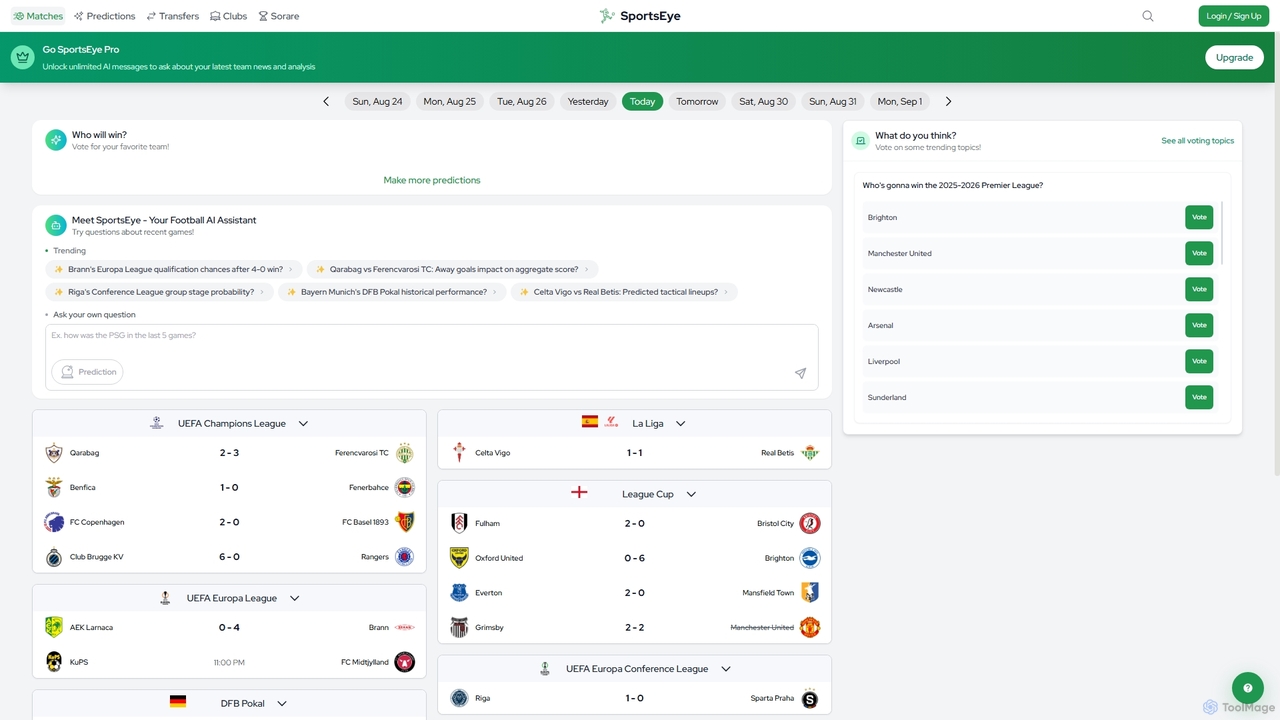
SportsEye is a next-generation AI platform for football fans, offering AI-powered match predictions, in-depth tactical analysis, and a chat assistant. It provides real-time transfer rumors and integrates with Sorare for fantasy football management, acting as your personal football analyst.

Sports Analytics
Visits 6KFavorites 99Likes 110
Leans.AI
Freemium

Leans.AI

Leans.AI is an AI-powered sports analytics platform providing data-driven betting picks and predictions. Its AI, "Remi," analyzes thousands of data points across NFL, NBA, MLB, NHL, and college sports to identify high-value betting opportunities. The platform offers transparent performance tracking, educational resources, and free daily picks to help bettors make more informed decisions.

Sports Betting
Visits 39.6KFavorites 126Likes 133
Locks
Paid

Locks

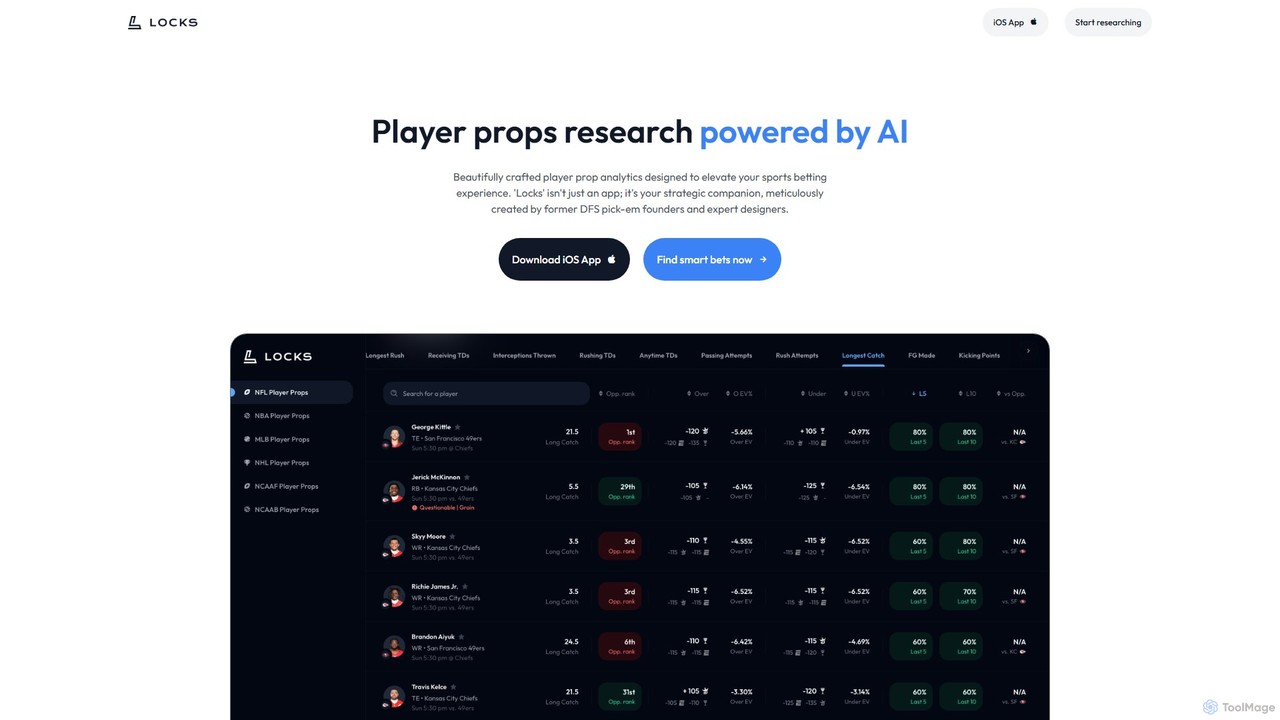
An AI-powered iOS app for sports betting research, specializing in player props. It uses proprietary algorithms to identify +EV (Positive Expected Value) bets, helping users make data-driven, profitable decisions by analyzing trends, matchups, and market data.

Predictive Analytics
Visits 5.9KFavorites 127Likes 126
GoDiary
Freemium

GoDiary

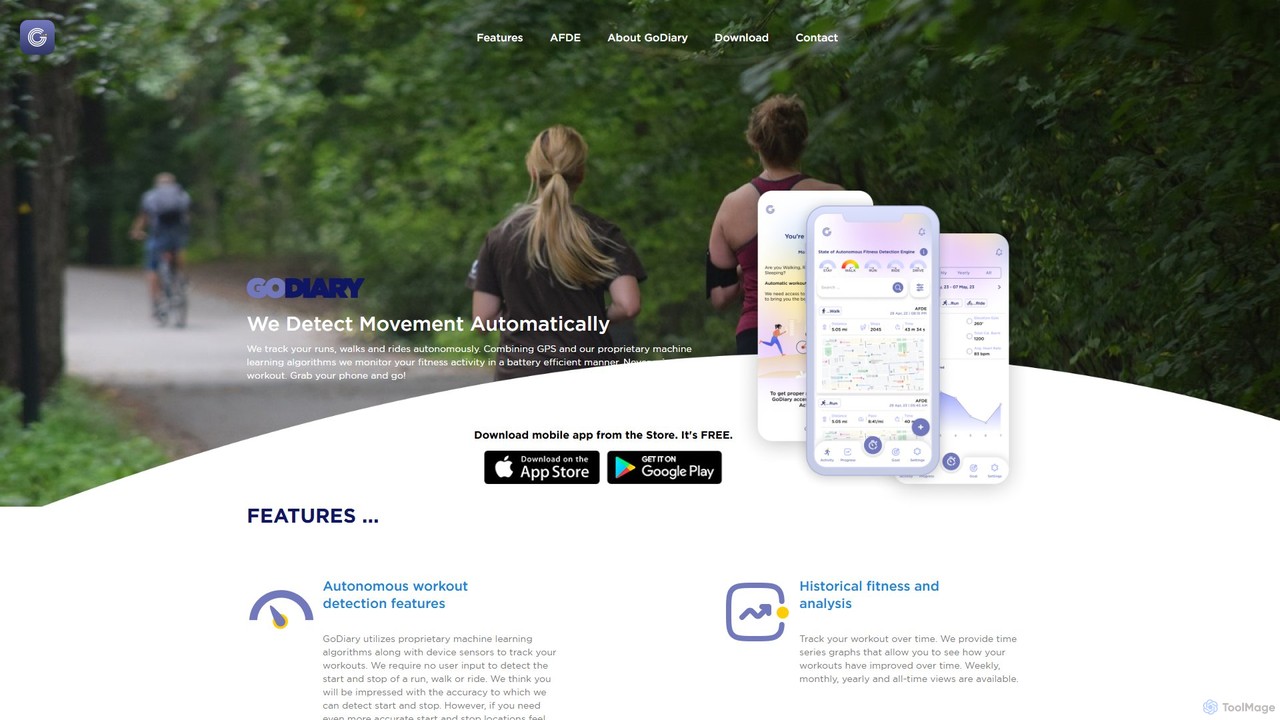
GoDiary is an AI-powered fitness tracking app that automatically detects and logs your workouts. Using machine learning, it precisely identifies the start and stop of runs, walks, and rides without any manual input. It offers historical analysis, personalized goal tracking, and seamless integration with Apple Health to help you monitor and improve your fitness journey effortlessly.

3D
Visits 6KFavorites 104Likes 103
SafeBet
Freemium

SafeBet

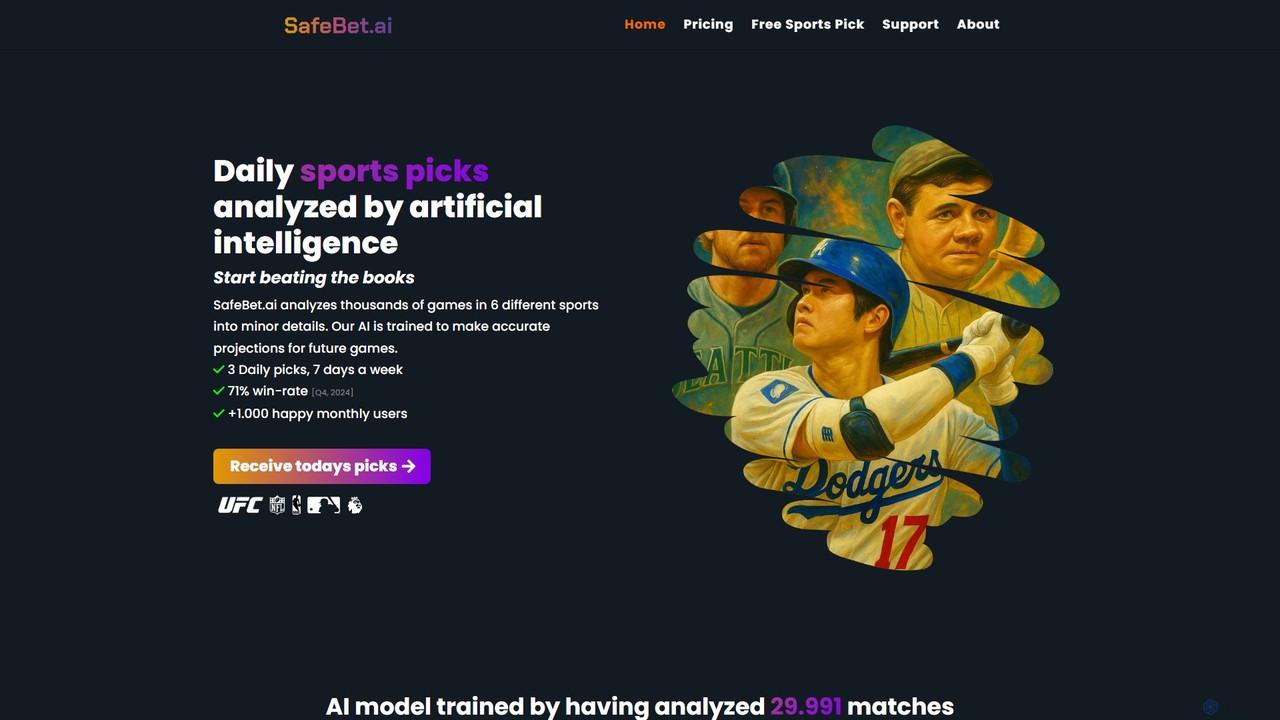
SafeBet is an AI-powered platform that provides daily sports betting picks. By analyzing vast amounts of data across sports like the NBA, NFL, and Soccer, it generates data-driven predictions to help users make informed, unemotional betting decisions. Picks are delivered via a private Telegram channel, complete with detailed reports and an 'AI Safe Score' to assess risk.

Predictive Analytics
Visits 6.8KFavorites 118Likes 113

About Sports

Sports AI tools are a category of artificial intelligence applications designed to enhance athletic performance, optimize training, and enrich the overall sports experience. These tools leverage advanced algorithms, machine learning, and data analytics to process vast amounts of sports-related data, from athlete biometrics to game statistics. They provide objective insights, predictive analysis, and personalized recommendations, transforming how athletes train, coaches strategize, and fans engage with sports.

Core Features

  • Performance Tracking & Analysis: Monitors and analyzes athlete movements, biometrics, and game data to identify strengths and weaknesses.
  • Personalized Training Programs: Generates customized workout and recovery plans based on individual athlete data, goals, and progress.
  • Injury Prediction & Prevention: Utilizes data patterns to assess injury risk, recommend preventative measures, and guide rehabilitation.
  • Game Strategy Optimization: Analyzes opponent tactics, simulates scenarios, and suggests optimal game plans for teams and individual players.
  • Fan Engagement & Content Creation: Develops interactive experiences, generates personalized highlights, and analyzes fan sentiment to improve audience interaction.

Use Cases

These tools are widely adopted by professional sports teams, individual athletes, coaches, sports scientists, and fitness enthusiasts. They are crucial for gaining a competitive edge, ensuring athlete well-being, and creating more dynamic and engaging sports content. From optimizing a marathon runner's pace to helping a football team refine its defensive formations, Sports AI tools provide data-driven insights that were previously unattainable.

How to Choose

When selecting a Sports AI tool, consider its data integration capabilities with existing sensors and platforms, the accuracy and depth of its analytical models, and its customization options for specific sports or individual needs. Evaluate the user interface for ease of use, the real-time feedback mechanisms, and the level of support for data privacy and security. Also, assess whether it offers predictive analytics beyond basic tracking.

Sports use cases

1

Optimizing Athlete Performance Through Data Analysis

Professional coaches and sports scientists utilize Sports AI tools to meticulously analyze an athlete's biomechanics, movement patterns, and physiological responses during training and competition. By processing vast datasets from wearables and sensors, these tools identify subtle inefficiencies, track progress over time, and pinpoint areas for improvement, enabling targeted interventions to maximize athletic potential and achieve peak performance.

2

Crafting Tailored Training Programs for Athletes

AI-powered platforms create highly individualized training and recovery regimens for athletes of all levels. Based on real-time performance data, fitness goals, injury history, and even sleep patterns, these tools dynamically adjust workout intensity, volume, and type. This ensures that each athlete receives a program perfectly suited to their unique needs, preventing overtraining and accelerating progress more effectively than generic plans.

3

Predicting and Preventing Sports-Related Injuries

Sports medicine professionals and trainers employ AI to analyze an athlete's historical data, training load, movement asymmetries, and fatigue indicators. By identifying patterns and anomalies that correlate with injury risk, these tools provide early warnings and recommend proactive measures, such as specific strengthening exercises or rest periods. This significantly reduces the incidence of injuries, extending an athlete's career and minimizing downtime.

4

Developing Winning Strategies with Predictive Analytics

Sports analysts and coaching staff use AI to dissect opponent strategies, player tendencies, and game flow in real-time or post-match. These tools can simulate various scenarios, predict opponent moves, and identify optimal tactical adjustments for a team. By providing data-driven insights into strengths, weaknesses, and potential opportunities, AI helps teams develop more effective game plans and make informed decisions during critical moments.

5

Enhancing Fan Experience with Personalized Content

Sports organizations leverage AI to analyze fan behavior, preferences, and social media sentiment. This enables the creation of personalized content, such as customized highlight reels, interactive statistics, and tailored news feeds. AI can also power virtual reality experiences, predictive game outcomes for betting, and intelligent chatbots for fan queries, fostering deeper engagement and a more immersive experience for supporters worldwide.

6

Identifying Promising Talent Through Data-Driven Scouting

Professional sports scouts and recruitment teams utilize AI to analyze performance metrics, physical attributes, and potential growth trajectories of aspiring athletes across various leagues and age groups. By processing vast amounts of data, including video analysis and statistical models, AI can objectively identify hidden gems, predict future success, and streamline the talent acquisition process, ensuring teams invest in players with the highest potential.

Sports FAQ

What are Sports AI tools?

Sports AI tools are artificial intelligence applications specifically designed for the sports industry. They leverage machine learning, computer vision, and data analytics to process sports-related data, providing insights for performance enhancement, training optimization, injury prevention, and fan engagement. These tools transform raw data into actionable intelligence for athletes, coaches, and sports organizations.

How do Sports AI tools enhance athletic performance?

Sports AI tools enhance performance by offering data-driven insights into an athlete's capabilities and areas for improvement. They analyze biomechanics, track physiological responses, and monitor training load to create personalized training plans, optimize recovery, and identify potential performance plateaus. This objective analysis helps athletes train smarter, refine techniques, and achieve peak physical condition more efficiently.

What should I consider when choosing a Sports AI tool?

When selecting a Sports AI tool, consider its compatibility with your existing equipment and data sources, the accuracy and reliability of its analytics, and its ability to provide actionable recommendations rather than just raw data. Evaluate the user interface for ease of use, the level of customization for your specific sport or needs, and the tool's focus on privacy and data security. Also, check for real-time feedback capabilities and scalability.

How do Sports AI tools differ from traditional sports analytics?

Traditional sports analytics primarily relies on historical data and statistical methods to describe past events. In contrast, Sports AI tools go beyond description by using machine learning to identify complex patterns, make predictions, and generate prescriptive recommendations. AI can process unstructured data like video, adapt to new information, and offer dynamic, personalized insights that traditional methods often cannot, leading to more proactive and intelligent decision-making.

Who benefits most from using Sports AI tools?

A wide range of individuals and organizations benefit significantly from Sports AI tools. This includes professional athletes seeking a competitive edge, coaches aiming to optimize team strategy and individual training, sports scientists conducting research, and medical staff focused on injury prevention and rehabilitation. Additionally, sports organizations use AI for talent scouting, fan engagement, and operational efficiency, while even amateur fitness enthusiasts can leverage personalized training insights.