Data Best in category 1 results Sports Analytics AI Tool

Popular AI tools in the Sports Analytics field of Data include SportsEye, etc., helping you quickly improve efficiency.

SportsEye

SportsEye

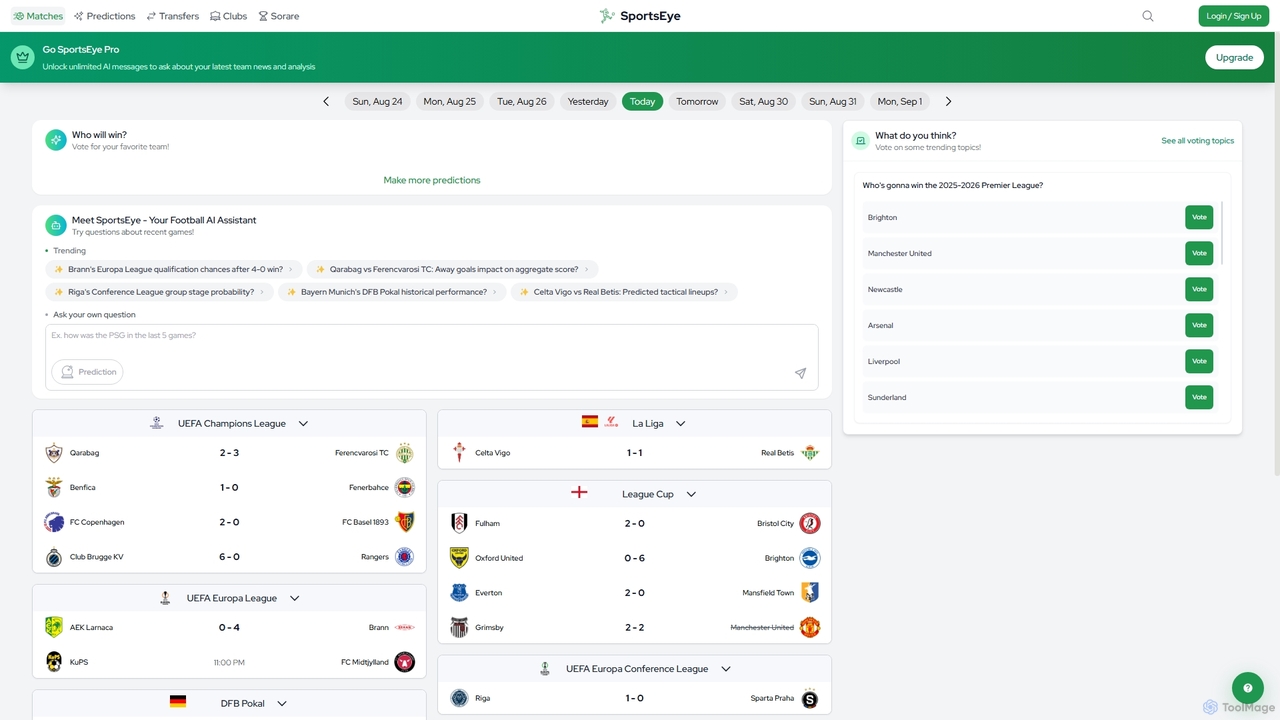
SportsEye is a next-generation AI platform for football fans, offering AI-powered match predictions, in-depth tactical analysis, and a …

2.7K

About Sports Analytics

Sports Analytics tools are AI-powered platforms that leverage data science and machine learning to extract actionable insights from sports-related data. These tools analyze vast datasets, including player performance metrics, physiological data, tactical movements, and fan engagement statistics, to optimize athletic performance, refine game strategies, and enhance business operations within the sports industry. They provide a data-driven approach to understanding complex sporting phenomena and making informed decisions, building upon general data analysis principles.

Core Features

  • Performance Tracking & Prediction: Monitor athlete performance, identify trends, and predict future outcomes.
  • Tactical & Strategic Analysis: Break down game strategies, identify opponent patterns, and optimize team formations.
  • Injury Risk Assessment: Analyze biomechanical and physiological data to predict and prevent athlete injuries.
  • Talent Identification & Scouting: Evaluate potential players based on comprehensive statistics and advanced metrics.
  • Fan Engagement & Business Insights: Understand fan behavior to enhance marketing, ticketing, and overall experience.

Applicable Scenarios

Professional sports teams utilize these tools to optimize player training regimens, analyze opponent weaknesses, and make real-time strategic adjustments during games. Sports broadcasters and media companies leverage analytics to enrich commentary with data-driven insights and create engaging content. Furthermore, sports betting platforms employ advanced models for more accurate odds prediction and risk management.

How to Choose

When selecting a Sports Analytics tool, consider its data integration capabilities with existing tracking systems and video platforms. Evaluate the depth and breadth of its analytical models, focusing on specific needs like performance optimization or injury prediction. User interface intuitiveness and the ability to customize dashboards are also crucial for effective adoption by coaches and analysts. Finally, assess the scalability to handle growing data volumes and team sizes.

Sports AnalyticsUse Cases

1

Optimizing Athlete Training Regimens

Coaches and sports scientists utilize Sports Analytics tools to analyze individual player performance data (e.g., speed, endurance, strength, recovery rates) and physiological metrics from wearables. This allows them to identify specific areas for improvement, detect signs of fatigue or overtraining, and tailor personalized training plans to maximize an athlete's potential while minimizing injury risk. The data-driven insights lead to more efficient and effective training protocols.

2

Developing Game-Winning Strategies

Tactical analysts and coaches input game footage, player tracking data, and historical match statistics into Sports Analytics platforms. The tools then process this information to identify opponent patterns, strengths, and weaknesses, as well as evaluate the effectiveness of their own team's formations and plays. This data-backed intelligence helps in developing optimal game plans, making informed in-game adjustments, and gaining a competitive edge.

3

Predicting and Preventing Player Injuries

Medical staff and athletic trainers leverage Sports Analytics to analyze biomechanical sensor data, physiological responses, and historical injury records. AI models can identify high-risk movements, fatigue indicators, or subtle changes in gait that precede an injury. This enables proactive interventions, personalized recovery protocols, and workload management strategies, significantly reducing the incidence and severity of player injuries, thereby extending careers and improving team availability.

4

Scouting and Recruiting Top Talent

Recruitment teams and scouts use Sports Analytics tools to sift through vast amounts of data from various leagues and competitions. By analyzing comprehensive player statistics, video highlights, and advanced metrics (e.g., expected goals, defensive actions per minute), they can identify undervalued players, project future performance, and assess compatibility with team strategy. This data-driven approach leads to more informed and effective talent acquisition decisions, reducing the reliance on subjective observations.

5

Enhancing Fan Engagement and Experience

Sports organizations utilize analytics to understand fan demographics, preferences, and behavior across digital platforms (social media, apps) and at venues. This data informs personalized marketing campaigns, dynamic ticket pricing strategies, and in-stadium experience improvements (e.g., concession optimization, interactive displays). By tailoring content and offerings to individual fan segments, teams can foster stronger loyalty, increase attendance, and generate new revenue streams.

6

Informing Sports Betting Odds and Strategies

Professional bettors and odds compilers leverage sophisticated Sports Analytics models to process vast amounts of historical data, team news, player form, and environmental factors (e.g., weather, home advantage). These tools provide advanced statistical probabilities and predictive insights for game outcomes, player statistics, and specific in-game events. This data-driven intelligence allows for more accurate odds setting, informed betting strategies, and enhanced risk management within the sports betting industry.

Sports AnalyticsFrequently Asked Questions