Market Research Best in category 2 results Analysis AI Tool

Popular AI tools in the Analysis field of Market Research include Prism、LaunchPad AI, etc., helping you quickly improve efficiency.

Prism

Prism

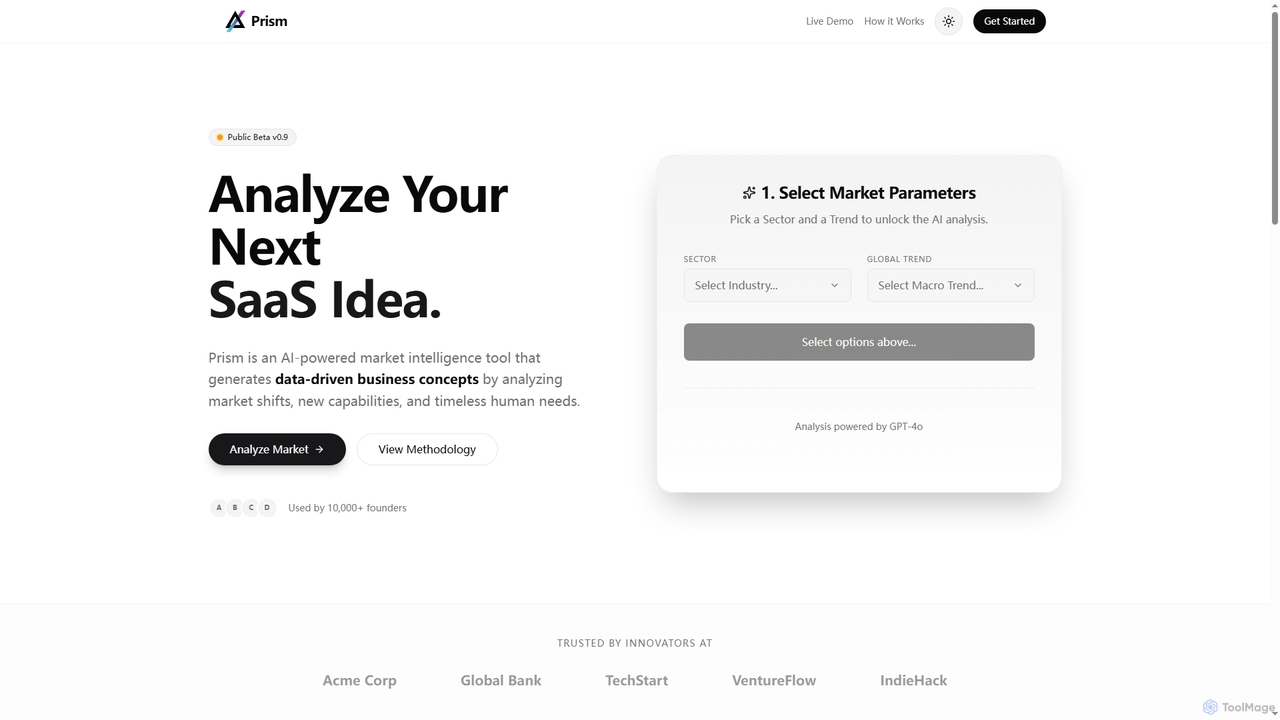
Prism is an AI-powered market intelligence tool that generates data-driven business ideas and performs market analysis. It leverages …

3.0K
Free
LaunchPad AI

LaunchPad AI

LaunchPad AI is an innovative AI-powered tool designed to transform your business idea into a comprehensive launch plan …

2.9K

About Analysis

AI Analysis tools are specialized platforms that process vast datasets to uncover patterns, trends, and actionable insights. Leveraging advanced machine learning algorithms, they transform raw market data into strategic intelligence, enabling businesses to make data-driven decisions. These tools are crucial for understanding customer behavior, market dynamics, and competitive landscapes within the broader field of market research.

Core Features

  • Sentiment Analysis: Automatically gauge public opinion and customer sentiment from text data like reviews and social media posts.
  • Predictive Modeling: Forecast future market trends, sales, or customer churn based on historical data.
  • Data Visualization: Present complex analytical findings through interactive charts, graphs, and dashboards for easier comprehension.
  • Competitor Benchmarking: Compare performance metrics and strategies against competitors to identify strengths and weaknesses.
  • Trend Identification: Detect emerging market trends and shifts in consumer preferences from unstructured data.

Applicable Scenarios

Marketing teams utilize AI analysis tools to understand campaign performance, identify target audience segments, and optimize ad spend by analyzing engagement data and conversion rates. Product managers leverage these tools to analyze user feedback and feature usage, guiding product development and iteration. Business strategists employ them for market forecasting and risk assessment, informing long-term planning and investment decisions.

How to Choose

When selecting an AI analysis tool, consider its data integration capabilities with your existing systems (CRM, ERP). Evaluate the depth and breadth of its analytical models, ensuring they align with your specific research questions (e.g., sentiment, predictive, segmentation). User-friendliness and the quality of data visualization are also crucial for effective insight communication. Finally, assess scalability and pricing models to match your organizational needs and budget.

AnalysisUse Cases

1

Analyzing Customer Feedback for Product Improvement

Product managers use AI analysis tools to process thousands of customer reviews, support tickets, and social media comments. The tools automatically identify recurring themes, sentiment, and pain points related to specific features or overall product experience. This allows teams to prioritize development efforts on areas that will have the greatest impact on user satisfaction and retention, streamlining the feedback loop.

2

Predicting Market Trends for Strategic Planning

Business strategists and market researchers employ AI analysis to forecast future market shifts, consumer demand, and competitive movements. By analyzing historical sales data, economic indicators, news articles, and social media discussions, the tools predict emerging trends. This enables proactive strategic planning, resource allocation, and timely market entry or exit decisions, reducing investment risks.

3

Optimizing Marketing Campaigns with Performance Insights

Marketing analysts leverage AI analysis to dissect campaign performance across various channels. The tools analyze ad spend, click-through rates, conversion data, and audience demographics to identify the most effective strategies and segments. This allows for real-time optimization of campaigns, reallocating budgets to high-performing areas, and personalizing messaging for maximum ROI.

4

Competitor Intelligence Gathering and Benchmarking

Competitive intelligence teams use AI analysis to monitor competitor activities, product launches, pricing strategies, and market share. The tools scrape and analyze public data, news, and social media mentions to provide a comprehensive view of the competitive landscape. This helps businesses benchmark their performance, identify competitive advantages, and anticipate market challenges.

5

Identifying Sales Opportunities and Customer Churn Risks

Sales and customer success teams utilize AI analysis to identify potential sales leads and customers at risk of churning. By analyzing customer interaction history, purchase patterns, and engagement levels, the tools predict future behavior. This allows for targeted outreach to high-value prospects and proactive intervention for at-risk customers, improving retention and revenue.

6

Automating Data Reporting and Insight Generation

Data analysts and business intelligence professionals use AI analysis tools to automate the generation of reports and dashboards. Instead of manual data aggregation and chart creation, the AI processes data, identifies key insights, and presents them in an easily digestible format. This significantly reduces reporting time, allowing teams to focus more on strategic interpretation rather than data preparation.

AnalysisFrequently Asked Questions