
Pulsed
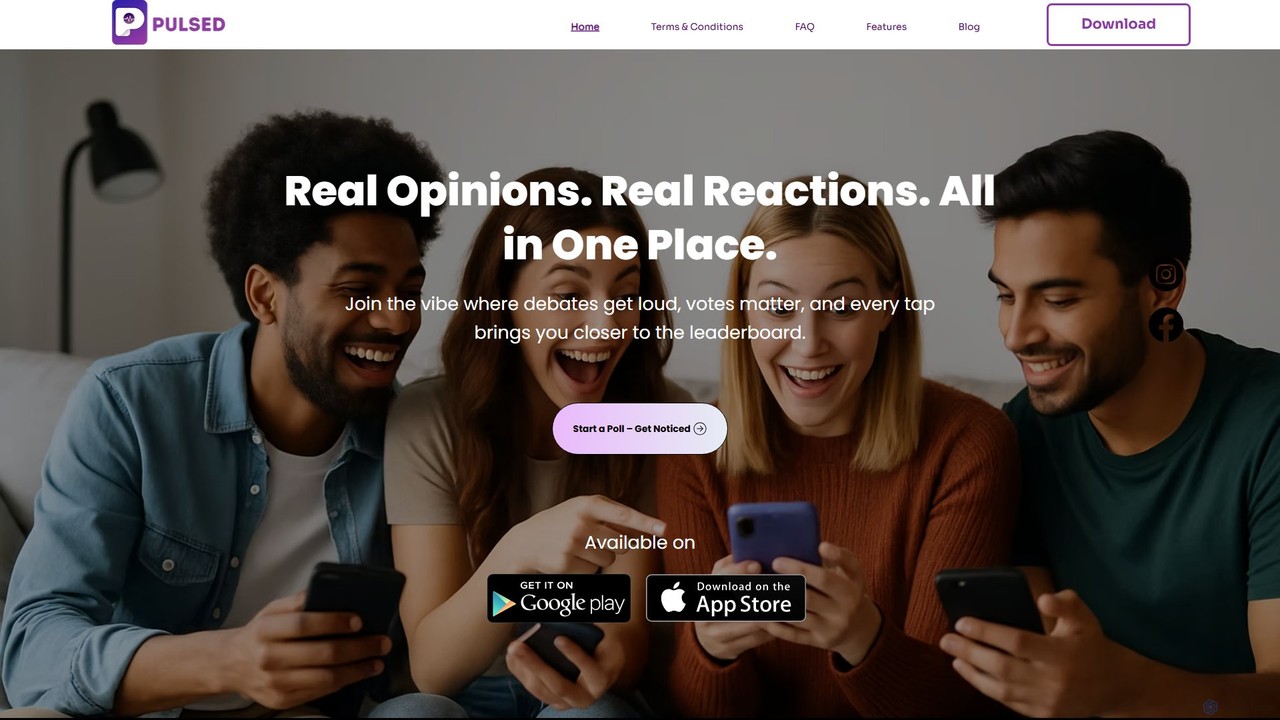
Pulsed is a gamified social polling app where your opinions earn you points and status. Create and vote …
Pulsed is a gamified social polling app where your opinions earn you points and status. Create and vote on polls, climb leaderboards, and engage with a community of real users, verified through optional facial recognition. The app also features AI-powered news summaries to keep you informed. It's a fun, rewarding way to share your voice, see real-time results, and influence conversations on topics that matter.
About Surveys
AI Survey tools are a class of platforms that use artificial intelligence to design, distribute, and analyze surveys. These tools leverage technologies like Natural Language Processing (NLP) to interpret open-ended text responses and machine learning to create dynamic question paths. This allows organizations to extract deep, actionable insights from qualitative data at scale, transforming customer feedback and employee opinions into structured, measurable metrics. Unlike traditional survey platforms, AI enhances the entire process from creation to analysis, uncovering nuanced themes and sentiments automatically.
Core Features
- Sentiment Analysis: Automatically determines the emotional tone (positive, negative, neutral) of text-based answers.
- Thematic Clustering: Groups open-ended responses into key themes or topics without manual coding.
- Dynamic Question Logic: Adapts the survey questions in real-time based on a respondent's previous answers.
- Predictive Insights: Uses survey data to forecast trends, customer churn, or employee satisfaction.
- Smart Question Generation: Suggests relevant and unbiased questions based on the survey's objectives.
Use Cases
These tools are widely used by product managers for analyzing customer feedback, HR departments for measuring employee engagement, and marketing teams for concept testing and brand perception studies. They are particularly valuable in any scenario requiring the analysis of large volumes of qualitative data to understand the 'why' behind quantitative scores.
How to Choose
When selecting an AI Survey tool, consider the depth of its analytical capabilities, such as sentiment and thematic analysis accuracy. Evaluate its integration options with other systems like CRMs or data warehouses. Also, assess the flexibility of its dynamic logic for creating personalized survey experiences and ensure it complies with data privacy and security standards.
SurveysUse Cases
Analyze Customer Feedback for Product Improvement
A product manager for a SaaS company uses an AI survey tool after a major feature release. They collect thousands of open-ended responses about the user experience. The AI automatically analyzes and clusters the feedback into categories like 'UI Confusion,' 'Performance Issues,' and 'Feature Requests.' This allows the product team to quickly prioritize bug fixes and identify the most requested enhancements without spending weeks manually reading and tagging comments, leading to a faster product iteration cycle.
Monitor Employee Engagement with Dynamic Pulse Surveys
An HR department implements a weekly pulse survey to track employee morale. Using an AI survey tool, the questions adapt based on previous responses. If an employee expresses negative sentiment about their workload, the AI triggers a follow-up question asking for specific details. This dynamic approach provides deeper, more contextual insights into employee concerns, allowing HR to address specific issues proactively rather than relying on generic, annual engagement surveys.
Conduct In-depth Market Research and Concept Testing
A marketing team is testing three potential ad campaigns for a new product. They use an AI survey to show each concept to a segment of their target audience and ask open-ended questions like, 'How does this ad make you feel?' The AI's sentiment and thematic analysis quickly reveals that while Concept A is rated highly, its emotional response is neutral. Concept B, however, evokes strong positive emotions related to 'trust' and 'innovation.' These nuanced insights guide the team to select the most impactful campaign, a decision difficult to make with simple rating scales alone.
Automate Voice of the Customer (VoC) Program Analysis
A large e-commerce company integrates an AI survey tool into its Voice of the Customer program. After every purchase, customers receive a short survey. The AI platform ingests and analyzes thousands of responses daily, identifying emerging trends and urgent issues in real-time. For example, it might detect a sudden spike in negative comments about 'delivery times' in a specific region, automatically alerting the logistics team to investigate. This automates the VoC analysis process and enables rapid response to customer issues.
Enhance Academic Research with Qualitative Data Analysis
A university researcher conducts a study involving in-depth interviews with 100 participants, resulting in hundreds of pages of transcripts. Instead of manually coding the text, the researcher uploads the transcripts to an AI survey platform. The tool's thematic analysis feature identifies recurring themes, patterns, and correlations within the data. This not only accelerates the research process significantly but also helps uncover subtle connections that might be missed during manual analysis, improving the overall quality and depth of the research findings.
Track Brand Perception and Campaign Effectiveness
A brand strategist wants to measure the impact of a recent rebranding campaign. They deploy an AI survey asking open-ended questions like, 'What three words come to mind when you think of our brand?' The AI analyzes responses over time, tracking shifts in associated keywords and overall sentiment. The platform shows a clear increase in words like 'modern' and 'innovative' post-campaign, providing quantifiable evidence of the campaign's success in shifting public perception, which is more insightful than simple awareness metrics.