InfoBeatLive
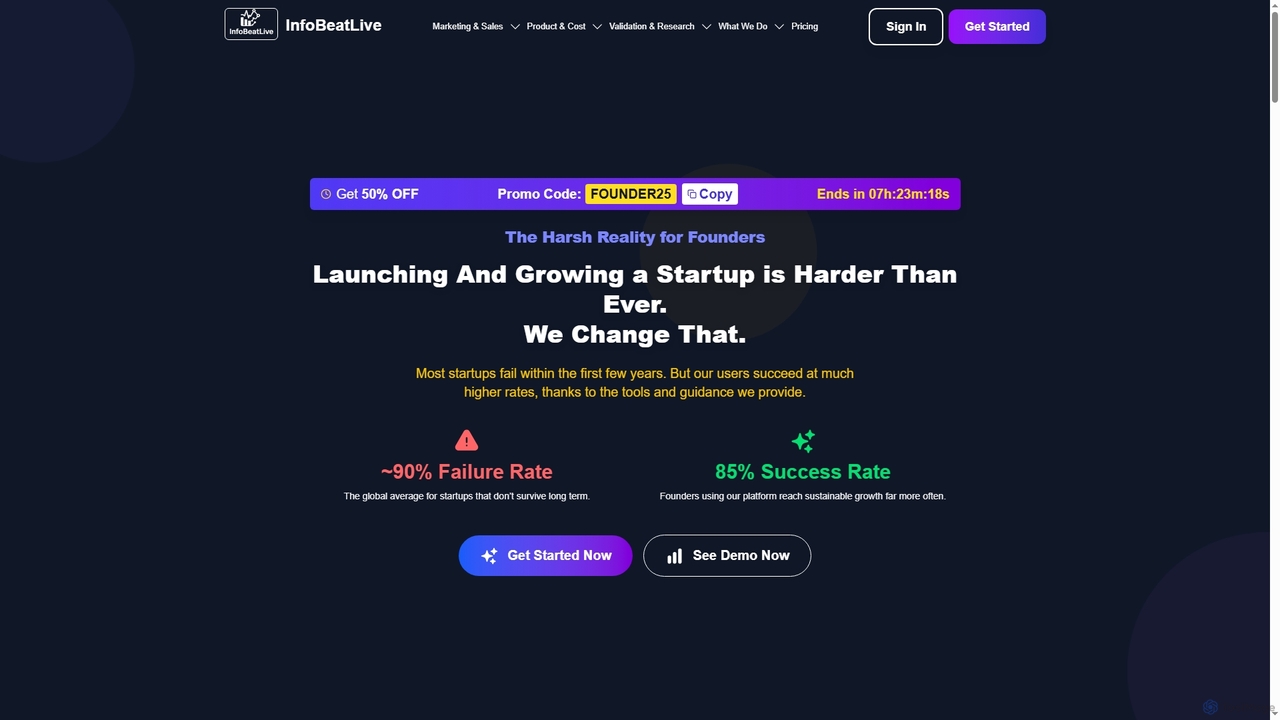
InfoBeatLive is an AI-powered platform designed for founders to accelerate startup growth. It provides comprehensive tools for market …
InfoBeatLive is an AI-powered platform designed for founders to accelerate startup growth. It provides comprehensive tools for market validation, strategic planning, marketing optimization, sales improvement, and financial management, helping businesses achieve sustainable success and outperform competitors.
Reviewradar
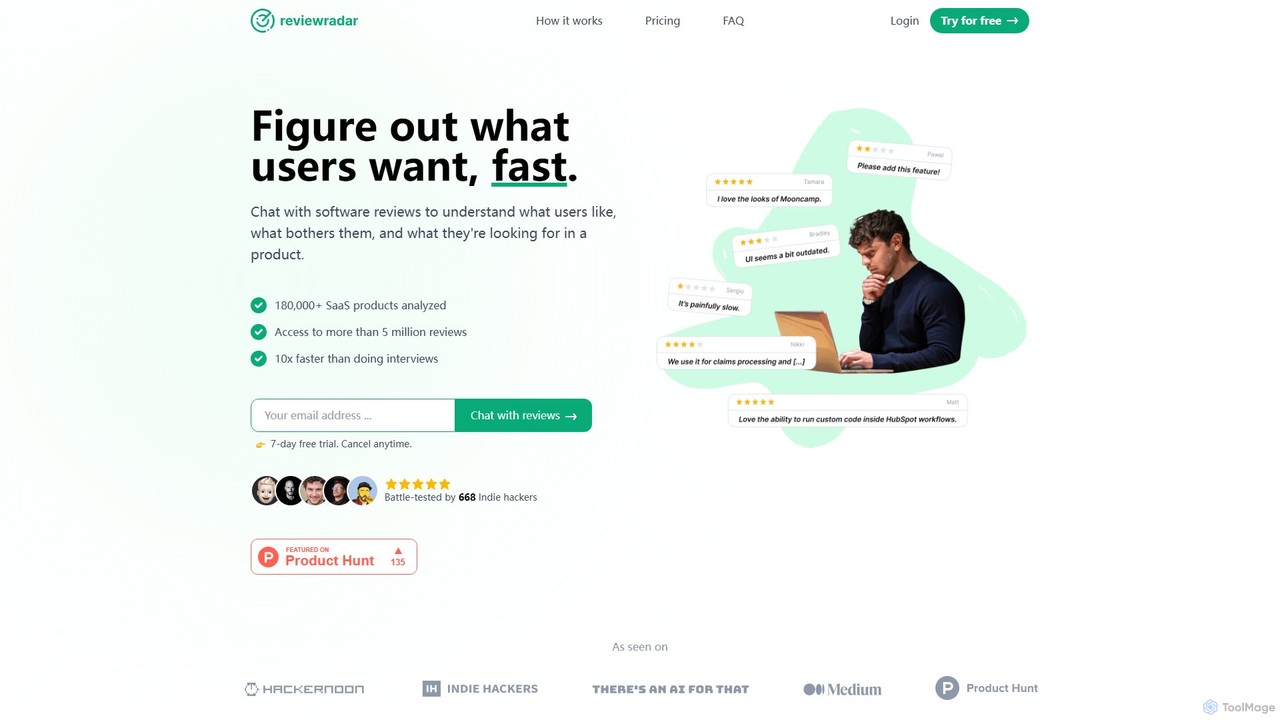
Reviewradar is an AI-powered research tool that analyzes millions of SaaS reviews. It allows users to chat with …
Reviewradar is an AI-powered research tool that analyzes millions of SaaS reviews. It allows users to chat with review data to quickly understand user sentiment, identify likes and dislikes, and uncover what customers are looking for in a product, accelerating market research and product development.
About Competitor Analysis
AI Competitor Analysis tools are specialized platforms that automate the collection, monitoring, and analysis of competitor data. Leveraging machine learning and natural language processing, these tools scan websites, social media, ad campaigns, and product reviews to extract strategic insights. They enable businesses to benchmark performance, identify market gaps, understand competitor strategies, and react quickly to market shifts. Unlike manual research, AI-driven analysis provides real-time, scalable, and deeper insights into pricing, messaging, and customer sentiment.
Core Features
- Website & SEO Tracking: Monitors competitor keyword rankings, backlink profiles, and on-page technical changes.
- Social Media Monitoring: Analyzes competitor content strategy, engagement rates, and audience sentiment across major platforms.
- Ad Campaign Analysis: Deconstructs competitor advertising strategies, including ad copy, visuals, target channels, and estimated spend.
- Product & Pricing Intelligence: Tracks changes in competitor product features, pricing tiers, and customer reviews automatically.
- Content Gap Analysis: Identifies topics and keywords that competitors rank for but you don't, revealing content opportunities.
Use Cases
These tools are widely used by marketing teams to refine campaign strategies and outperform rivals in search and social media. Product managers utilize them to inform feature roadmaps by tracking competitor innovations and customer feedback. E-commerce businesses also rely on them for dynamic pricing and assortment planning based on real-time market data.
How to Choose
When selecting a tool, first consider the data sources it covers; ensure they align with your industry's key channels (e.g., social media, app stores, ad networks). Evaluate the depth of analysis—does it provide actionable insights or just raw data? Also, check for integration capabilities with your existing marketing stack (like CRM or analytics platforms) and assess if the pricing model scales with the number of competitors you need to track.

Competitor AnalysisUse Cases
Optimizing Digital Ad Campaigns
A digital marketing manager for a SaaS company needs to launch a new ad campaign that outperforms key rivals. Using an AI competitor analysis tool, they automatically track competitors' ad copy, visuals, and landing pages across Google Ads and social media. The tool identifies the most effective messaging and highest-traffic keywords used by the competition. This allows the marketing team to bypass testing common ad variations and instead focus on unique value propositions, leading to a 15% higher click-through rate and a more efficient ad spend.
Refining E-commerce Pricing Strategy
An e-commerce store owner selling consumer electronics needs to maintain competitive pricing without manually checking dozens of competitor sites daily. They configure an AI tool to monitor the prices of 10 key products across five competitor websites. The system sends real-time alerts when a competitor launches a promotion or changes a price. This enables the owner to implement a dynamic pricing strategy, automatically adjusting prices to match or beat competitors, which resulted in a 10% increase in sales during a key holiday season.
Identifying Content Gaps for SEO Strategy
A content strategist for a B2B tech blog aims to increase organic traffic by targeting valuable keywords. Using an AI tool, they analyze the content of three top competitors, mapping out all the topics and keywords for which they rank. The tool generates a 'content gap' report, highlighting high-volume keywords that competitors cover but the company's blog does not. Based on this data, the content team prioritizes creating articles for these identified gaps, resulting in three new blog posts ranking on the first page of Google within two months.
Tracking Competitor Product Feature Launches
A product manager for a mobile app needs to stay ahead of market trends. They use an AI tool to monitor competitors' app store descriptions, 'What's New' sections, and customer reviews. The tool's natural language processing detects mentions of new features, bug fixes, and common user complaints about the competition. This provides the product team with early warnings about competitor roadmap directions and allows them to prioritize features that address competitor weaknesses, improving their own app's user retention by 5%.
Monitoring Competitor Social Media Strategy
A social media manager for a fashion brand wants to understand what type of content resonates best with their target audience. An AI tool analyzes the posting frequency, content formats (e.g., reels, stories), and engagement metrics of top competitor accounts. It identifies their most successful posts and analyzes the sentiment of user comments. Based on the insight that user-generated content drove the highest engagement for competitors, the brand adjusts its strategy to feature more customer photos, boosting its own engagement rate by 20%.
Benchmarking Brand Share of Voice
A PR specialist at a large enterprise needs to measure their brand's presence and reputation against key rivals. They use an AI tool that continuously scans news articles, blogs, and social media for mentions of their company and its competitors. The tool calculates the 'Share of Voice' (SOV) for each brand and analyzes the sentiment of the coverage. This provides the PR team with a monthly dashboard showing SOV trends, allowing them to measure the impact of their campaigns and quickly respond to negative sentiment spikes before they escalate.