VCV8
VCV8 is an AI-powered idea validation and strategy platform designed for founders and innovators. It helps users make …
VCV8 is an AI-powered idea validation and strategy platform designed for founders and innovators. It helps users make confident decisions by evaluating business concepts across eight critical dimensions and three analytical stages, grounded in real-world data, before committing significant resources.
UsedBy
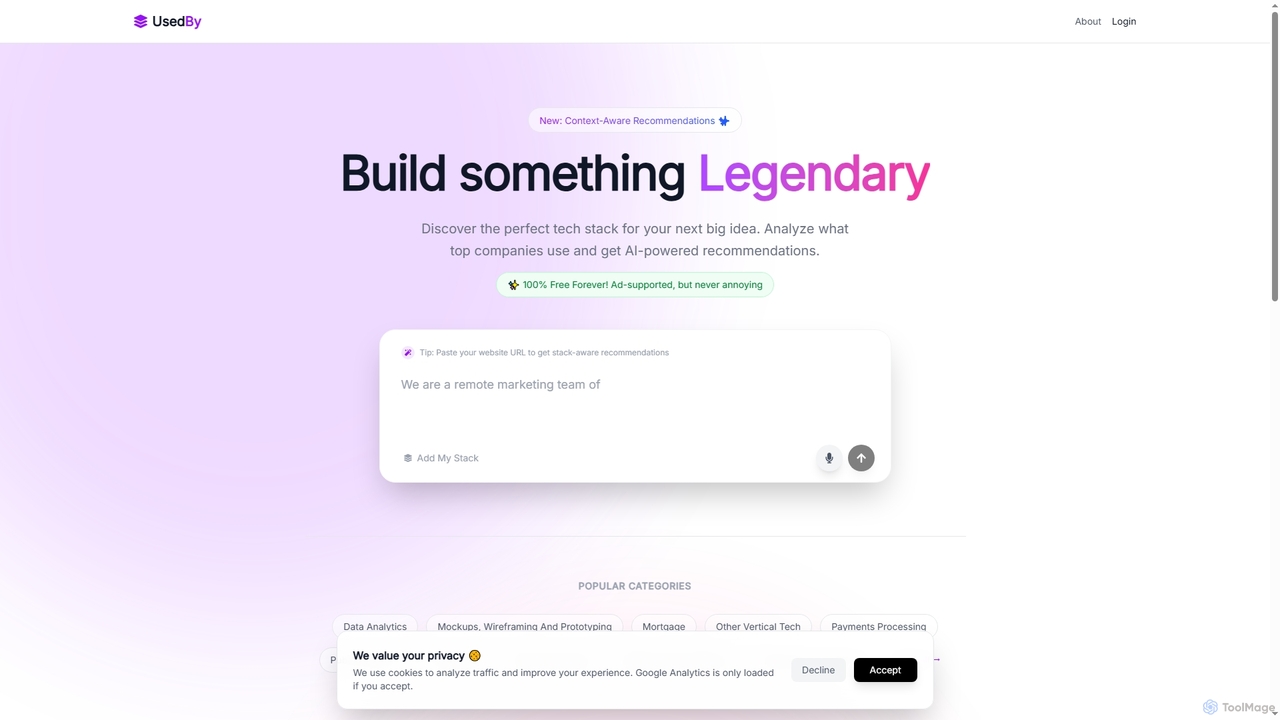
UsedBy is a free, AI-powered platform that helps businesses and startups discover the ideal tech stack by analyzing …
UsedBy is a free, AI-powered platform that helps businesses and startups discover the ideal tech stack by analyzing what top companies use. It provides context-aware recommendations, surfaces hidden gems, and aggregates real-time data from dynamic sources to ensure up-to-date and relevant tool suggestions for any business model or use case.
CraftiqueAI
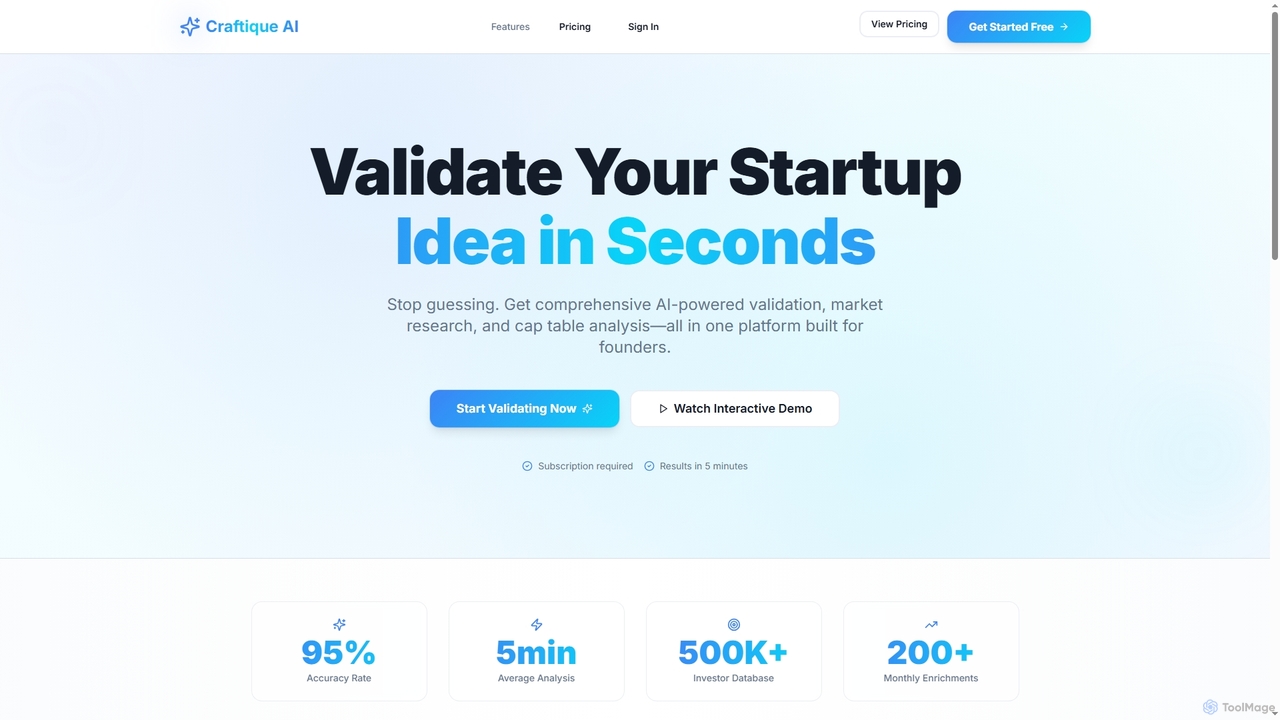
CraftiqueAI is an AI-powered platform designed for founders to validate startup ideas, conduct comprehensive market research, and perform …
CraftiqueAI is an AI-powered platform designed for founders to validate startup ideas, conduct comprehensive market research, and perform cap table analysis efficiently. It offers rapid insights, investor matching, and automated outreach to transform visions into funded startups.
Pixo Labs
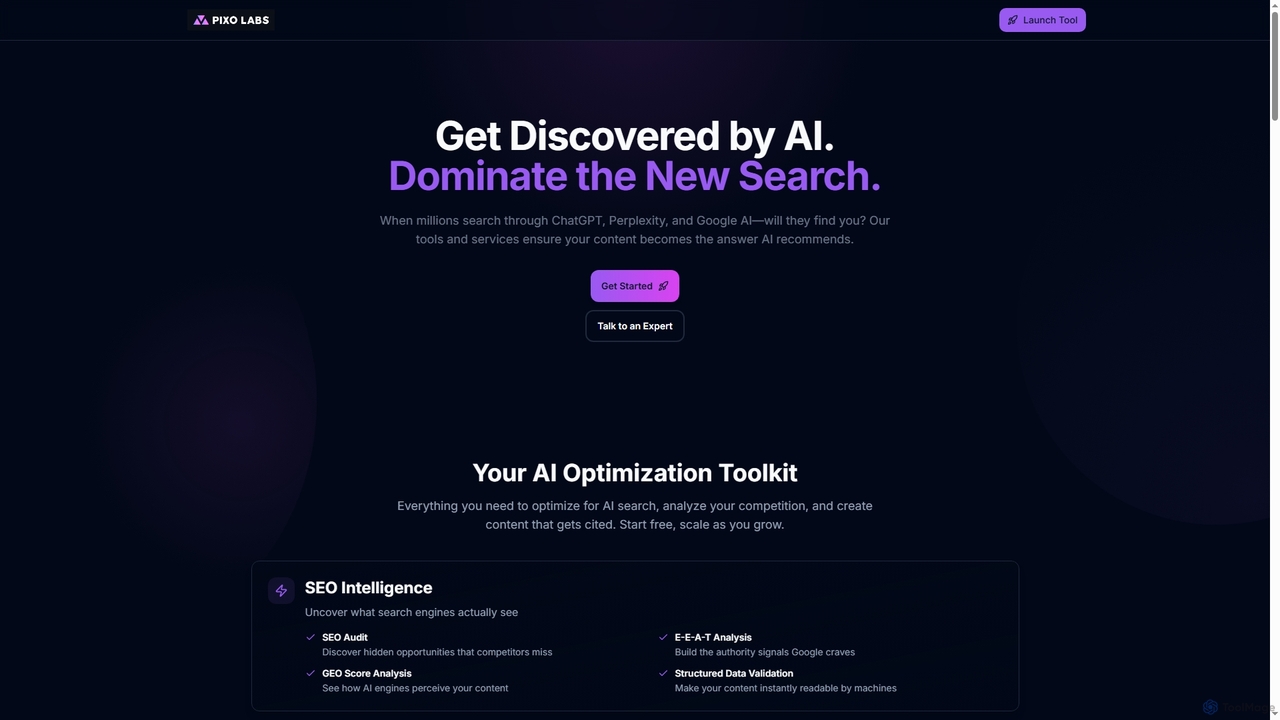
Pixo Labs is an AI-first platform and service designed to help businesses dominate the new era of generative …
Pixo Labs is an AI-first platform and service designed to help businesses dominate the new era of generative search. It provides a comprehensive toolkit for AI search optimization, competitive analysis, and content creation, ensuring content is recommended by AI platforms like ChatGPT, Perplexity, and Google AI.
About Competitive Analysis
Competitive Analysis tools are AI-powered platforms designed to systematically monitor, gather, and analyze data about competitors. These tools utilize data scraping, natural language processing (NLP), and machine learning to track rivals' marketing strategies, product features, pricing changes, and customer sentiment. By automating this intelligence gathering, they provide businesses with actionable insights to identify market opportunities, anticipate competitive moves, and refine their own strategies. This allows for more informed decision-making based on a clear understanding of the competitive landscape.
Core Features
- Automated Competitor Tracking: Continuously monitors competitors' websites, social media, ad campaigns, and news mentions for real-time updates.
- SEO & SEM Analysis: Deconstructs competitors' search engine strategies, revealing their top keywords, backlinks, and ad copy.
- Feature Gap Analysis: Compares your product's features against competitors' to identify strengths, weaknesses, and development opportunities.
- Pricing Intelligence: Tracks competitor pricing, discounts, and promotional activities across various channels.
- Content Strategy Insights: Analyzes competitors' top-performing content to uncover topics and formats that resonate with the target audience.
Use Cases
These tools are essential for product managers, marketing teams, and business strategists. For instance, a marketing manager can use them to discover a competitor's successful ad campaign and adapt their own strategy. A product team can identify a critical feature missing from their offering by comparing it to rivals, helping prioritize their development roadmap.
How to Choose
When selecting a Competitive Analysis tool, consider the scope of data sources it covers (web, social, ads, etc.). Evaluate the depth of its analytical capabilities—does it just present data or offer strategic recommendations? Also, check its integration options with your existing marketing or sales stack and ensure its pricing model aligns with the number of competitors you need to track.

Competitive AnalysisUse Cases
Product Strategy and Roadmap Planning
A Product Manager for a SaaS company uses a competitive analysis tool to continuously track the feature releases and updates of their top three competitors. The tool automatically maps competitor features against their own product, creating a visual gap analysis report. Based on this data, the manager identifies that two competitors have recently launched an integration that is highly requested by their own customers. This insight allows them to prioritize the development of a similar integration in their next quarterly roadmap, ensuring product parity and reducing customer churn.
Optimizing Digital Marketing Campaigns
A digital marketing team for an e-commerce brand wants to improve its paid search performance. They use a competitive analysis tool to analyze the SEM strategies of their main rivals. The tool reveals the top-performing keywords competitors are bidding on, their most effective ad copy, and the landing pages driving the most conversions. The team discovers a set of long-tail keywords with high purchase intent that they had overlooked. They launch a new ad group targeting these keywords with refined ad copy inspired by competitor successes, resulting in a 20% increase in click-through rate and a 15% lower cost-per-acquisition.
Dynamic Pricing for E-commerce
An online electronics retailer uses a competitive analysis tool with pricing intelligence features. The tool is configured to monitor the prices of 50 top-selling products across five key competitor websites in real-time. When a major competitor launches a flash sale on a popular gaming console, the retailer receives an instant alert. Their system automatically adjusts their own price to remain competitive, while ensuring the new price still maintains a minimum profit margin. This dynamic pricing strategy helps them capture sales they would have otherwise lost and maintain a reputation for competitive pricing without manual effort.
SEO Content Gap Analysis
A content strategist for a B2B software company aims to increase organic traffic. Using a competitive analysis tool, they input their domain and the domains of two primary competitors. The tool performs a content gap analysis, generating a list of valuable keywords for which competitors rank on the first page of Google, but their own site does not. The strategist discovers several high-intent keywords related to 'enterprise data security solutions' they hadn't targeted. They then commission a series of in-depth articles and a whitepaper on these topics, which, after a few months, begin to rank and drive qualified leads from organic search.
Sales Enablement and Objection Handling
A sales team lead for a CRM provider wants to better equip their reps for competitive deals. They use an analysis tool to aggregate and analyze customer reviews for their main competitor from sites like G2 and Capterra. The AI categorizes reviews by sentiment and topic, highlighting recurring complaints about the competitor's slow customer support and complex user interface. The lead creates a 'battle card' for the sales team summarizing these weaknesses. When a prospect mentions they are considering the competitor, reps can confidently address these specific pain points, showcasing their own company's superior support and intuitive design.
Market Entry Strategy for Startups
The founder of a new project management startup needs to define their unique value proposition in a crowded market. They use a competitive analysis tool to map the entire landscape, analyzing the positioning, messaging, and target audience of the top 10 players. The analysis reveals that while most tools focus on enterprise clients or developers, there is an underserved niche of small creative agencies. The founder decides to position their product specifically for this audience, tailoring their marketing messaging to address the unique workflow challenges of creative teams. This focused strategy helps them gain early traction by avoiding direct competition with larger, established incumbents.