ToolMage
Sign in

Best 3 Consumer Insights AI tools for Market Research

Popular Consumer Insights AI tools in Market Research include Atypica, iLuk, and Reddit Problem Finder, helping you work more efficiently.

Atypica
Freemium

Atypica

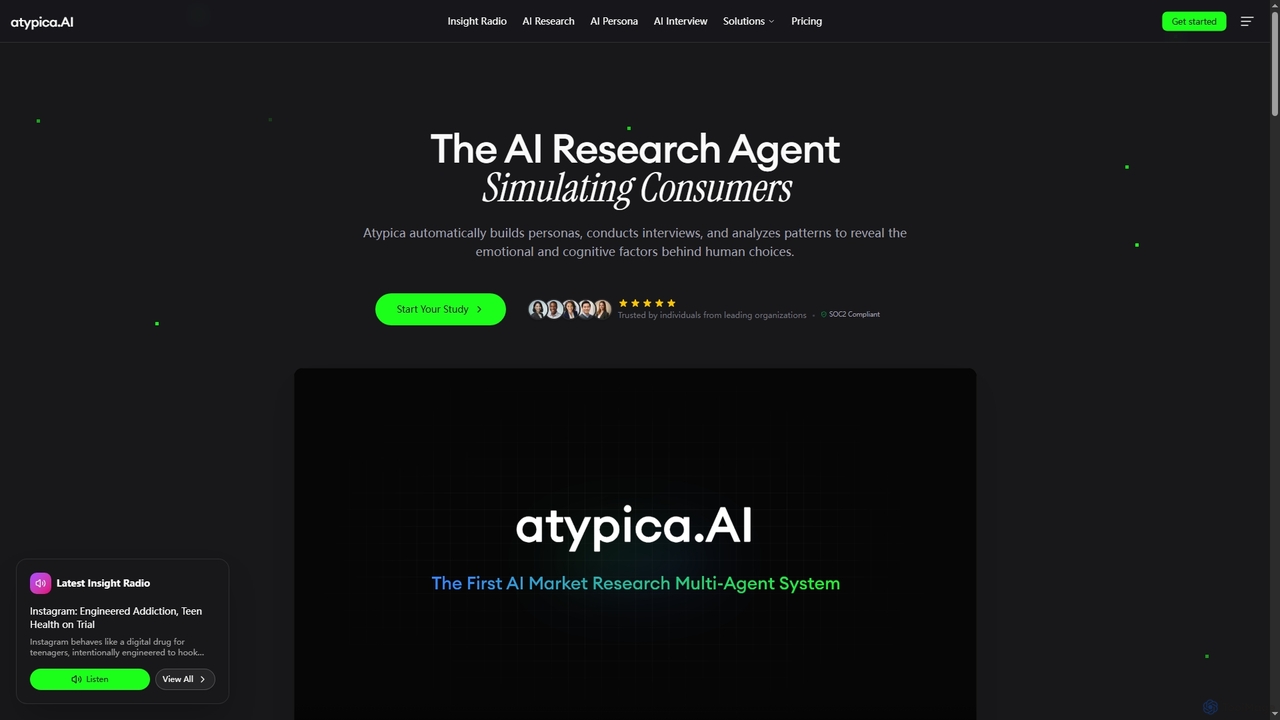
Atypica is an AI research agent designed to simulate consumers, providing deep insights into human decision-making. It automatically builds AI personas, conducts expert interviews, and analyzes behavioral patterns to uncover emotional and cognitive factors influencing choices. This platform helps businesses and individuals conduct market research, test concepts, and strategize with unparalleled speed and depth.

Strategy Planning
Visits 54.4KFavorites 25Likes 35
iLuk
Freemium

iLuk

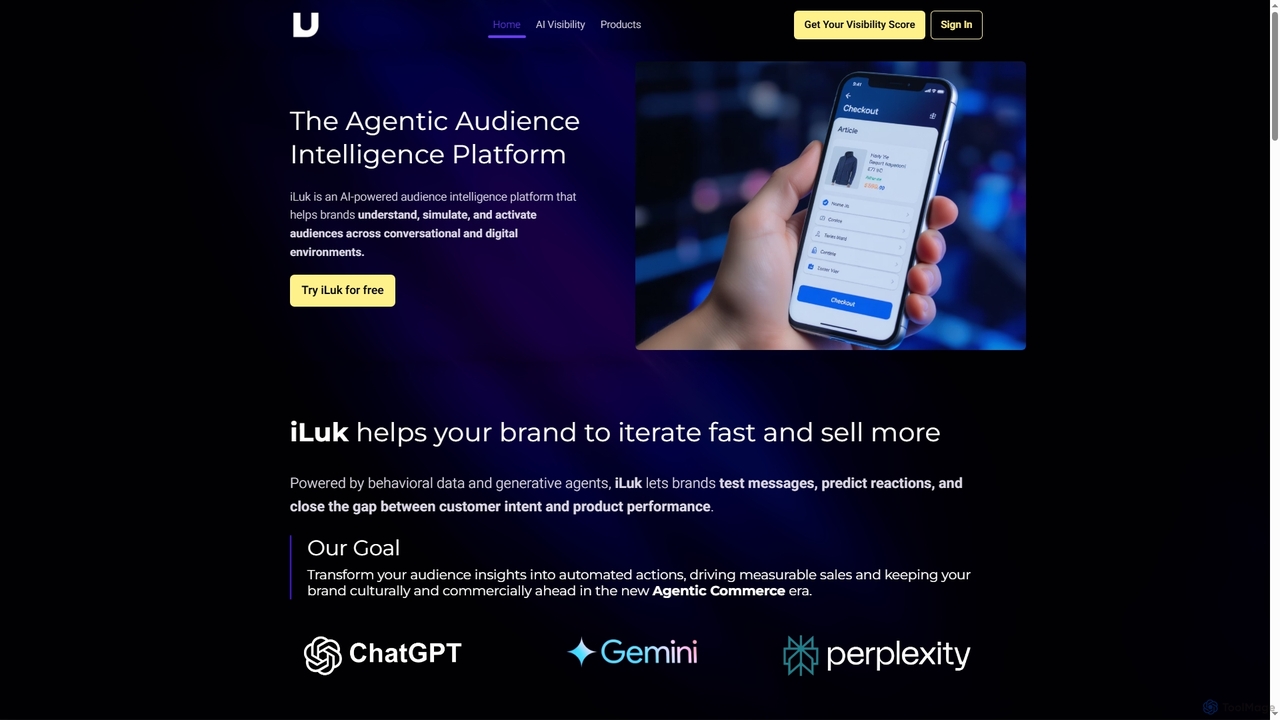
iLuk is an AI-powered audience intelligence platform that helps brands understand, simulate, and activate audiences across conversational and digital environments. It enables rapid iteration, predicts reactions, and optimizes brand visibility within large language models (LLMs) to drive sales in the Agentic Commerce era.

Ai Optimization
Visits 6.8KFavorites 156Likes 173
Reddit Problem Finder
Freemium

Reddit Problem Finder

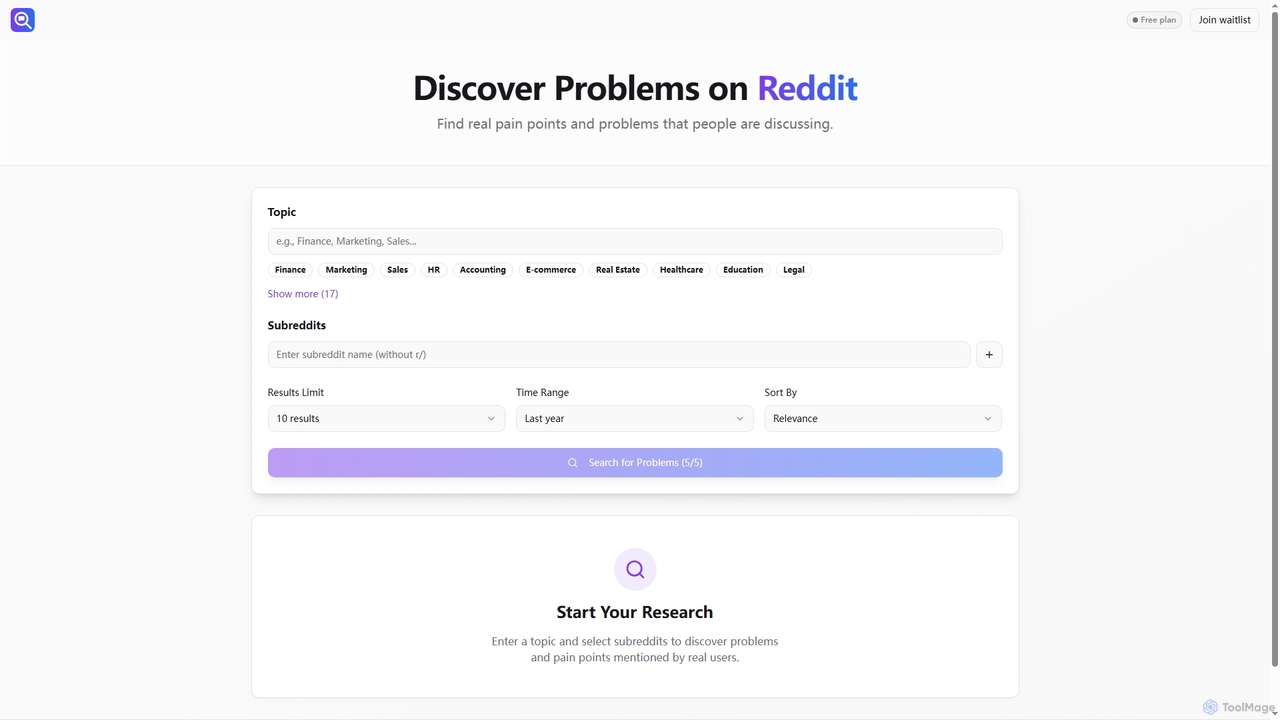
Reddit Problem Finder is an AI-powered tool designed to uncover real pain points and market insights by analyzing discussions on Reddit. It helps users identify problems, trends, and unmet needs across various topics and subreddits, offering valuable data for product development, content creation, and strategic planning.

Idea Generation
Visits 6KFavorites 138Likes 128

About Consumer Insights

Consumer Insights AI tools are specialized platforms that leverage artificial intelligence to analyze vast amounts of consumer data, revealing patterns, preferences, and behaviors. These tools utilize advanced NLP, machine learning, and predictive analytics to extract actionable intelligence from diverse sources like social media, reviews, surveys, and sales data. They empower businesses to understand their target audience deeply, personalize marketing strategies, and make data-driven product development decisions, moving beyond surface-level demographics to uncover underlying motivations.

Core Features

  • Sentiment Analysis: Automatically identifies and quantifies the emotional tone and opinions expressed in text data, such as customer reviews or social media posts.
  • Behavioral Pattern Recognition: Detects recurring consumer actions, purchase journeys, and engagement trends across various touchpoints.
  • Predictive Analytics: Forecasts future consumer trends, purchasing likelihood, and market shifts based on historical data and current signals.
  • Demographic & Psychographic Profiling: Creates detailed profiles of target segments, combining traditional demographics with psychological attributes, values, and lifestyles.
  • Topic Modeling & Trend Detection: Uncovers emerging themes, popular discussions, and nascent trends within unstructured data sets.

Use Cases

Businesses across retail, e-commerce, and service industries utilize these tools to refine their offerings. For instance, a marketing team might analyze social media conversations to identify unmet needs for a new product launch, while a product development team could use feedback analysis to prioritize feature improvements.

How to Choose

When selecting a Consumer Insights AI tool, consider its data integration capabilities (e.g., social media, CRM, survey platforms), the depth and accuracy of its analytical models, the clarity of its visualization dashboards, and its scalability to handle growing data volumes. Evaluate the ease of use for non-technical users and the level of customization offered for specific industry needs.

Consumer Insights use cases

1

Uncovering Untapped Market Needs for Product Development

Product managers and R&D teams can leverage Consumer Insights AI to analyze customer feedback, online reviews, and forum discussions. By identifying recurring pain points or frequently requested features that current products lack, they can pinpoint untapped market needs. This allows for the development of innovative products or services that directly address consumer desires, reducing development risk and increasing market acceptance.

2

Personalizing Marketing Campaigns Based on Behavioral Data

Marketing strategists and campaign managers use these tools to segment audiences not just by demographics, but by actual online behavior, purchase history, and expressed interests. An e-commerce brand, for example, can identify customers who frequently browse sustainable products and tailor email campaigns with eco-friendly recommendations, leading to higher engagement rates and conversion.

3

Enhancing Customer Experience by Analyzing Service Interactions

Customer service managers and CX teams deploy Consumer Insights AI to analyze transcripts of support calls, chat logs, and helpdesk tickets. The AI can identify common issues, sentiment shifts during interactions, and areas where agents might need more training. This enables proactive improvements to service protocols, reduces customer churn, and boosts overall satisfaction.

4

Optimizing Content Strategy with Audience Engagement Insights

Content creators and digital marketers utilize AI-powered insights to understand which topics resonate most with their target audience, what content formats perform best, and when their audience is most active. By analyzing social media engagement, website analytics, and search trends, they can create highly relevant and timely content, driving increased traffic, shares, and brand loyalty.

5

Identifying Emerging Trends and Competitive Gaps

Business strategists and market analysts employ Consumer Insights AI to continuously monitor industry discussions, competitor activities, and broader societal shifts. The tools can detect subtle changes in consumer language or purchasing patterns that signal emerging trends, allowing businesses to be first movers in new markets or to quickly adapt their strategies to exploit competitive gaps.

6

Refining Retail Store Layouts and Product Placement

Retail managers and merchandising teams can use insights derived from in-store sensor data, purchase patterns, and customer journey mapping. By understanding how customers navigate stores, which products are frequently viewed together, or where bottlenecks occur, AI tools help optimize store layouts, product displays, and promotional placements to enhance the shopping experience and maximize sales.

Consumer Insights FAQ

What are Consumer Insights AI tools?

Consumer Insights AI tools are advanced software solutions that use artificial intelligence, including machine learning and natural language processing, to analyze vast datasets of consumer information. They go beyond traditional market research by automatically identifying complex patterns, sentiments, and behavioral drivers from sources like social media, reviews, surveys, and sales data. Their core purpose is to provide businesses with a deep, actionable understanding of their target audience's motivations and preferences.

How do Consumer Insights AI tools differ from traditional market research?

While both aim to understand consumers, Consumer Insights AI tools offer significant advantages in scale, speed, and depth. Traditional market research often relies on manual data collection (surveys, focus groups) and human analysis, which can be time-consuming and limited in scope. AI tools, conversely, can process massive, unstructured datasets in real-time, uncover hidden correlations, and provide predictive analytics, offering more dynamic and granular insights without human bias.

What are the key benefits of using AI for consumer insights?

The primary benefits include enhanced data accuracy and objectivity, as AI can process data without human bias. They offer unparalleled speed in analyzing large volumes of information, enabling real-time trend detection. Businesses gain deeper, more granular insights into consumer motivations and behaviors, leading to more effective personalization, optimized product development, and more targeted marketing campaigns. Ultimately, this translates to improved decision-making and a stronger competitive edge.

Who typically uses Consumer Insights AI tools?

A wide range of professionals and departments utilize these tools. This includes marketing teams for campaign optimization and personalization, product development teams for identifying unmet needs and feature prioritization, customer experience (CX) departments for improving service and satisfaction, and business strategists for market analysis and trend forecasting. Essentially, any role focused on understanding and serving customers benefits from these insights.

What data sources do Consumer Insights AI tools analyze?

These tools are designed to integrate and analyze data from a multitude of sources. Common inputs include social media posts and comments, online reviews (e.g., e-commerce, app stores), customer support interactions (chat logs, call transcripts), survey responses, website analytics, search engine queries, sales transaction data, and even public demographic information. The ability to synthesize insights from these diverse sources is a key strength.