ToolMage
Sign in

Best 3 Website Optimization AI tools for Marketing

Popular Website Optimization AI tools in Marketing include Ryte, Commented, and Frase, helping you work more efficiently.

Frase
Paid

Frase

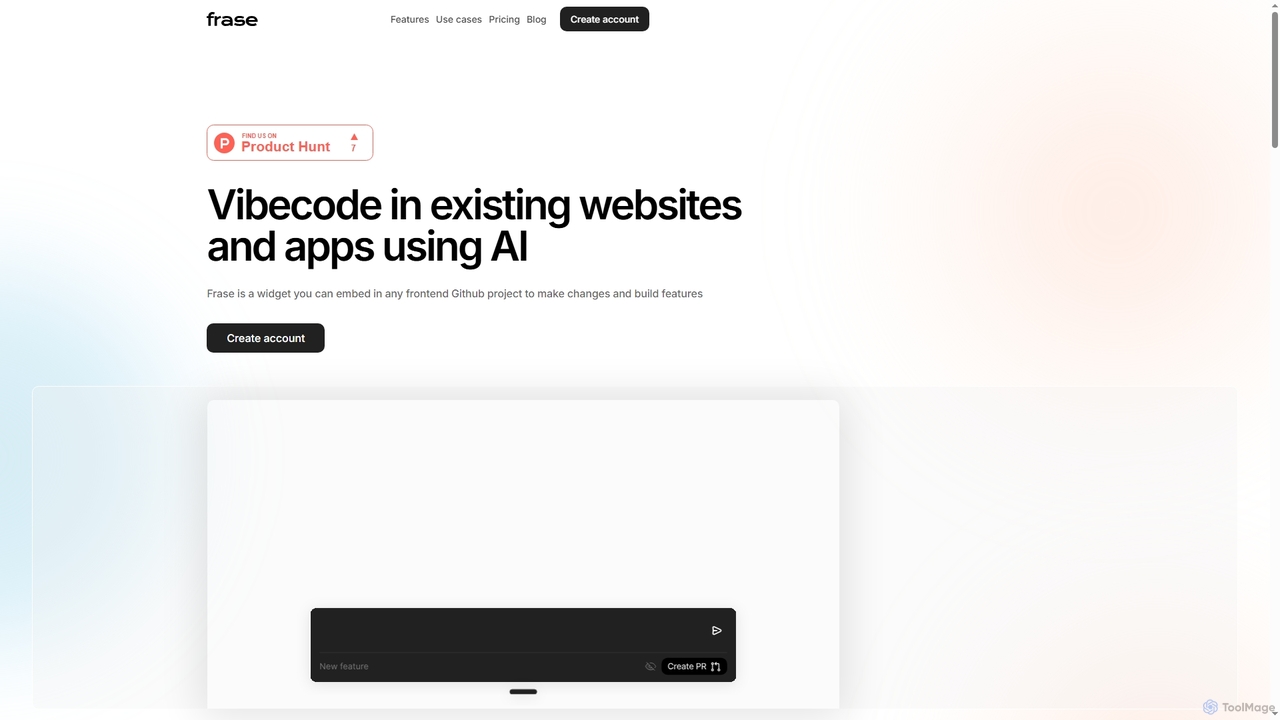
Frase is an AI-powered widget designed for marketing teams, product managers, and non-technical founders to edit existing websites and build features without writing code. It allows real-time preview of changes, integrates with GitHub, and streamlines frontend development by enabling direct, natural language modifications.

Ui Editing
Visits 7.4KFavorites 184Likes 176
Ryte
Paid

Ryte

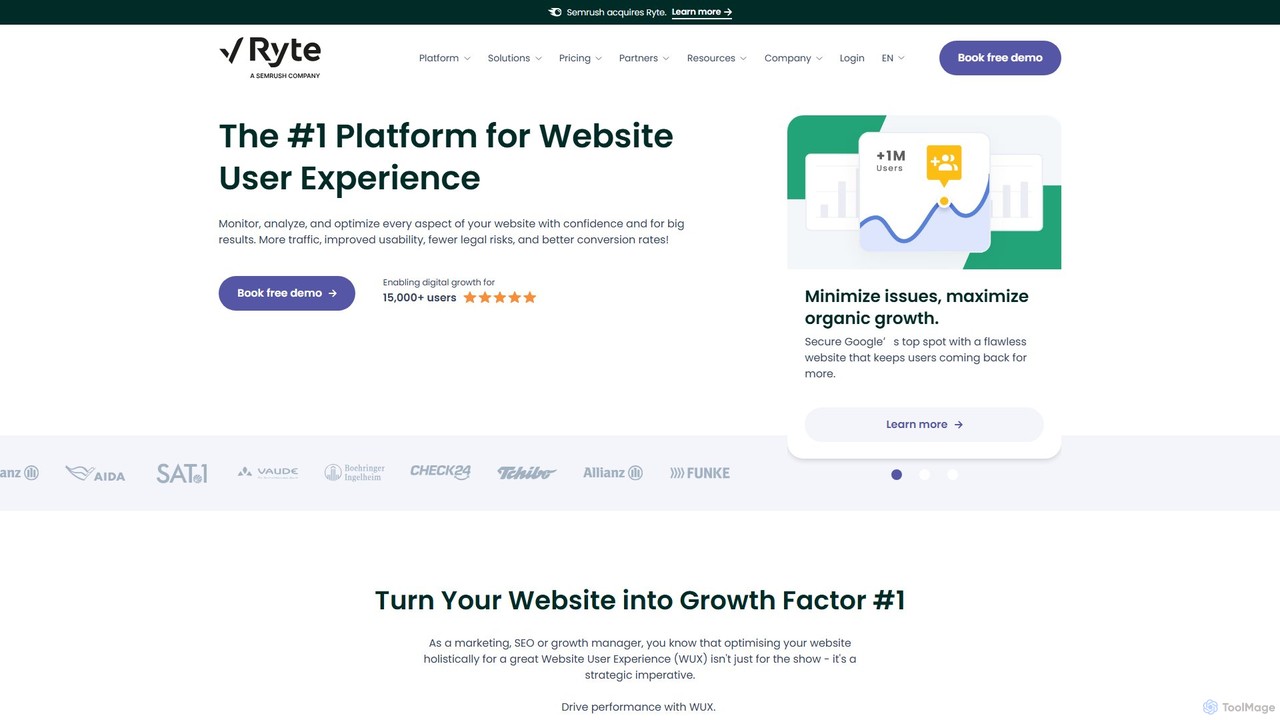
Ryte is a comprehensive Website User Experience (WUX) platform, now part of Semrush, designed to help businesses monitor, analyze, and optimize their websites. It focuses on key pillars like SEO, Web Performance, and Compliance. By providing data-driven insights and automated recommendations, Ryte enables marketing and SEO managers to increase organic traffic, improve user engagement, and boost conversion rates for sustainable digital growth.

Website Optimization
Visits 24.9KFavorites 149Likes 134
Commented
Freemium

Commented

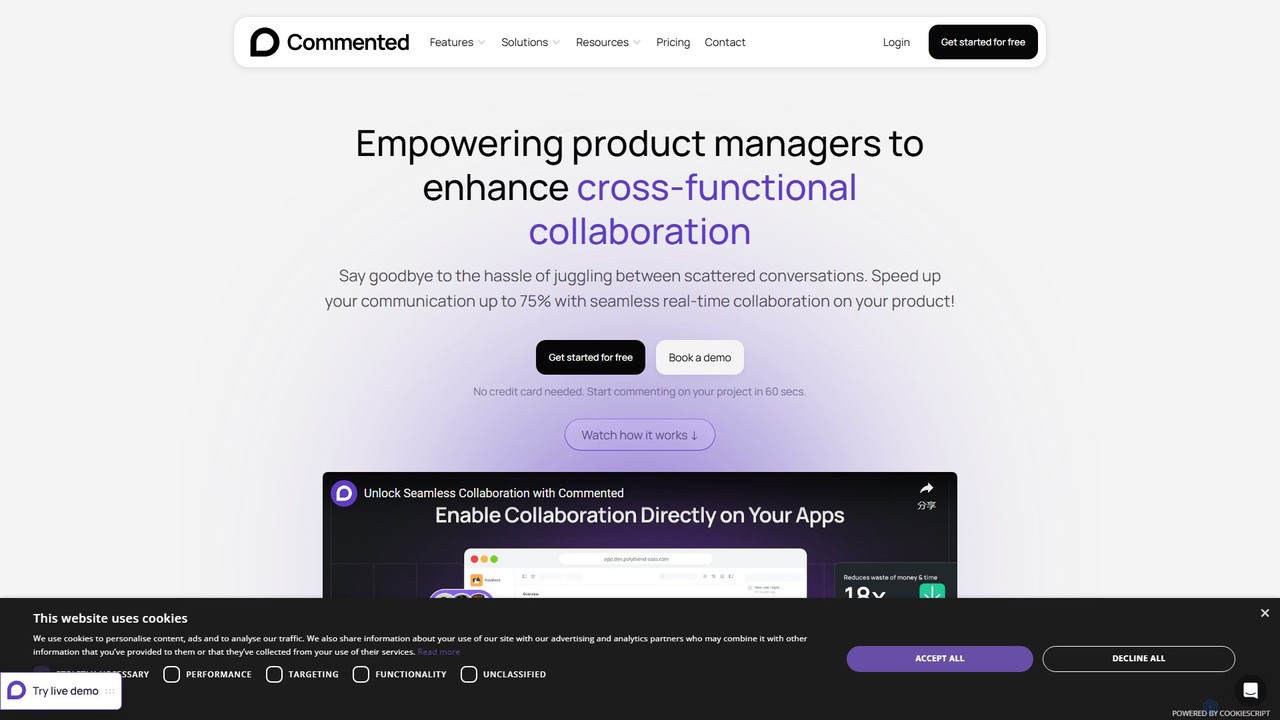
Commented is a visual collaboration and feedback tool designed for product teams, developers, and marketers. It allows users to leave precise, contextual comments and annotations directly on live websites, web apps, and mobile applications, streamlining the feedback process and accelerating development cycles by up to 75%.

Bug Tracking
Visits 14.4KFavorites 140Likes 131

About Website Optimization

AI Website Optimization tools are a class of software that use machine learning and data analysis to improve website performance, user experience, and conversion rates. These tools analyze user behavior, automate A/B testing, and provide data-driven recommendations for enhancing elements like layout, copy, and calls-to-action. By identifying friction points and personalizing content, they help businesses increase key metrics such as engagement, lead generation, and sales without manual data analysis. This approach allows for more rapid and effective optimization cycles compared to traditional methods.

Core Features

  • Automated A/B & Multivariate Testing: Uses AI to automatically generate and test variations of headlines, images, and layouts to find the highest-performing combination.
  • Behavioral Analysis & Heatmaps: Analyzes user clicks, scrolls, and navigation patterns to generate visual heatmaps and identify areas of high engagement or user friction.
  • AI-Powered Personalization: Delivers dynamic content, product recommendations, and offers tailored to individual visitors based on their real-time behavior and profile data.
  • Predictive CRO Insights: Leverages machine learning to analyze user journeys, predict drop-off points, and provide actionable recommendations to improve conversion funnels.
  • Automated SEO Audits: Scans websites to identify technical SEO issues, content gaps, and keyword opportunities to improve search engine rankings.

Use Cases

These tools are widely used by digital marketers, e-commerce managers, CRO (Conversion Rate Optimization) specialists, and UX/UI designers. They are particularly valuable for e-commerce sites aiming to reduce cart abandonment, SaaS companies looking to improve user onboarding, and lead generation websites seeking to maximize form submissions.

How to Choose

When selecting an AI Website Optimization tool, consider its integration capabilities with your existing platforms like Google Analytics, Shopify, or WordPress. Evaluate whether you need an all-in-one solution or a specialized tool for A/B testing or personalization. Also, assess the technical requirements—some tools offer no-code visual editors for marketers, while others require developer involvement for advanced implementation.

Website Optimization use cases

1

Optimizing E-commerce Checkout Funnels

An e-commerce manager notices a high cart abandonment rate on their website. Using an AI website optimization tool, they analyze session recordings and heatmaps of the checkout process. The AI identifies that users hesitate most on the shipping information page. The manager then uses the tool's A/B testing feature to test different layouts for this page, including a single-page checkout versus a multi-step process. The AI automatically directs more traffic to the better-performing version, resulting in a 15% reduction in cart abandonment and a significant lift in completed sales.

2

Personalizing the SaaS Onboarding Experience

A product marketer for a SaaS company wants to increase user activation rates. They implement an AI personalization tool that tracks user actions during the free trial. Based on which features a user engages with first, the tool dynamically changes the in-app tutorial messages and highlights relevant advanced features. For example, a user focusing on reporting features will see tips about data exporting, while a user exploring integrations will get prompts to connect their other software. This tailored guidance helps users discover value faster, leading to a 20% increase in trial-to-paid conversions.

3

Improving Blog Post Engagement with Heatmaps

A content strategist notices that a high-traffic blog post has a low conversion rate for its call-to-action (CTA). By using an AI optimization tool's heatmap feature, they discover that 80% of readers don't scroll down far enough to see the CTA. The scroll map confirms this finding. Based on this data, they move the CTA to a higher position within the article and rephrase it based on AI-generated copy suggestions. A follow-up analysis shows that the visibility of the CTA increased to 90%, and clicks on it tripled, significantly boosting lead generation from the content.

4

Automating SEO Audits for a Large Website

An SEO specialist manages a corporate website with over 5,000 pages. Performing manual technical audits is impractical. They use an AI website optimization tool to schedule weekly automated crawls. The tool scans for issues like broken links, slow page load times, duplicate content, and missing meta descriptions. It generates a prioritized report, highlighting critical errors that impact rankings the most. This allows the SEO specialist to focus their time on fixing high-impact issues rather than finding them, saving over 20 hours of manual work each month and leading to a steady improvement in the site's overall SEO health score.

5

A/B Testing Landing Page Headlines for Ad Campaigns

A PPC manager is running a high-budget ad campaign but the landing page conversion rate is low. Using an AI optimization tool, they test five different headlines simultaneously. Instead of a traditional 50/50 split, the tool uses a multi-armed bandit algorithm to dynamically allocate more traffic to the headlines that are performing better in real-time. Within 48 hours, the AI identifies a clear winning headline that resonates most with the ad traffic. By automatically shifting 90% of traffic to this winner, the campaign's overall conversion rate increases by 35%, maximizing the return on ad spend.

6

Enhancing User Experience with Dynamic Content

A digital marketer for a travel website wants to provide a more relevant experience for visitors. They use an AI optimization tool to implement dynamic content on their homepage. The tool detects a visitor's location via their IP address. Visitors from cold climates are shown banners for tropical beach vacations, while visitors from warm regions see ads for mountain ski trips. This simple personalization makes the homepage instantly more relevant to each user segment. As a result, the website's bounce rate decreases by 25%, and the click-through rate on the homepage banners doubles.

Website Optimization FAQ

What are AI Website Optimization tools?

AI Website Optimization tools are software platforms that use artificial intelligence, particularly machine learning, to analyze website data and user behavior. Their primary function is to identify opportunities for improvement and automate the process of testing changes to increase conversions, engagement, and overall performance. Unlike traditional analytics tools that only report data, these tools provide predictive insights, suggest specific changes (like new headlines or button colors), and can automatically run experiments to validate their effectiveness.

How to choose the right AI Website Optimization tool?

To choose the right tool, consider these factors:

  • Primary Goal: Determine if your main need is A/B testing, personalization, SEO, or user behavior analysis. Some tools specialize, while others are all-in-one platforms.
  • Integration: Ensure the tool integrates seamlessly with your existing technology stack, such as your CMS (e.g., WordPress, Shopify), analytics platform (e.g., Google Analytics), and marketing tools.
  • Technical Requirements: Assess whether the tool requires coding knowledge or offers a user-friendly visual editor that marketers can use without developer assistance.
  • Scalability and Pricing: Evaluate the pricing model (often based on traffic volume or features) and ensure it can scale with your business growth.
What's the difference between AI Website Optimization and traditional A/B testing tools?

The key difference lies in automation and intelligence. Traditional A/B testing tools require you to manually create variations, define audience segments, and interpret statistical results. AI Website Optimization tools automate many of these processes. They can suggest what to test, use algorithms like multi-armed bandits to dynamically send more traffic to winning variations during a test (saving time and conversions), and analyze user behavior data (like heatmaps) to provide deeper context behind the test results. In essence, AI tools are more proactive and data-driven in their recommendations, while traditional tools are more reactive and manual.

What are the main features of AI Website Optimization tools?

Most AI Website Optimization tools include a combination of the following core features:

  • Automated A/B & Multivariate Testing: For scientifically comparing different versions of a webpage to see which one performs better.
  • AI-Powered Analytics: This includes heatmaps, scroll maps, and session replays to visually understand how users interact with your site.
  • Real-time Personalization: The ability to show different content, offers, or experiences to different user segments based on their behavior, location, or other data.
  • Predictive Insights & Recommendations: AI algorithms that analyze your data to suggest high-impact optimization opportunities.
  • Automated SEO Audits: Tools that crawl your site to find and report on technical SEO issues, content gaps, and other ranking factors.
Who should use AI Website Optimization tools?

AI Website Optimization tools are valuable for a wide range of professionals and businesses. Key users include:

  • Digital Marketers: To improve campaign landing pages, increase lead generation, and maximize ROI.
  • E-commerce Managers: To reduce cart abandonment, increase average order value, and personalize product recommendations.
  • CRO Specialists: To run more sophisticated and rapid experiments to systematically improve conversion rates across the entire user journey.
  • UX/UI Designers: To gain data-backed insights into user behavior to inform design decisions and identify usability issues.
  • Product Managers: To optimize user onboarding flows, feature adoption, and overall user engagement within a web application.