SingleAPI
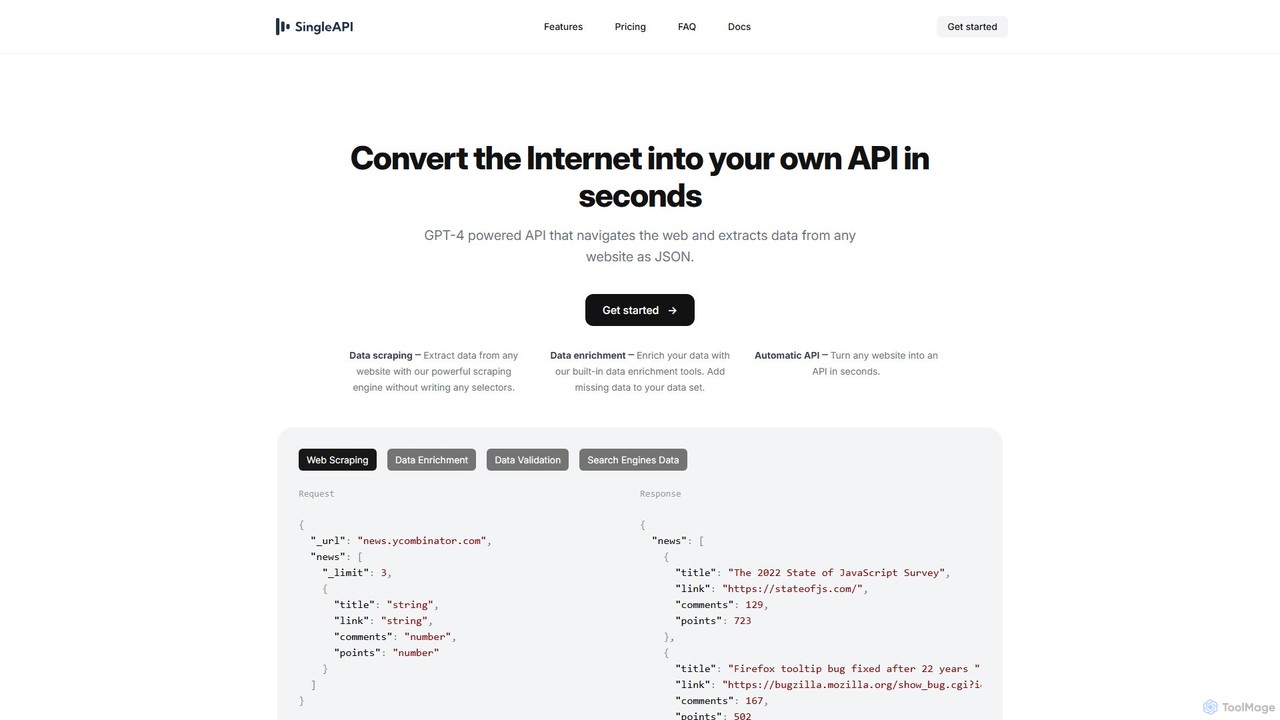
SingleAPI is a GPT-4 powered tool that instantly converts any website into a structured JSON API. It simplifies …
SingleAPI is a GPT-4 powered tool that instantly converts any website into a structured JSON API. It simplifies web scraping, data extraction, and data enrichment without writing any code or selectors, allowing users to effortlessly access web data for various applications.
About Data Extraction
Data Extraction tools are AI-powered solutions designed to automatically identify, collect, and structure information from various sources. Leveraging advanced machine learning and natural language processing, these tools parse unstructured or semi-structured data, transforming it into usable formats. They are essential for automating data collection, populating databases, and feeding analytics systems, significantly reducing manual effort and accelerating data-driven decision-making, especially within no-code and low-code environments.
Core Features
- Automated Web Scraping: Systematically extracts data from websites based on predefined rules or AI-driven recognition.
- Document Parsing & OCR: Automatically extracts text and data from various document types, including PDFs, images, and scanned files, using Optical Character Recognition.
- Structured Data Output: Converts extracted information into structured formats like CSV, JSON, or Excel for easy integration.
- API & Integration Capabilities: Offers seamless connection with databases, CRM systems, analytics platforms, and other business applications.
- Data Cleaning & Validation: Includes features to clean, normalize, and validate extracted data, ensuring accuracy and consistency.
Use Cases
Data Extraction tools are widely used across industries for tasks requiring automated information gathering. Businesses utilize them for competitive analysis by monitoring competitor pricing and product information. Researchers employ them to collect large datasets from academic papers or public records. Marketing teams leverage them for lead generation and content aggregation, while financial analysts extract key figures from public reports for market insights.
How to Choose
When selecting a Data Extraction tool, prioritize its compatibility with your data sources (web, documents, APIs) and the accuracy of its extraction capabilities. Consider the ease of use, especially for no-code users, and the flexibility of its output formats. Scalability, integration options with your existing tech stack, and compliance with data privacy regulations (like GDPR) are also crucial factors for long-term effectiveness.

Data ExtractionUse Cases
Automated Competitor Price Monitoring
E-commerce businesses use data extraction tools to regularly scrape competitor websites, collecting pricing, product details, and stock levels to inform dynamic pricing strategies and market positioning. This automation saves countless hours of manual data collection, allowing businesses to react quickly to market changes and maintain a competitive edge.
Lead Generation from Public Directories
Sales and marketing teams leverage these tools to extract contact information, company details, and industry classifications from online business directories or professional networking sites, building targeted lead lists efficiently. This streamlines the prospecting process, allowing teams to focus on engagement rather than manual data entry.
Invoice and Receipt Data Capture
Finance departments or small businesses automate the extraction of key information like vendor names, amounts, dates, and line items from scanned invoices or digital receipts, streamlining expense management and accounting processes. This significantly reduces errors and processing time compared to manual data entry, improving financial accuracy.
Market Research & Sentiment Analysis
Researchers and brand strategists extract customer reviews, social media comments, and news articles from various online platforms to analyze public sentiment, identify emerging trends, and gather insights into product perception. This provides a comprehensive view of market dynamics and consumer opinions, informing product development and marketing campaigns.
Real Estate Listing Aggregation
Real estate professionals or prop-tech companies use data extraction to collect property details, prices, images, and agent contacts from multiple listing service (MLS) websites, creating comprehensive databases for analysis and client matching. This enables faster market analysis, trend identification, and more efficient property matching for clients.
Regulatory Compliance Data Collection
Legal and compliance teams extract specific clauses, dates, and entities from legal documents, contracts, or regulatory filings to ensure adherence to standards, track changes, and perform risk assessments efficiently. This automation helps maintain regulatory compliance and reduces the manual burden of reviewing vast amounts of legal text.