Slingshot
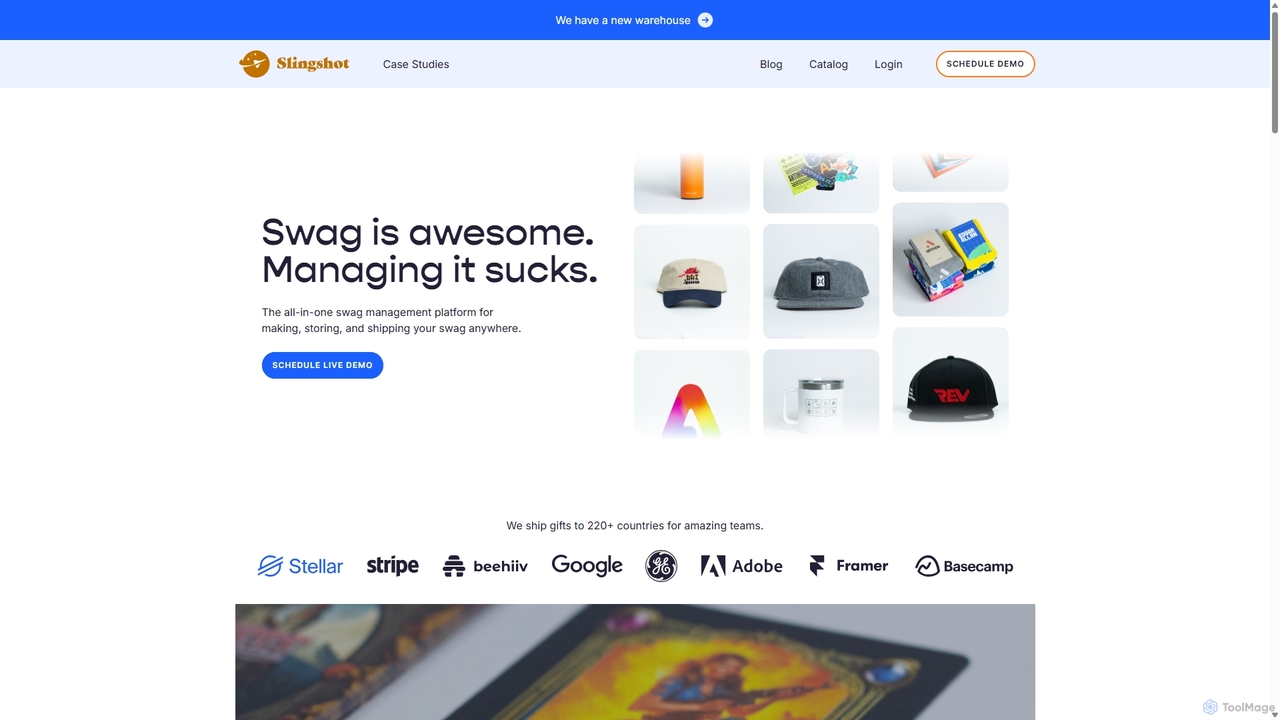
Slingshot is an all-in-one swag management platform that handles the entire lifecycle of branded merchandise. It enables companies …
Slingshot is an all-in-one swag management platform that handles the entire lifecycle of branded merchandise. It enables companies to design, store, and ship custom swag to over 220 countries, eliminating logistical headaches. Ideal for marketing campaigns, employee engagement, and event management.
About Logistics
Logistics AI tools are a category of AI-powered solutions designed to optimize, automate, and enhance various aspects of the supply chain and goods movement, forming a crucial part of broader business operations. These tools leverage machine learning, predictive analytics, and automation to process vast amounts of data, identify patterns, and make intelligent decisions. Their primary value lies in improving efficiency, reducing costs, and increasing the accuracy and responsiveness of logistics processes, from warehousing to last-mile delivery.
Core Features
- Demand Forecasting: Predicts future product demand with high accuracy to optimize inventory levels and production planning.
- Route Optimization: Calculates the most efficient delivery routes considering traffic, weather, and delivery windows, minimizing fuel costs and transit times.
- Warehouse Automation: Utilizes AI-driven robotics and vision systems for automated sorting, picking, and inventory tracking within warehouses.
- Inventory Management: Dynamically adjusts stock levels, predicts potential shortages or overstocks, and automates reordering processes.
- Freight Management: Optimizes cargo loading, carrier selection, and freight scheduling to reduce shipping costs and improve delivery reliability.
Applicable Scenarios
Logistics AI tools are indispensable for e-commerce businesses managing complex delivery networks, manufacturing companies optimizing their raw material supply and finished goods distribution, and third-party logistics (3PL) providers seeking to enhance service delivery and operational efficiency. They are also vital for retail chains aiming to streamline inventory across multiple stores and distribution centers.
How to Choose
When selecting Logistics AI tools, consider the specific operational challenges you aim to solve, such as route efficiency or inventory accuracy. Evaluate the tool's integration capabilities with existing ERP or WMS systems, its scalability to handle growing data volumes, and the level of customization offered. Assess the vendor's data security protocols and the clarity of their pricing model, ensuring it aligns with your budget and expected ROI.

LogisticsUse Cases
Optimizing Last-Mile Delivery Routes
A courier company uses AI to analyze real-time traffic, weather, and delivery addresses, dynamically adjusting driver routes. This minimizes fuel consumption, reduces delivery times, and increases the number of successful deliveries per day, significantly enhancing customer satisfaction and operational cost-effectiveness.
Predictive Inventory Management for Retail
A large retail chain employs AI to forecast product demand across hundreds of stores based on historical sales, seasonal trends, and promotional activities. This enables precise inventory stocking, reducing instances of overstocking (and associated holding costs) and understocking (preventing lost sales), ensuring optimal product availability.
Automated Warehouse Operations
A manufacturing firm integrates AI-powered robots and computer vision systems into its warehouse. These systems automate tasks like sorting incoming goods, picking items for orders, and conducting continuous inventory audits. This drastically reduces manual labor costs, improves picking accuracy, and accelerates order fulfillment cycles.
Global Supply Chain Risk Assessment
A multinational corporation utilizes AI to monitor global events, geopolitical shifts, and weather patterns, assessing potential disruptions to its supply chain. The AI identifies alternative suppliers or routes in real-time, allowing the company to proactively mitigate risks and maintain supply chain resilience during unforeseen crises.
Freight Cost Reduction through Load Optimization
A logistics provider uses AI algorithms to optimize cargo loading within trucks and containers, maximizing space utilization. The AI also identifies the most cost-effective carriers and shipping methods for various routes, leading to substantial savings on freight expenses while ensuring timely delivery.
Streamlining Customs and Documentation
An import/export business leverages AI to automate the generation and verification of customs declarations, shipping manifests, and other regulatory documents. The AI identifies potential errors or missing information, speeding up clearance processes, reducing delays, and ensuring compliance with international trade regulations.