UpKeep
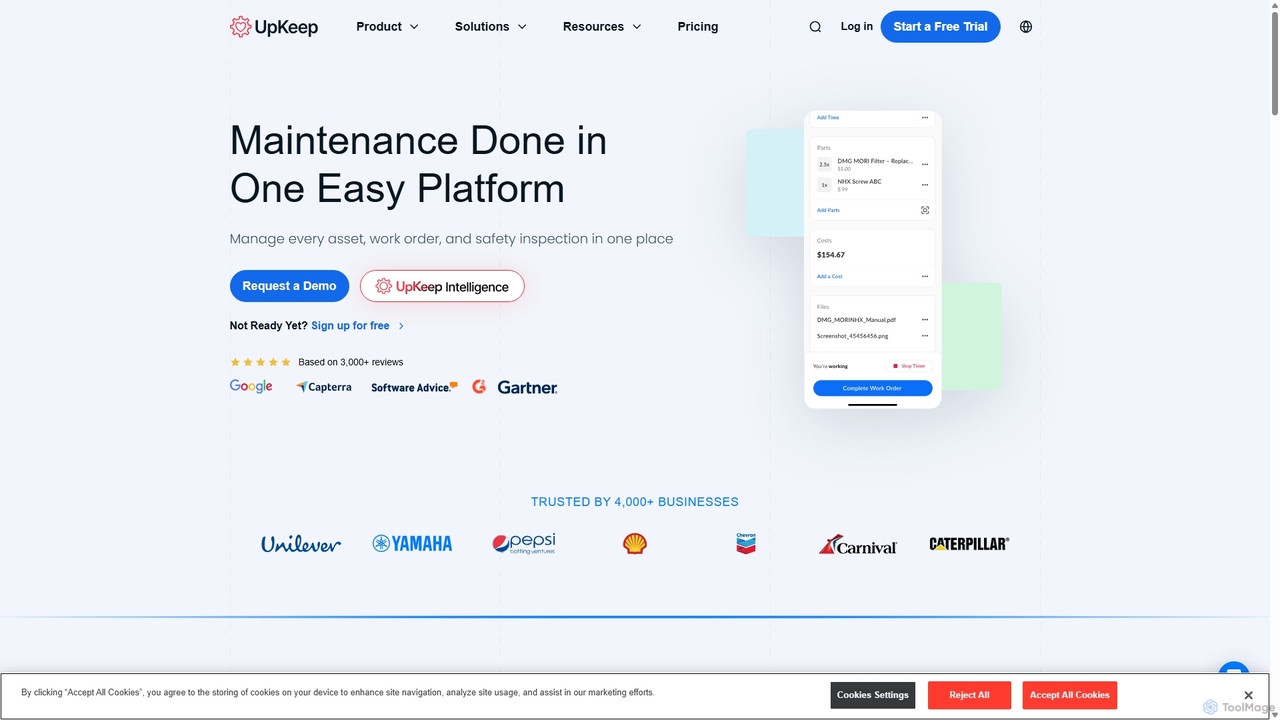
UpKeep is an AI-powered, mobile-first Asset Operations Management platform. It combines a CMMS, EAM, and IIoT software to …
UpKeep is an AI-powered, mobile-first Asset Operations Management platform. It combines a CMMS, EAM, and IIoT software to help maintenance, reliability, and operations teams manage work orders, assets, and inventory. The platform is designed to streamline operations, reduce downtime, and increase productivity by centralizing data and providing actionable insights.
About Maintenance Management
Maintenance Management AI tools are a category of AI-powered solutions designed to optimize the planning, execution, and monitoring of maintenance activities across various assets and infrastructures. These tools leverage machine learning, sensor data, and predictive analytics to anticipate equipment failures, automate scheduling, and streamline operational workflows. By transforming reactive maintenance into proactive strategies, they significantly enhance asset reliability, reduce downtime, and improve overall operational efficiency within the broader context of operations management.
Core Features
- Predictive Analytics: Analyzes sensor data and historical records to forecast potential equipment failures before they occur.
- Automated Scheduling: Generates optimized maintenance schedules based on predicted needs, resource availability, and operational constraints.
- Anomaly Detection: Identifies unusual patterns in operational data that may indicate impending issues or inefficiencies.
- Resource Optimization: Manages spare parts inventory, technician allocation, and budget to maximize efficiency and minimize costs.
- Performance Monitoring: Provides real-time insights into asset health and maintenance KPIs through dashboards and reports.
Applicable Scenarios
These tools are crucial for industries relying on heavy machinery and complex infrastructure, such as manufacturing plants, energy utilities, and transportation companies. Facility managers use them to maintain building systems, while logistics firms apply them to fleet management, ensuring continuous operation and extending asset lifespans.
How to Choose
When selecting an AI maintenance management tool, consider its integration capabilities with existing ERP or CMMS systems, the types of data sources it supports (e.g., IoT sensors, historical logs), and its scalability to accommodate future asset growth. Evaluate the accuracy of its predictive models, the flexibility of its scheduling features, and the clarity of its reporting and alert mechanisms to ensure it aligns with specific operational needs and technical expertise.

Maintenance ManagementUse Cases
Predictive Maintenance for Manufacturing Equipment
A manufacturing plant manager utilizes AI maintenance management tools to monitor critical production machinery. By analyzing real-time sensor data (vibration, temperature, pressure) and historical performance, the AI predicts potential component failures days or weeks in advance. This enables the manager to schedule maintenance proactively during planned downtime, preventing unexpected breakdowns, reducing costly production interruptions, and extending the lifespan of high-value assets.
Optimizing Facility HVAC System Maintenance
A commercial building facility manager employs AI to manage the maintenance of complex HVAC systems. The AI analyzes energy consumption patterns, environmental sensor data, and usage logs to identify inefficiencies or impending issues. It then automatically generates optimized maintenance schedules, ensuring systems run at peak efficiency, reducing energy costs, improving occupant comfort, and minimizing the need for emergency repairs.
Real-time Fleet Vehicle Health Monitoring
A logistics company uses AI maintenance management to monitor its fleet of delivery vehicles. Telematics data, engine diagnostics, and driver behavior are fed into the AI, which predicts potential mechanical failures (e.g., brake wear, engine issues). This allows the maintenance team to schedule preventative servicing for specific vehicles, avoiding roadside breakdowns, enhancing driver safety, and ensuring timely deliveries while optimizing vehicle uptime.
Automated Anomaly Detection in Utility Grids
An energy utility company leverages AI to oversee its vast power grid infrastructure. AI algorithms continuously analyze data from smart meters, sensors, and SCADA systems to detect subtle anomalies in power flow or equipment behavior. Early detection of these deviations helps prevent major outages, identifies failing components in transformers or lines, and enables targeted, efficient repairs, significantly improving grid reliability and safety.
Optimizing Spare Parts Inventory Management
A maintenance department in a large industrial complex uses AI to manage its spare parts inventory. The AI analyzes historical maintenance records, predicted failure rates, and lead times for parts procurement. It accurately forecasts future demand for specific components, ensuring critical parts are always in stock while minimizing excess inventory. This reduces carrying costs, prevents delays due to part unavailability, and streamlines the supply chain.
Prioritizing and Dispatching Maintenance Work Orders
A property management firm utilizes AI to streamline its maintenance request process for multiple residential buildings. When tenants submit work orders, the AI assesses urgency, categorizes the issue, and identifies the most suitable technician based on skills, availability, and location. This automated prioritization and dispatch system significantly reduces response times, improves tenant satisfaction, and optimizes the workload distribution among maintenance staff.