Cflow
Cflow is an AI-powered, no-code platform for workflow automation and business process management (BPM). It enables businesses to …
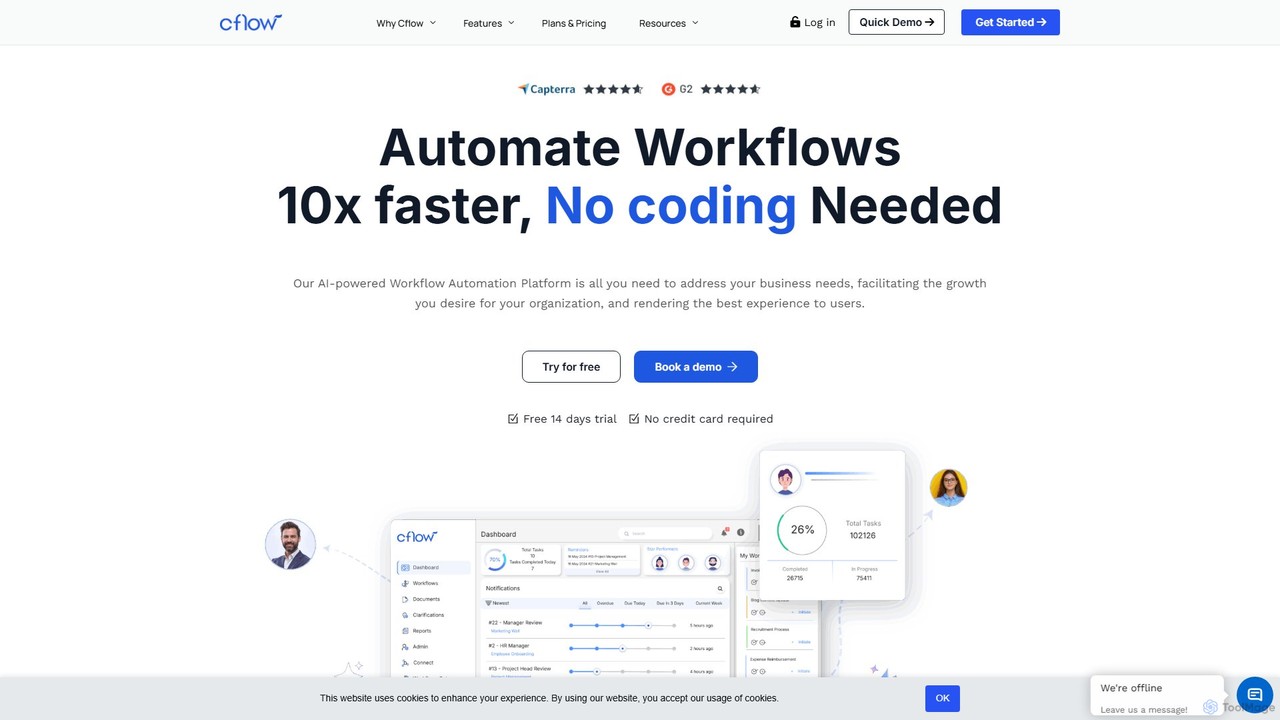
Cflow is an AI-powered, no-code platform for workflow automation and business process management (BPM). It enables businesses to digitize and automate processes across departments like HR, finance, and procurement using a visual builder, OCR, and advanced analytics.
About Human Resources
AI Human Resources tools are a specialized category within Operations, designed to leverage artificial intelligence to optimize and automate various HR functions. These tools utilize machine learning, natural language processing, and data analytics to streamline processes, enhance employee experience, and drive data-driven talent management decisions. They empower HR professionals to move beyond administrative tasks, focusing on strategic initiatives and fostering a more engaged and productive workforce.
Core Features
- AI-Powered Recruitment: Automates candidate sourcing, screening, and initial interviews, reducing time-to-hire and potential bias.
- Intelligent Onboarding: Provides personalized onboarding experiences, automating paperwork, training assignments, and initial support for new hires.
- Performance & Feedback Analytics: Analyzes performance data, 360-degree feedback, and sentiment to offer insights into employee strengths and development areas.
- Workforce Planning & Prediction: Uses predictive analytics to forecast talent needs, identify skill gaps, and anticipate employee turnover risks.
- HR Chatbots & Virtual Assistants: Offers instant, 24/7 support for employee queries on policies, benefits, and administrative tasks.
Applicable Scenarios
AI Human Resources tools are invaluable for organizations of all sizes looking to modernize their HR operations. Large enterprises use them for global talent acquisition and complex workforce analytics, while growing businesses leverage them to scale hiring efficiently. HR departments benefit from automating routine inquiries, freeing up staff for strategic initiatives like culture building and talent development.
How to Choose
When selecting AI HR tools, consider their integration capabilities with your existing HRIS and payroll systems to ensure seamless data flow. Evaluate the specific HR functions they address (e.g., recruitment, learning, retention) and their scalability to grow with your organization. Data privacy and security compliance, especially concerning sensitive employee information, are paramount. Finally, assess the user experience for both HR teams and employees to ensure high adoption rates.

Human ResourcesUse Cases
Automating Candidate Sourcing and Initial Screening
HR recruiters utilize AI tools to efficiently scan thousands of resumes and candidate profiles, automatically matching them against specific job requirements. This process significantly reduces the manual effort involved in initial screening, identifies top-tier candidates faster, and helps mitigate unconscious bias, allowing recruiters to focus on more strategic engagement with qualified individuals.
Streamlining Onboarding with Personalized AI Assistants
New hires engage with AI-powered virtual assistants that guide them through the onboarding process, answering FAQs about company policies, benefits, and IT setup. These assistants provide personalized learning paths and automated reminders for pending tasks, ensuring a smooth, efficient, and engaging integration into the company culture and their new role.
Analyzing Employee Performance and Feedback for Insights
HR managers leverage AI to analyze vast amounts of performance review data, 360-degree feedback, and employee sentiment from surveys or internal communications. This provides deep insights into individual and team performance trends, identifies skill gaps, potential flight risks, and areas for targeted development programs, enabling proactive talent management strategies.
Predictive Workforce Planning and Talent Gap Analysis
HR strategists employ AI to analyze historical data, market trends, and internal growth projections to forecast future talent needs. These tools identify potential skill gaps within the current workforce, predict employee turnover, and recommend proactive strategies for recruitment, upskilling, or reskilling, ensuring the organization has the right talent at the right time.
Enhancing Employee Experience with AI-driven Support
Employees access AI-powered platforms for instant, personalized support regarding HR policies, benefits enrollment, leave requests, or payroll inquiries. This self-service capability reduces the burden on HR staff, provides consistent and accurate information, and significantly improves employee satisfaction by offering quick resolutions to common administrative questions, anytime and anywhere.
Optimizing Compensation and Benefits Strategies
HR professionals utilize AI to analyze vast datasets of market salary benchmarks, internal equity, employee demographics, and performance metrics. This enables them to design highly competitive and fair compensation packages and benefits programs that attract top talent, improve employee retention, and align with organizational budget constraints and strategic goals, all based on data-driven insights.