
Invoxia
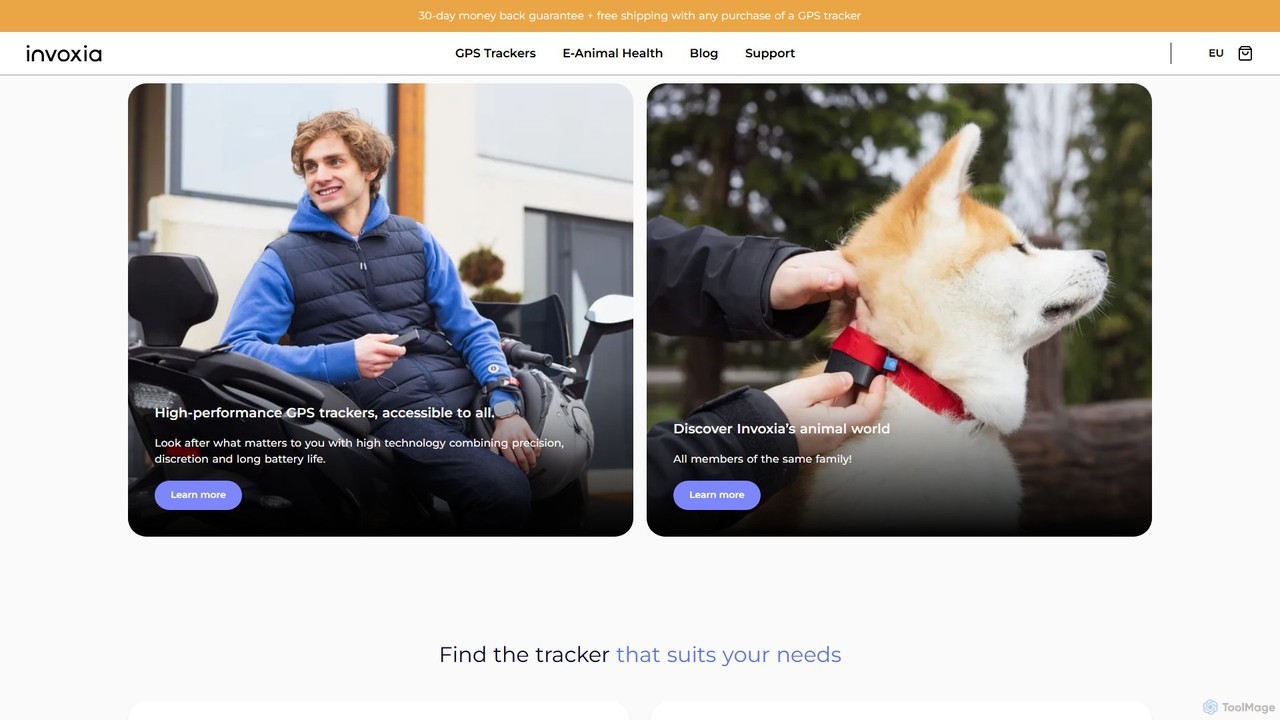
Invoxia offers a range of AI-powered GPS trackers for vehicles, valuables, pets, and people. These discreet devices provide …
Invoxia offers a range of AI-powered GPS trackers for vehicles, valuables, pets, and people. These discreet devices provide real-time location tracking, intelligent anti-theft alerts, geofencing, and exceptional battery life, all managed through a user-friendly mobile app for ultimate peace of mind.
About Iot
AI IoT tools are a class of software designed to apply artificial intelligence and machine learning algorithms to data generated by Internet of Things (IoT) devices. These tools analyze vast streams of sensor data in real-time to identify patterns, predict future outcomes, and automate complex decision-making processes. Their primary value lies in transforming raw IoT data into actionable intelligence, enabling systems to become more efficient, autonomous, and responsive. This capability allows for the creation of truly smart environments, from factories to cities.
Core Features
- Real-time Data Analysis: Processes and analyzes high-velocity data streams from multiple sensors to provide immediate insights.
- Predictive Maintenance: Utilizes historical data to forecast equipment failures, allowing for proactive maintenance and reducing downtime.
- Anomaly Detection: Automatically identifies unusual patterns or outliers in sensor data that may indicate operational issues or security threats.
- Edge AI Capabilities: Enables the deployment of machine learning models directly on IoT devices, reducing latency and bandwidth usage.
- Automated Control & Optimization: Triggers automated actions and adjusts system parameters based on AI analysis to optimize performance or resource usage.
Use Cases
AI IoT tools are widely adopted in industries like smart manufacturing for predictive maintenance, in smart cities for traffic flow optimization and public safety, and in agriculture for precision farming. They are also crucial in logistics for real-time supply chain tracking and in healthcare for remote patient monitoring and diagnostics.
How to Choose
When selecting an AI IoT tool, consider its compatibility with your existing hardware and data protocols (e.g., MQTT, CoAP). Evaluate its scalability to handle your expected data volume and device count. Assess whether you require cloud-based processing for large-scale analysis or edge computing for low-latency responses. Finally, examine the available pre-built AI models and the flexibility to develop custom ones.
IotUse Cases
Predictive Maintenance in Manufacturing
A plant manager for a manufacturing facility uses an AI IoT tool to prevent costly equipment downtime. The tool connects to vibration and temperature sensors on critical machinery. It continuously analyzes this data, using machine learning models to detect subtle patterns that precede a failure. Instead of relying on a fixed maintenance schedule, the manager receives automated alerts predicting a specific component will fail within the next 72 hours, allowing maintenance teams to schedule repairs proactively. This approach minimizes unexpected shutdowns and extends the lifespan of the equipment.
Smart Traffic Management in a City
A city's traffic management department implements an AI IoT solution to reduce congestion. AI-powered cameras and road sensors collect real-time data on vehicle flow, speed, and density. The AI tool processes this information to predict traffic patterns and automatically adjusts traffic light timings across intersections to optimize flow. During an accident, the system can instantly reroute traffic by changing signals on surrounding streets and updating digital road signs, helping to clear congestion faster and improve emergency response times.
Optimizing Crop Yields in Precision Agriculture
An agricultural enterprise uses an AI IoT platform to maximize crop yields and conserve resources. Soil sensors measure moisture and nutrient levels, while drones equipped with multispectral cameras capture images of the fields. The AI tool integrates and analyzes all this data to create a real-time health map of the crops. It identifies specific areas that require water or fertilizer and automatically controls the irrigation system and robotic applicators to deliver precise amounts only where needed. This prevents overwatering, reduces chemical usage, and leads to healthier, more abundant harvests.
Real-time Cold Chain Monitoring
A logistics company specializing in pharmaceuticals uses AI IoT tools to ensure vaccine integrity during transport. Each shipment is equipped with sensors that monitor temperature and humidity in real-time. The AI platform analyzes this data stream, comparing it against safe parameters. If the temperature begins to deviate, the system not only sends an immediate alert to the driver and operations center but also predicts the potential impact on the vaccine's efficacy based on the duration and severity of the deviation. This allows for immediate corrective action and ensures compliance with regulatory standards.
Smart Home Energy Consumption Management
A homeowner uses a smart home system powered by an AI IoT tool to reduce their electricity bills. The system connects to smart plugs, thermostats, and light sensors throughout the house. The AI learns the family's daily routines and occupancy patterns. It automatically adjusts the thermostat when no one is home, turns off lights in empty rooms, and schedules high-energy appliances like the dishwasher to run during off-peak hours. The user can view a detailed breakdown of energy usage on a mobile app and receive AI-generated tips for further savings, such as identifying a faulty, energy-draining appliance.
Remote Patient Monitoring for Chronic Conditions
A healthcare provider uses an AI IoT platform to monitor patients with chronic heart conditions remotely. Patients wear devices that track vital signs like heart rate, blood pressure, and oxygen saturation. The AI tool analyzes this data in real-time, establishing a personalized baseline for each patient. It can detect subtle, critical changes that might go unnoticed by the patient or a human observer. If the system identifies a deteriorating trend or an acute anomaly, it automatically alerts the clinical team, enabling early intervention and potentially preventing hospitalization.