Other Best in category 1 results Mediation AI Tool

Popular AI tools in the Mediation field of Other include AI Judge, etc., helping you quickly improve efficiency.

Free
AI Judge

AI Judge

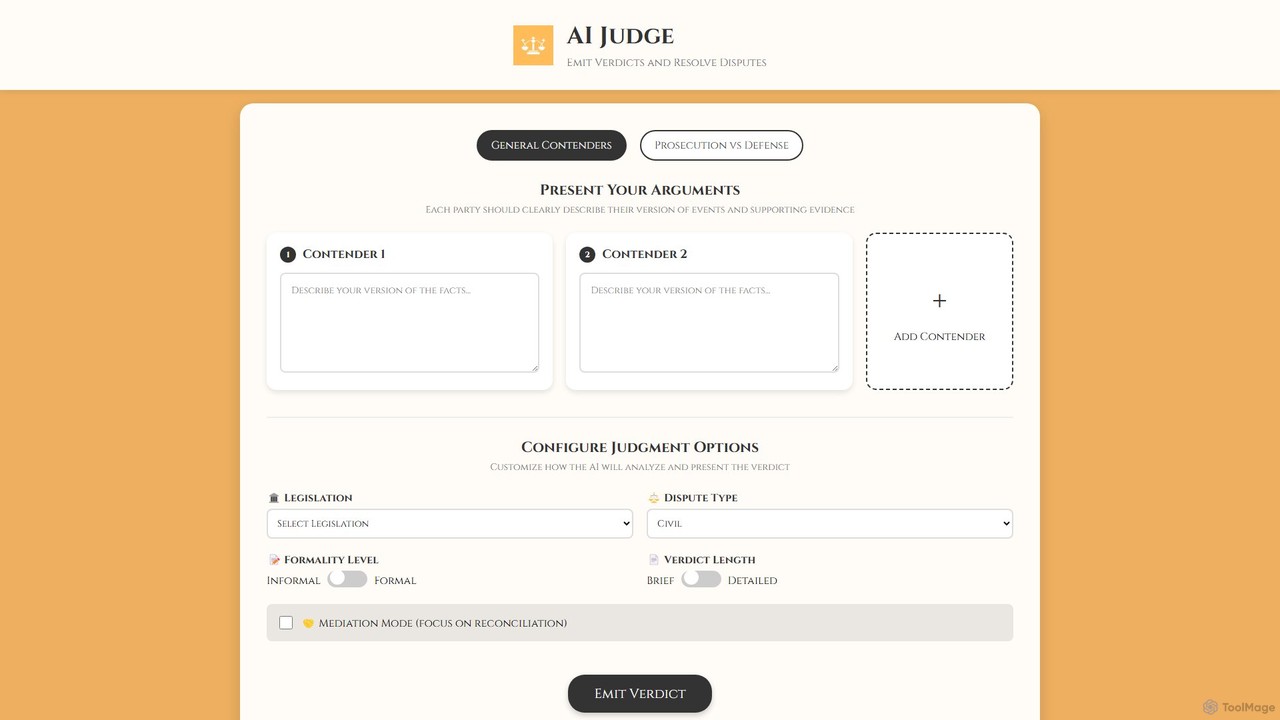
AI Judge is an innovative online tool that generates impartial verdicts to resolve disputes. Users present their arguments, …

3.6K

About Mediation

AI Mediation tools are a specialized class of software designed to facilitate conflict resolution and negotiation between parties. They utilize technologies like Natural Language Processing (NLP) and sentiment analysis to analyze communication, identify key issues, and suggest neutral language. The primary goal is to create a structured, objective, and less confrontational environment, guiding users toward a mutually acceptable agreement. These platforms can significantly reduce the time and cost associated with traditional dispute resolution methods.

Core Features

  • Conflict Analysis: Automatically identifies points of contention, emotional triggers, and areas of potential agreement from text-based conversations.
  • Neutral Language Suggestions: Rephrases biased or emotionally charged statements into objective and constructive alternatives to de-escalate tension.
  • Structured Workflows: Guides participants through a step-by-step mediation process, ensuring all key aspects of the dispute are addressed systematically.
  • Agreement Drafting: Helps summarize agreed-upon points and generates a preliminary draft of a settlement agreement for review.

Applicable Scenarios

These tools are valuable in various contexts, including corporate human resources for resolving employee disputes, legal settings for managing small claims or family law cases, and online platforms for moderating community conflicts. They serve as a neutral third-party assistant for mediators, lawyers, and individuals seeking amicable solutions.

Selection Criteria

When choosing an AI Mediation tool, consider the specific type of dispute it is designed for (e.g., commercial, workplace, family). Evaluate its data security and confidentiality protocols, ease of use for non-technical users, and its integration capabilities with existing communication platforms like email or chat.

MediationUse Cases

1

Resolving Workplace Employee Disputes

An HR manager is tasked with mediating a conflict between two team members regarding project responsibilities. Instead of lengthy face-to-face meetings, they use an AI Mediation platform. The employees communicate through the platform, which analyzes their text for emotional language and suggests rephrasing to maintain a professional tone. The AI identifies the core disagreement about task allocation and guides them through a structured process to redefine roles, resulting in a clear, documented agreement and restoring team harmony without escalating the issue.

2

Mediating Small Commercial Disputes

Two small business owners are in a dispute over a delayed payment for services. Legal fees are prohibitively expensive. They agree to use an online AI mediation service. The platform provides a secure space for them to upload invoices and correspondence. The AI tool summarizes the timeline of events and identifies the key point of contention. It then presents several standard settlement options, such as a payment plan or a partial discount for the delay. This structured approach helps them reach a legally binding agreement in a few days, saving thousands in potential legal costs.

3

Facilitating Family & Divorce Negotiations

A couple undergoing a divorce uses an AI mediation tool to negotiate the division of assets, aiming to avoid contentious court battles. The platform provides checklists and structured modules for listing assets, debts, and proposals. When one party writes an emotionally charged message, the AI suggests a more neutral phrasing before sending. It also visualizes different asset division scenarios to help them see fair outcomes. This process empowers them to collaboratively create a separation agreement draft for their lawyers to review, reducing emotional stress and legal expenses.

4

Moderating Online Community Conflicts

A moderator for a large online forum faces a recurring dispute between two influential users. Instead of issuing warnings or bans, the moderator invites them to a private mediation channel powered by an AI tool. The tool monitors their conversation for personal attacks and rule violations in real-time, flagging problematic language. It also helps the moderator summarize the core issues and guides the users to focus on the topic of disagreement rather than on each other. This de-escalates the situation and helps establish a precedent for constructive conflict resolution within the community.

5

Negotiating Landlord-Tenant Agreements

A tenant and a landlord disagree on the terms for renewing a lease, specifically regarding a rent increase. Communication has become strained. They use an AI mediation app to facilitate the discussion. The tenant inputs their concerns about affordability, while the landlord inputs data on rising market rates and maintenance costs. The AI tool presents a neutral summary and proposes compromise solutions, such as a smaller, phased rent increase or extending the lease term in exchange for the original rate. This data-driven approach removes emotion and helps them find a middle ground acceptable to both.

6

Training for Negotiation and Mediation Skills

A law student or a corporate trainee uses an AI mediation tool as a simulator to practice negotiation skills. They can engage in role-playing scenarios with an AI counterpart that is programmed to represent different personality types (e.g., aggressive, passive, collaborative). The tool provides real-time feedback on their language, identifying phrases that are too confrontational or too yielding. After each session, it generates a performance report highlighting strengths and areas for improvement, such as maintaining a neutral tone and effectively summarizing points of agreement. This provides a safe and repeatable way to build critical professional skills.

MediationFrequently Asked Questions