Threadsense
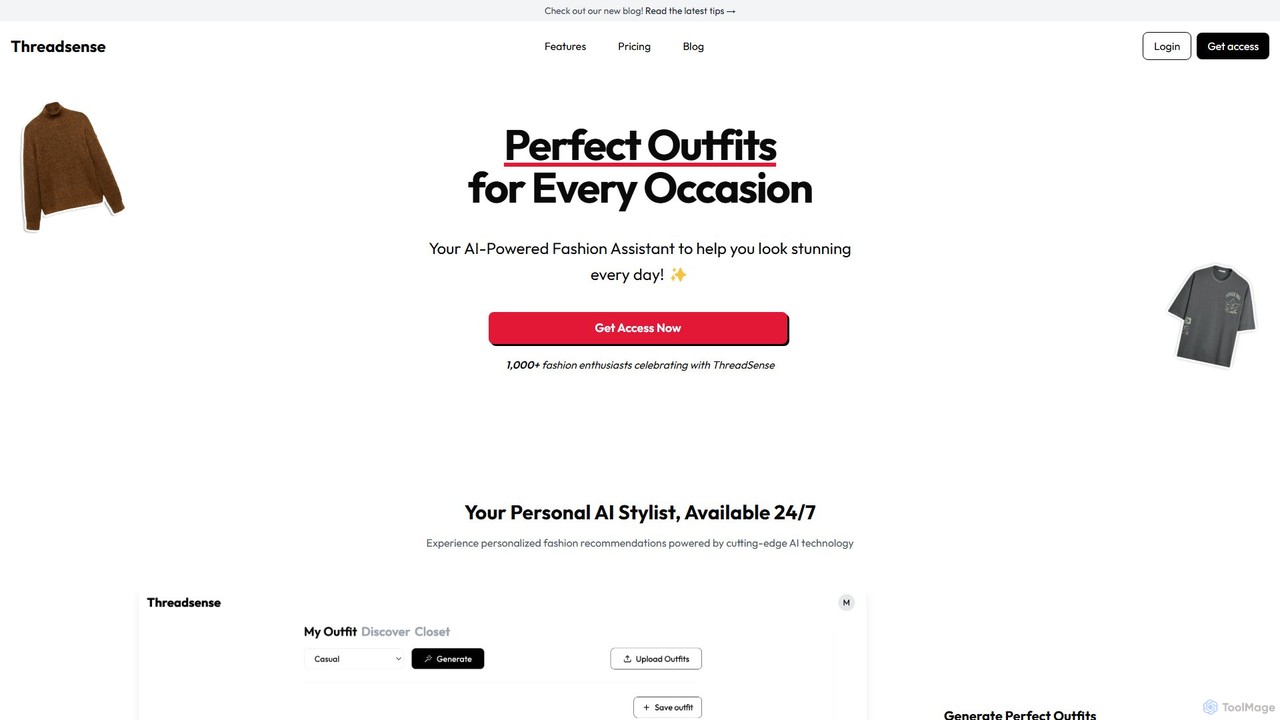
Threadsense is an AI-powered fashion assistant and personal stylist designed to help you create perfect outfits for any …
Threadsense is an AI-powered fashion assistant and personal stylist designed to help you create perfect outfits for any occasion. By uploading your wardrobe to a digital closet, you can receive instant, personalized outfit recommendations. Discover new styles, get the most out of your existing clothes, and save time getting ready every day.
About Recommendation Engine
Recommendation Engines are AI-powered tools that analyze user behavior and item characteristics to predict preferences and suggest relevant content, products, or services. They leverage sophisticated machine learning algorithms to personalize user experiences, significantly enhancing engagement and satisfaction. These systems are vital for businesses aiming to optimize discovery, drive sales, and foster customer loyalty by delivering highly tailored suggestions.
Core Features
- Collaborative Filtering: Recommends items based on the preferences of similar users.
- Content-Based Filtering: Suggests items similar to those a user has liked in the past.
- Hybrid Recommendation Systems: Combines collaborative and content-based methods for improved accuracy.
- Real-time Personalization: Adapts recommendations instantly based on current user interactions.
- Explainable AI (XAI): Provides transparency on why certain recommendations are made.
Use Cases
Recommendation engines are widely adopted across various digital platforms. E-commerce sites use them to suggest products, streaming services to recommend movies or music, and news platforms to personalize article feeds. They help users discover new items efficiently while boosting platform engagement and revenue.
How to Choose
When selecting a recommendation engine, consider its algorithm sophistication (e.g., ability to handle cold-start problems), integration capabilities with existing platforms, scalability to manage growing data volumes, and the level of customization offered. Evaluate its performance metrics, such as click-through rates and conversion improvements, and ensure it aligns with your specific business goals and data privacy requirements.
Recommendation EngineUse Cases
Personalized Product Recommendations for E-commerce
An e-commerce manager uses a recommendation engine to suggest products to individual customers based on their browsing history, past purchases, and items viewed by similar shoppers. This leads to a significant increase in average order value and conversion rates, as customers are presented with highly relevant items they are more likely to buy, enhancing their shopping experience.
Content Discovery for Media Platforms
A streaming service employs a recommendation engine to suggest movies, TV shows, or music to subscribers. By analyzing viewing habits, genre preferences, and interactions with similar content, the engine helps users discover new entertainment they'll love, increasing watch time and reducing churn. This keeps users engaged and subscribed for longer periods.
Personalized News Feed Curation
A news publisher utilizes a recommendation engine to curate personalized news feeds for its readers. Based on articles previously read, topics of interest, and engagement metrics, the engine delivers a highly relevant selection of news. This increases reader satisfaction, encourages deeper exploration of content, and boosts overall time spent on the platform, fostering a loyal readership.
Job Matching for Recruitment Platforms
Recruitment platforms deploy recommendation engines to match job seekers with suitable vacancies and employers with ideal candidates. By analyzing resumes, job descriptions, skills, and career aspirations, the engine provides highly accurate matches, reducing time-to-hire for companies and improving job satisfaction for candidates. This streamlines the recruitment process for all parties involved.
Personalized Learning Path Suggestions
An online education platform uses a recommendation engine to suggest personalized learning paths and courses to students. Based on their academic performance, learning style, career goals, and previously completed modules, the engine guides students to relevant content, optimizing their learning journey. This improves course completion rates and student engagement, leading to better educational outcomes.
Fraud Detection and Anomaly Recommendations
Financial institutions leverage recommendation engines to identify unusual patterns in transactions or user behavior that might indicate fraudulent activity. By recommending suspicious activities for review, the engine helps security analysts quickly pinpoint and investigate potential threats, minimizing financial losses and enhancing security protocols. This proactive approach strengthens the overall integrity of financial systems.