CastSpells
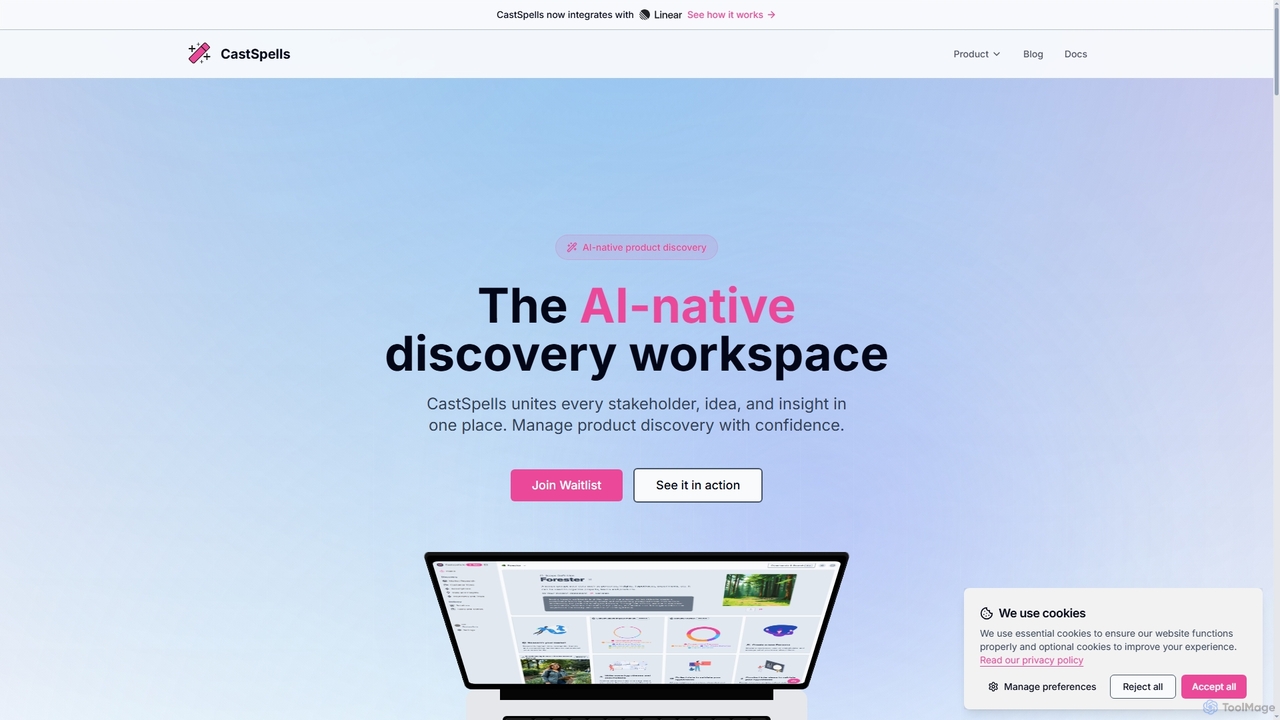
CastSpells is an AI-native product discovery workspace designed to unify stakeholders, ideas, and insights into a single, evidence-linked …
CastSpells is an AI-native product discovery workspace designed to unify stakeholders, ideas, and insights into a single, evidence-linked platform. It empowers product teams to make data-driven decisions by connecting market research, customer voice, hypotheses, and validation directly to planning and delivery. With AI-powered "Spells" for content generation, data analysis, and recommendations, CastSpells transforms chaotic product development into a clear, repeatable, and confident process, ensuring every feature is backed by real customer evidence.
Squad
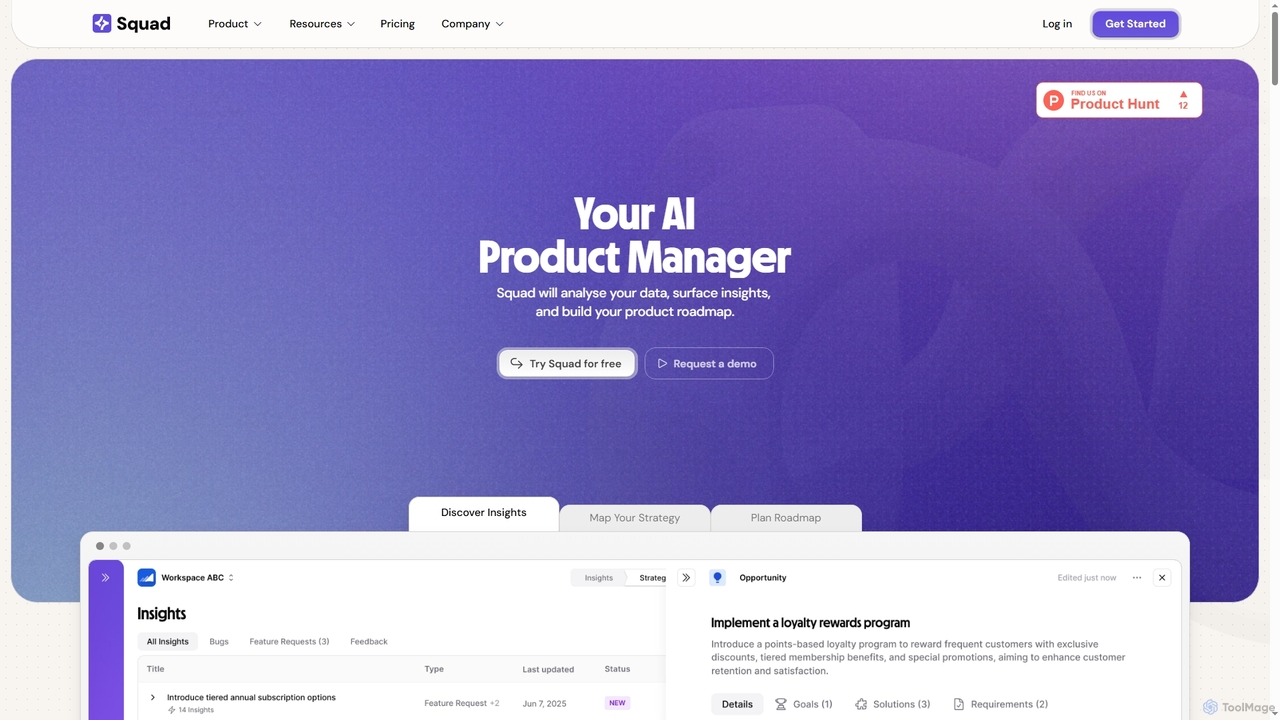
Squad is an AI-powered product management platform designed to streamline product discovery, strategy, and roadmapping. It aggregates customer …
Squad is an AI-powered product management platform designed to streamline product discovery, strategy, and roadmapping. It aggregates customer feedback, aligns it with business goals, and leverages AI agents to surface opportunities, automate documentation, and ensure team alignment for building user-centric products.
About Discovery
Discovery tools are AI-powered solutions specifically designed to enhance the initial phases of product management by uncovering valuable insights. These tools leverage advanced artificial intelligence and machine learning algorithms to analyze vast amounts of data, including market trends, user feedback, competitive landscapes, and internal product usage. They enable product teams to identify unmet customer needs, validate new ideas, and prioritize features with data-driven confidence, ultimately streamlining the product development lifecycle from conception to launch.
Core Features
- Market Trend Analysis: Automatically identifies emerging market trends, shifts in consumer behavior, and technological advancements relevant to product development.
- User Feedback Aggregation: Collects, categorizes, and analyzes user feedback from various sources like reviews, surveys, and support tickets to pinpoint pain points and desires.
- Competitor Benchmarking: Monitors competitor products, features, and strategies, highlighting opportunities and potential threats in the market.
- Idea Validation & Scoring: Provides data-backed insights to validate new product concepts and helps score ideas based on market demand, feasibility, and strategic alignment.
- Opportunity Identification: Uncovers underserved market segments or gaps in existing product offerings through comprehensive data analysis.
Applicable Scenarios
AI Discovery tools are invaluable for product managers, UX researchers, and innovation teams seeking to make informed decisions. They are used when launching a new product to assess market viability, during feature prioritization to ensure alignment with user needs, or for continuous product improvement by monitoring evolving market dynamics and user sentiment. These tools help reduce the risk associated with product development by grounding decisions in concrete data.
How to Choose
When selecting an AI Discovery tool, consider its data source breadth and integration capabilities with your existing product management ecosystem. Evaluate the sophistication of its AI analysis, including natural language processing for feedback and predictive analytics for trends. Look for robust visualization and reporting features that translate complex data into actionable insights. Finally, assess the tool's scalability and how well it supports your team's specific discovery methodologies and budget.
DiscoveryUse Cases
Identifying Unmet Needs from Customer Support Data
Product managers can utilize AI Discovery tools to analyze large volumes of customer support tickets, chat logs, and forum discussions. The AI identifies recurring pain points, feature requests, and common frustrations that indicate unmet customer needs, allowing the team to prioritize solutions that directly address user problems and improve satisfaction. This process can reduce manual review time by up to 70%.
Validating New Product Concepts with Market Insights
Before investing heavily in development, startup founders or innovation teams can use Discovery tools to validate new product ideas. By inputting concept descriptions, the AI analyzes market demand, competitive landscape, and potential user segments, providing data-driven confidence scores and identifying potential risks or opportunities, thereby saving significant resources on unviable projects.
Analyzing Competitor Feature Sets and Market Positioning
Product strategists can deploy AI Discovery tools to continuously monitor competitor product launches, feature updates, and marketing messages. The tools automatically extract and compare feature sets, pricing models, and user reviews across competitors, revealing strategic gaps or areas where the company can differentiate its offerings, leading to more competitive product roadmaps.
Prioritizing Product Roadmap Items Based on Demand
For established product teams, Discovery tools help in objectively prioritizing features for the next development cycle. By correlating internal data (e.g., usage analytics) with external data (e.g., market trends, user feedback), the AI can score potential features based on their predicted impact and market demand, ensuring resources are allocated to the most impactful initiatives.
Generating Innovative Product Ideas from Trend Analysis
R&D departments or product innovation labs can leverage Discovery tools to proactively generate novel product ideas. The AI scans global trends, technological advancements, and cross-industry innovations, suggesting potential product concepts that align with future market needs or leverage emerging technologies, fostering a culture of continuous innovation.
Segmenting User Feedback for Targeted Product Improvements
UX researchers and product owners can use these tools to automatically segment and categorize vast amounts of qualitative user feedback. The AI identifies distinct user groups, their specific needs, and sentiment patterns, allowing teams to develop targeted product improvements or personalized features that resonate with different user segments, enhancing overall user experience.