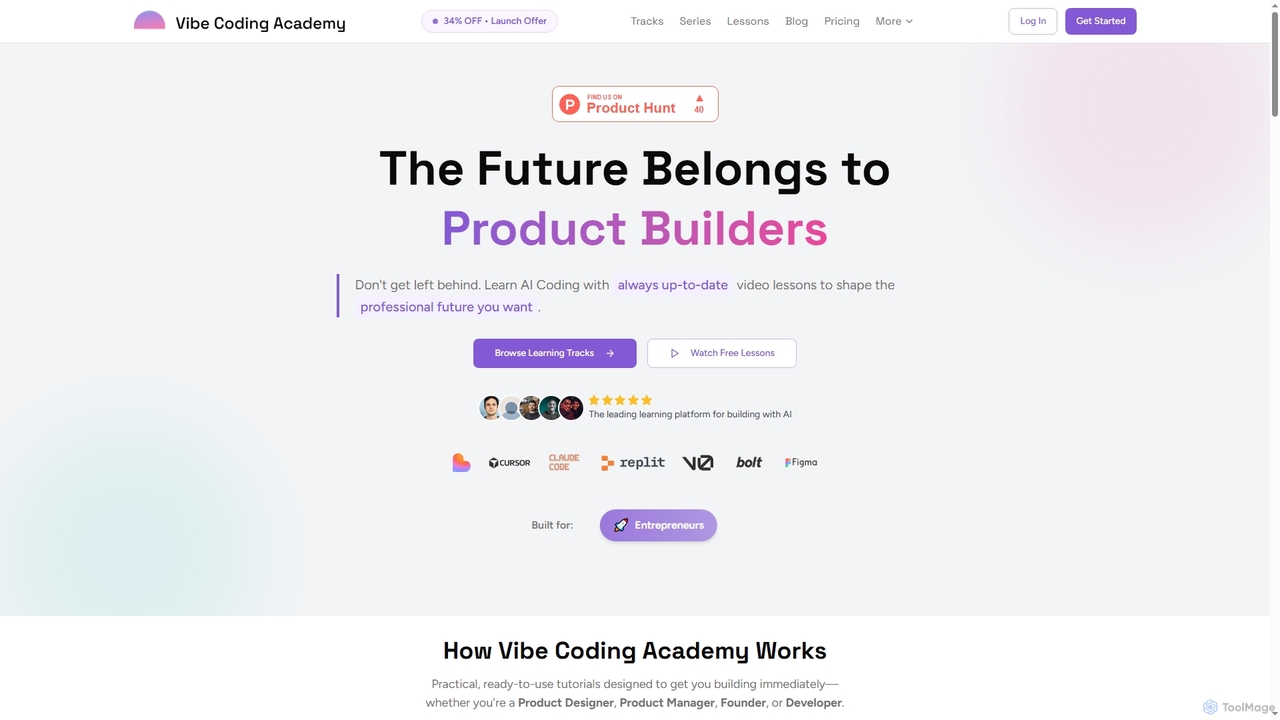
Vibe Coding Academy
Vibe Coding Academy offers AI-powered coding education through practical video tutorials, ready-to-use prompts, and structured learning tracks. It …
Vibe Coding Academy offers AI-powered coding education through practical video tutorials, ready-to-use prompts, and structured learning tracks. It empowers product builders, designers, managers, and engineers to master modern development workflows and ship production-ready applications with AI assistance.
About Product Building
Product Building AI tools are specialized platforms that leverage artificial intelligence to streamline and enhance various stages of digital product development, from ideation to iteration. These tools utilize advanced algorithms for tasks like data analysis, pattern recognition, and content generation, enabling product teams to build more efficient, user-centric, and data-driven products. They empower product managers, designers, and developers to accelerate workflows, make informed decisions, and innovate faster within the broader product management lifecycle.
Core Features
- AI-Powered Ideation: Generates new product ideas, features, or solutions based on market trends, user data, and competitive analysis.
- Automated Prototyping & Wireframing: Converts textual descriptions or basic sketches into functional wireframes or interactive prototypes.
- User Feedback Synthesis: Analyzes large volumes of user reviews, support tickets, and survey responses to identify key pain points and feature requests.
- Predictive Feature Prioritization: Uses data to forecast the potential impact and success of new features, guiding development roadmaps.
- Product Content Generation: Automatically creates marketing copy, user manuals, or in-app messages for new product features.
Applicable Scenarios
These tools are invaluable for product teams in startups and large enterprises seeking to accelerate their development cycles. Product managers use them for data-driven decision-making and roadmap planning, while UX designers leverage them for rapid prototyping and user research analysis. Developers can benefit from AI-assisted code generation or testing insights, ensuring a more robust and efficient product build process.
How to Choose
When selecting Product Building AI tools, consider their integration capabilities with your existing design and development stacks, the sophistication of their AI models for specific tasks like natural language processing or image generation, and the level of customization offered. Evaluate data privacy policies, scalability for future growth, and the clarity of their analytics and reporting features to ensure they align with your product development methodology and team's technical expertise.
Product BuildingUse Cases
Generating Innovative Product Features with AI
Product managers can input market trends, competitor analysis, and existing user feedback into AI product building tools. The AI then processes this data to suggest novel feature ideas, identify unmet user needs, and even propose solutions, significantly reducing the time spent on brainstorming and initial concept development. This helps teams discover high-potential features that might otherwise be overlooked.
Rapidly Creating UI/UX Prototypes from Text
UX designers or product owners can describe desired user interfaces or user flows in natural language. AI product building tools can interpret these descriptions to automatically generate initial wireframes or interactive prototypes. This accelerates the design phase, allowing for quicker iteration and validation of concepts with stakeholders and users, saving hours of manual design work.
Synthesizing User Feedback for Actionable Insights
Product teams often face an overwhelming volume of user feedback from various channels like app store reviews, social media, and support tickets. AI tools can ingest and analyze this unstructured data, identifying common themes, sentiment, and critical pain points. This synthesis provides clear, actionable insights that directly inform product improvements and bug fixes, ensuring development efforts are aligned with user needs.
Prioritizing Features Based on Predicted Impact
Before committing resources, product managers can use AI tools to analyze historical data, market trends, and user behavior to predict the potential success, user adoption, and business impact of new features. This data-driven prioritization helps in optimizing the product roadmap, ensuring that development efforts are focused on features that offer the highest return on investment and user value.
Crafting Engaging Product Descriptions and Copy
Marketing and product teams can leverage AI product building tools to generate compelling product descriptions, feature highlights, and in-app messaging. By providing key product attributes and target audience information, the AI can produce various copy options, saving time for content creators and ensuring consistent, persuasive communication across all product touchpoints, from launch announcements to user guides.
Enhancing A/B Testing for User Interface Elements
For product teams looking to optimize user experience, AI tools can assist in designing more effective A/B tests for UI elements, button placements, or call-to-action texts. The AI can suggest variations, predict which designs are more likely to perform better based on past data, and even analyze test results to provide deeper insights into user behavior, leading to faster and more impactful UI/UX improvements.