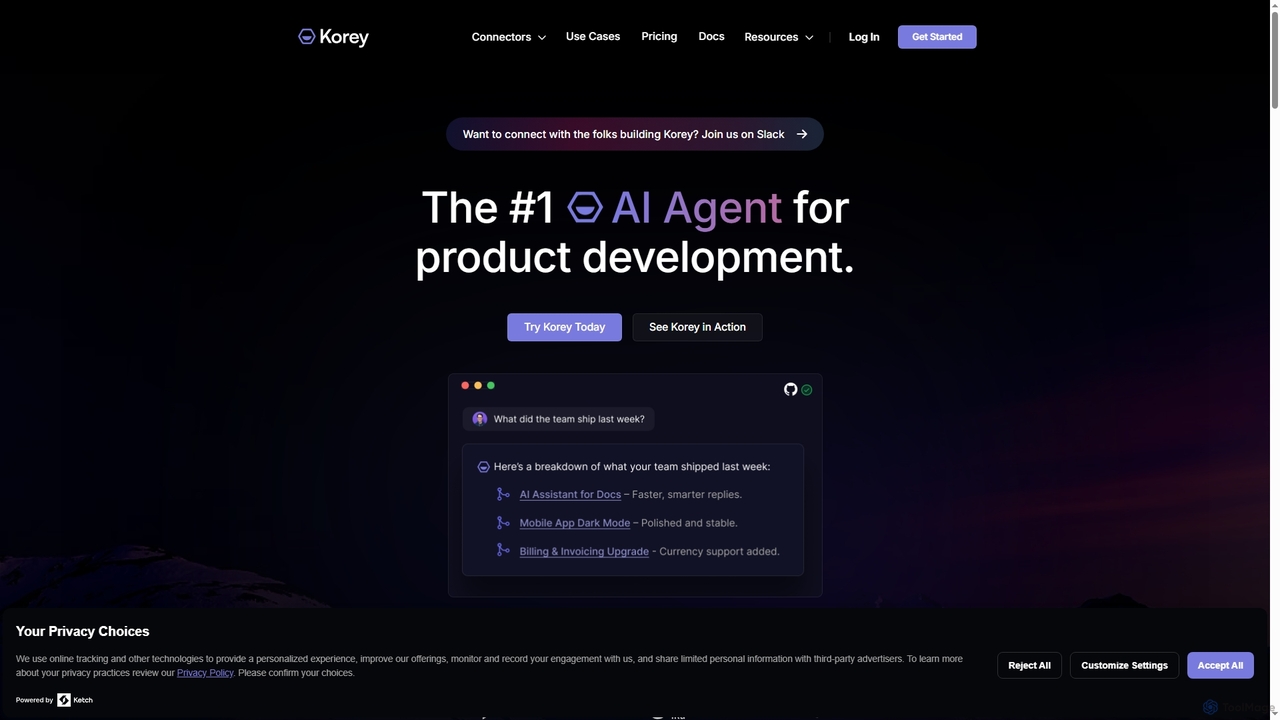
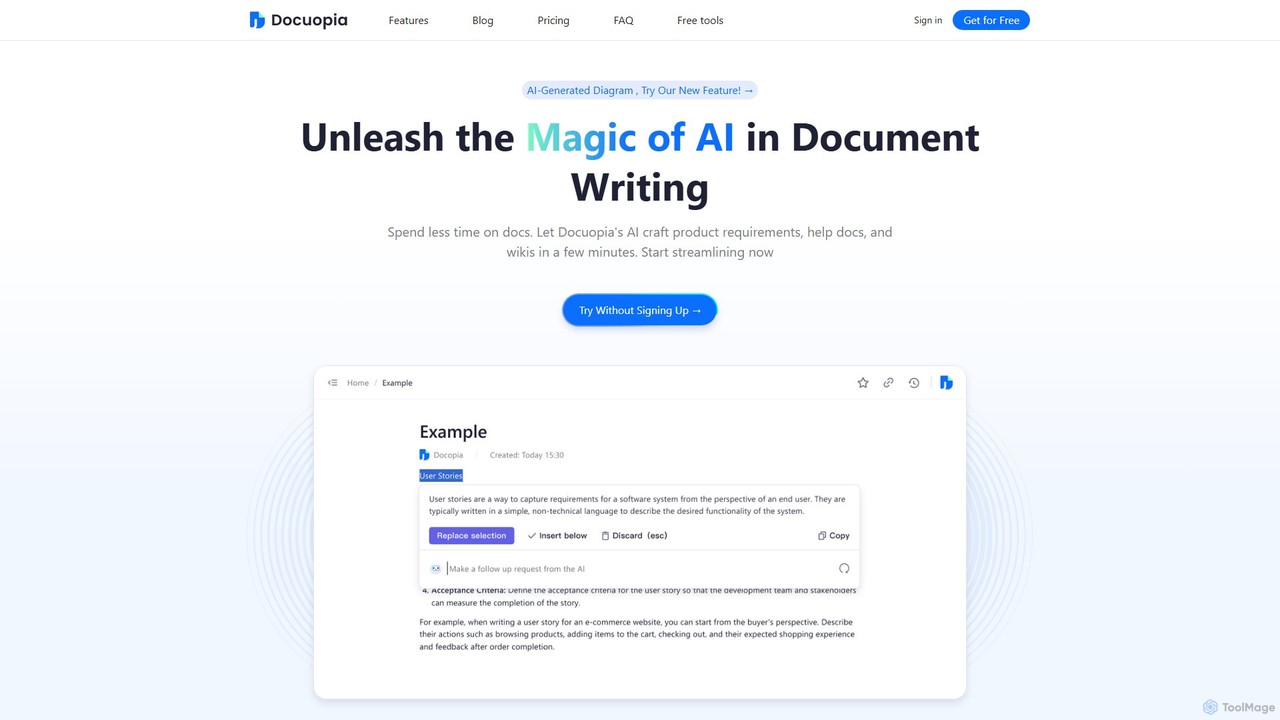
AI Documentation tools are a class of software that uses artificial intelligence to automate the creation, management, and discovery of technical and user documents. These tools leverage Natural Language Generation (NLG) to convert code, data, or brief inputs into coherent guides, and employ semantic search to provide precise answers from extensive knowledge bases. As a key part of the product management lifecycle, they accelerate the creation of user manuals, API references, and internal wikis, ensuring content remains accurate and synchronized with product updates. This reduces manual effort for technical writers and developers, improving both internal knowledge sharing and external user support.
Core Features
- Automated Content Generation: Automatically creates documentation from source code, API specifications, or structured data, reducing manual writing time.
- Semantic Search & Q&A: Enables users to ask natural language questions and receive precise answers directly from the documentation, instead of manually searching.
- Content Synchronization: Keeps documentation automatically in sync with changes in the source code or product features, preventing outdated information.
- Version Control & History: Manages different versions of documents, allowing teams to track changes and revert to previous states seamlessly.
- Multi-Format Publishing: Generates and publishes content in various formats like web portals, PDFs, or integrated help widgets from a single source.
Use Cases
These tools are essential for software companies, SaaS providers, and enterprises with complex products. Technical writers, developers, product managers, and support teams use them to maintain accurate API documentation, build comprehensive user help centers, and manage internal standard operating procedures (SOPs). They are particularly valuable in agile development environments where products evolve rapidly.
How to Choose
When selecting an AI Documentation tool, consider its integration capabilities with your existing codebase (e.g., GitHub, GitLab) and other tools (e.g., Jira, Slack). Evaluate the quality and customizability of its content generation. Assess the power of its search functionality and its support for version control. Finally, consider the ease of use for both content creators and end-users, as well as the pricing model's scalability.