Squad
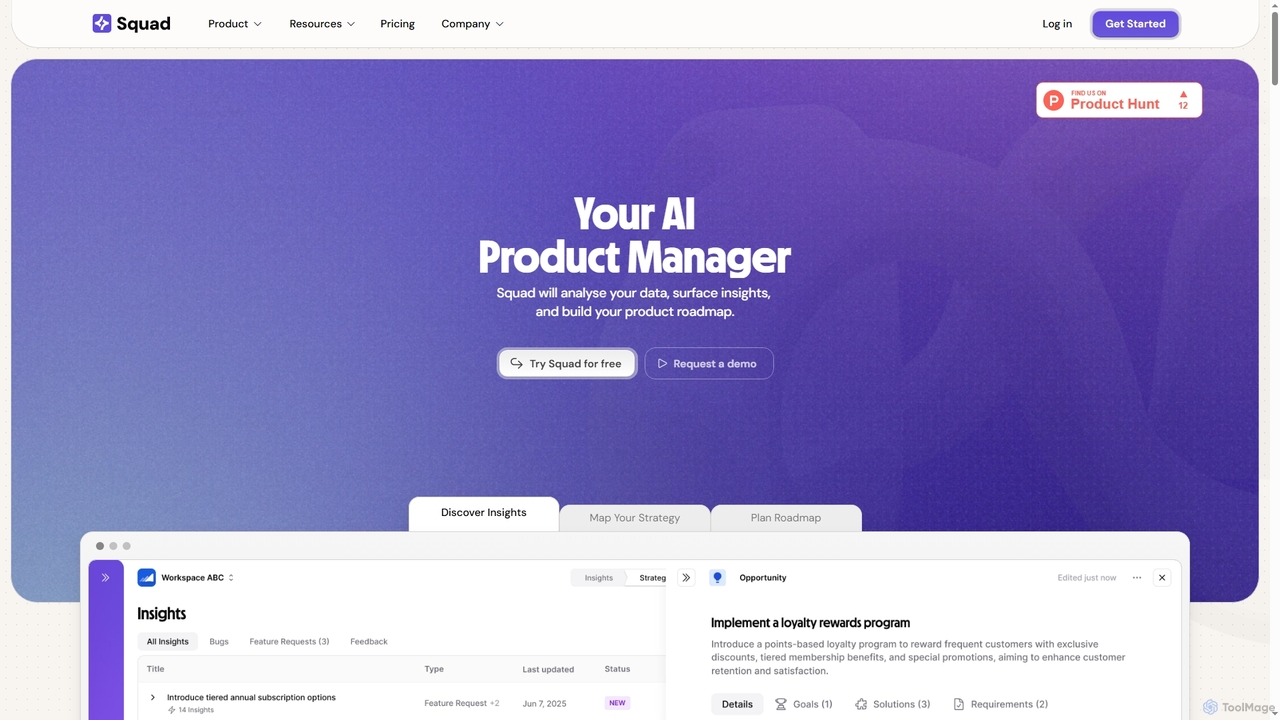
Squad is an AI-powered product management platform designed to streamline product discovery, strategy, and roadmapping. It aggregates customer …
Squad is an AI-powered product management platform designed to streamline product discovery, strategy, and roadmapping. It aggregates customer feedback, aligns it with business goals, and leverages AI agents to surface opportunities, automate documentation, and ensure team alignment for building user-centric products.
GapNix
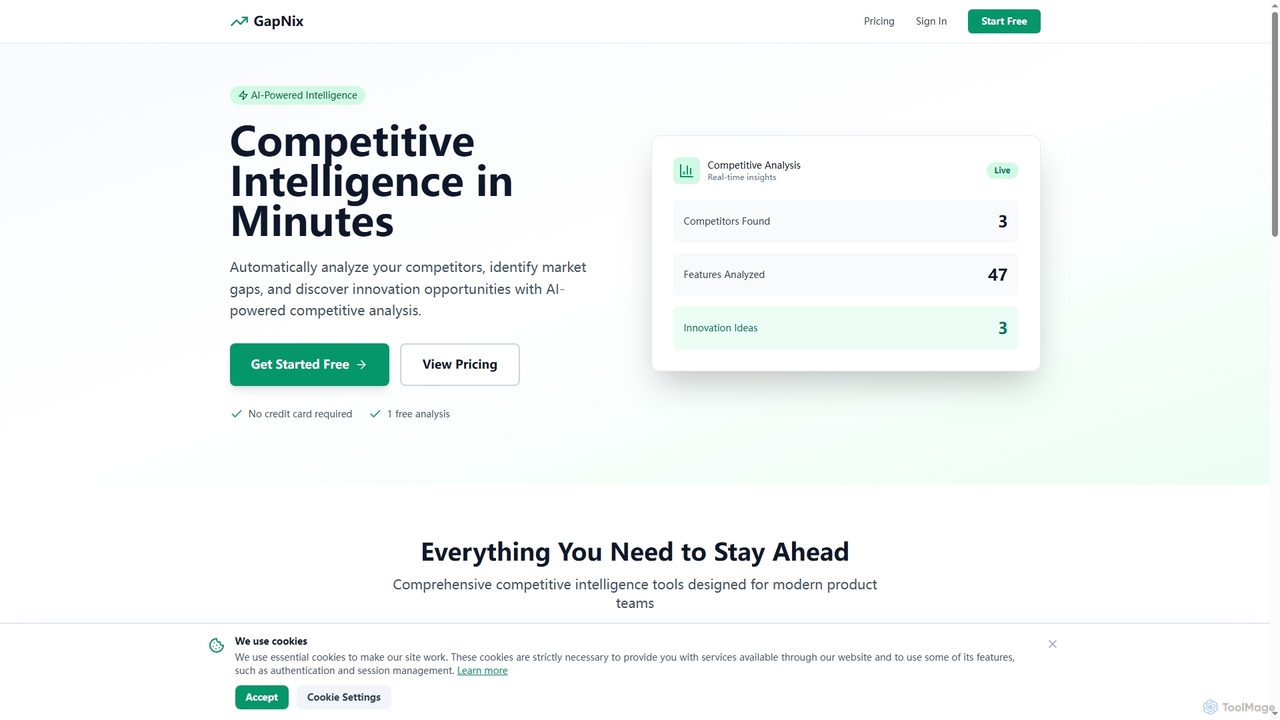
GapNix is an AI-powered competitive intelligence platform that helps product teams, marketers, and business leaders quickly analyze competitors, …
GapNix is an AI-powered competitive intelligence platform that helps product teams, marketers, and business leaders quickly analyze competitors, identify market gaps, and discover innovation opportunities. It automates research to provide actionable insights in minutes, enabling data-driven decision-making and strategic planning.
About Roadmapping
AI Roadmapping tools are specialized platforms that use artificial intelligence to help teams visualize, plan, and communicate their product strategy. These tools analyze data from various sources, such as user feedback and development progress, to generate predictive insights and automate planning tasks. This enables organizations to create dynamic, data-driven roadmaps that align stakeholders and adapt to market changes more effectively than static documents. They transform strategic planning from a manual process into an intelligent, responsive system.
Core Features
- AI-Powered Prioritization: Automatically scores and ranks features based on factors like user impact, business value, and development effort.
- Predictive Timeline Forecasting: Uses historical data and dependency analysis to forecast project completion dates and identify potential delays.
- Automated Stakeholder Reporting: Generates customized roadmap views and progress reports tailored for different audiences, such as executives or engineering teams.
- Risk Identification: Proactively flags potential resource conflicts, scope creep, and critical dependencies that could jeopardize timelines.
- Feedback Analysis: Employs Natural Language Processing (NLP) to categorize and extract insights from customer feedback, directly informing planning.
Use Cases
Primarily used by product managers, program managers, and leadership teams in technology companies and software development environments. They are essential for planning new product launches, managing complex project portfolios, and aligning cross-functional teams (product, engineering, marketing, sales) around a single strategic vision.
How to Choose
When selecting an AI Roadmapping tool, consider its integration capabilities with your existing stack (e.g., Jira, Slack, Zendesk). Evaluate the depth and accuracy of its AI features, such as prioritization algorithms and forecasting models. Also, assess the tool's flexibility in visualization and its collaboration features to ensure it meets your team's specific communication and planning needs.

RoadmappingUse Cases
Data-Driven Feature Prioritization for a SaaS Product
A product manager for a B2B SaaS platform is inundated with feature requests from sales, support tickets, and user interviews. Instead of relying on intuition, they connect their AI roadmapping tool to Salesforce, Zendesk, and Jira. The AI analyzes the data, correlating feature requests with deal sizes, customer tiers, and development effort. It then generates a prioritized backlog with a clear 'value vs. effort' score, enabling the manager to build a defensible, data-backed roadmap and communicate the reasoning clearly to stakeholders.
Creating an Executive-Level Strategic Roadmap
A Head of Product needs to present the annual strategy to the C-suite and board. Using an AI roadmapping tool, they aggregate detailed project plans into a high-level, theme-based view. The AI helps summarize key initiatives and forecasts their potential impact on top-line business goals like ARR or market expansion. The tool generates a clean, visual timeline that focuses on strategic outcomes rather than granular features, making it easy for leadership to understand and approve the direction without getting lost in technical details.
Forecasting Release Timelines with Greater Accuracy
An engineering manager is planning a complex release with multiple feature dependencies. Instead of providing a single, often inaccurate, delivery date, they use an AI roadmapping tool connected to their team's Jira instance. The AI analyzes historical velocity, story points, and the dependency graph to run thousands of simulations. It then provides a probabilistic forecast, such as an '80% confidence of shipping by Q3', allowing for more realistic planning and better expectation management with stakeholders.
Aligning Go-to-Market Teams on Product Launches
A product marketing manager struggles to keep the sales and marketing teams updated on shifting product timelines. They create a dedicated 'Go-to-Market' view in the AI roadmapping tool. This view automatically pulls key dates and feature descriptions from the engineering roadmap but presents them in a non-technical, benefit-oriented way. When a release date is updated by the product team, this view is instantly refreshed, ensuring that all commercial teams have a single, reliable source of truth for planning their campaigns and sales enablement materials.
Identifying and Mitigating Project Risks Proactively
A program manager overseeing multiple interconnected projects uses an AI roadmapping tool to get a portfolio-level view. The AI continuously scans for risks across all projects, such as a key dependency on a delayed project, a team's capacity being exceeded, or features that are consistently falling behind schedule. It flags these risks on a dashboard with a severity score, allowing the manager to intervene early, reallocate resources, or adjust timelines before a small issue cascades into a major program delay.
Centralizing Customer Feedback to Inform Strategy
A product operations team is tasked with making sense of customer feedback from disparate sources like Intercom, App Store reviews, and NPS surveys. They integrate these channels into their AI roadmapping tool. The AI uses NLP to automatically tag and categorize thousands of pieces of feedback into themes like 'performance issues', 'UI/UX suggestions', or 'billing requests'. This transforms unstructured qualitative data into a quantitative dashboard, revealing the most pressing customer needs and providing concrete evidence to justify new strategic initiatives on the roadmap.