ToolMage
Sign in

Best 2 Proptech AI tools for Real Estate

Popular Proptech AI tools in Real Estate include Pulppo and Stream.Estate, helping you work more efficiently.

Stream.Estate
Paid

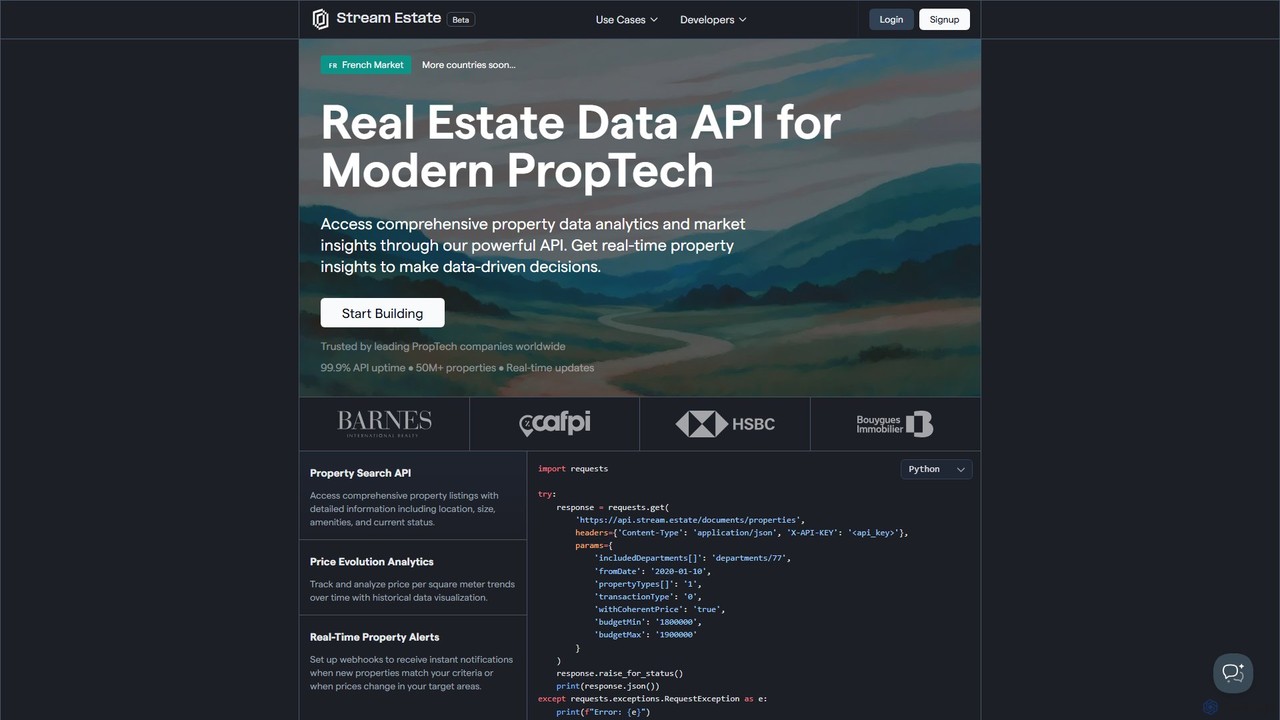
Stream.Estate

A powerful Real Estate Data API designed for modern PropTech companies. It provides comprehensive, real-time property data, market analytics, and AI-powered insights to facilitate data-driven decisions. Access over 50 million properties, primarily in the European market, with high uptime and developer-friendly tools.

Market Intelligence
Visits 11.9KFavorites 88Likes 93
Pulppo
Freemium

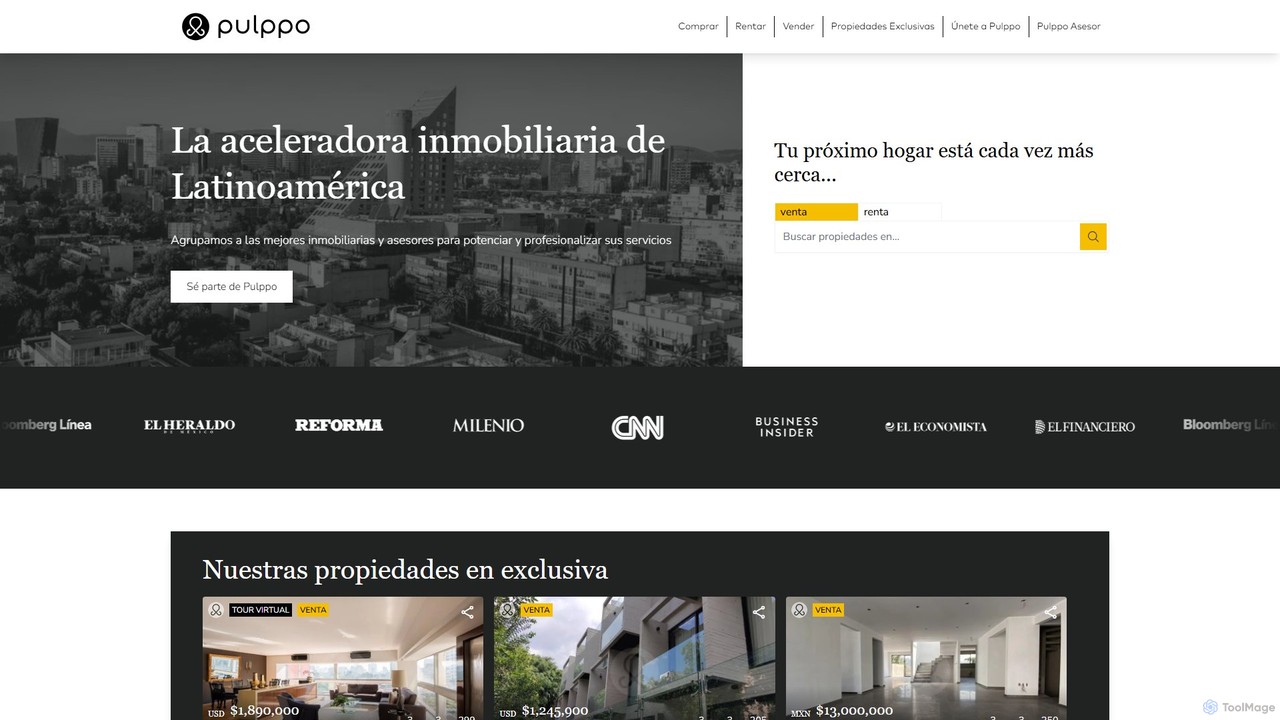
Pulppo

Pulppo is a real estate accelerator for Latin America, leveraging AI and technology to empower top real estate agencies and brokers. It provides a comprehensive platform with advanced tools, marketing support, and consulting to streamline property sales, enhance agent productivity, and offer a transparent, efficient experience for buyers and sellers.

Crm
Visits 54.9KFavorites 120Likes 121

About Proptech

Proptech (Property Technology) refers to AI-powered tools and platforms that leverage advanced technologies to revolutionize the real estate industry. These innovations streamline processes, enhance decision-making, and improve user experiences across property development, management, sales, and investment. By integrating AI, IoT, and data analytics, Proptech solutions offer unprecedented efficiency and insights for property owners, developers, agents, and tenants.

Core Features

  • AI-Powered Valuation: Automated property appraisal using machine learning models to analyze market data, comparable sales, and property attributes.
  • Smart Property Management: IoT-enabled systems for predictive maintenance, energy optimization, and automated access control in buildings.
  • Virtual Property Tours: AI-enhanced VR/AR platforms offering immersive, interactive property viewings from anywhere.
  • Real Estate Analytics: Advanced data analysis tools providing market trends, investment insights, and demographic predictions.
  • Automated Lead Generation: AI algorithms identifying potential buyers or renters based on behavioral data and preferences.

Use Cases

Proptech tools are utilized by real estate developers for site selection and project management, property managers for optimizing building operations and tenant services, and real estate agents for enhancing client engagement and sales efficiency. Investors leverage these platforms for market analysis and portfolio optimization, while urban planners use them for smart city development.

How to Choose

When selecting Proptech tools, consider the specific real estate segment (residential, commercial, industrial) and your primary objective. Evaluate the tool's integration capabilities with existing systems, data security protocols, and scalability to meet future needs. User-friendliness and the accuracy of AI models are also crucial for effective adoption.

Proptech use cases

1

Optimizing Commercial Building Operations

Property managers use AI-driven smart building systems to monitor energy consumption, predict maintenance needs for HVAC and elevators, and automate lighting and climate control. This leads to significant operational cost reductions, extends equipment lifespan, and enhances tenant comfort by proactively addressing issues before they become problems.

2

Automated Property Valuation for Lenders

Financial institutions and mortgage lenders employ AI valuation models to rapidly assess property values for loan applications. By analyzing vast datasets of market trends, comparable sales, and property-specific features, these tools provide accurate, real-time appraisals, accelerating the lending process and reducing manual appraisal costs.

3

Enhancing Real Estate Agent Productivity

Real estate agents leverage AI-powered CRM and lead generation platforms to identify high-potential clients, personalize communication, and automate follow-ups. These tools analyze client preferences and browsing behavior to suggest relevant properties, significantly improving conversion rates and freeing up agents' time for client interaction.

4

Virtual Showings for Remote Buyers

Developers and agents utilize VR/AR platforms to offer immersive virtual tours of properties, allowing potential buyers to explore spaces remotely. This is particularly beneficial for international clients or those with limited mobility, providing a realistic sense of the property layout and features without the need for physical presence.

5

Predictive Maintenance in Residential Complexes

Residential property managers deploy IoT sensors and AI analytics to monitor critical infrastructure like plumbing, electrical systems, and security. The system predicts potential failures, schedules preventive maintenance, and alerts staff to anomalies, minimizing disruptions for residents and reducing emergency repair costs.

6

Data-Driven Real Estate Investment Analysis

Investors use Proptech platforms equipped with AI and big data analytics to identify undervalued properties, forecast market trends, and assess investment risks. These tools provide comprehensive insights into demographic shifts, economic indicators, and property performance, enabling more informed and profitable investment decisions.

Proptech FAQ

What is Proptech and how does it differ from traditional real estate technology?

Proptech (Property Technology) refers to the application of advanced technologies like AI, IoT, and big data to innovate the real estate sector. Unlike traditional real estate technology, which often digitizes existing processes (e.g., listing websites), Proptech actively transforms operations through automation, predictive analytics, and immersive experiences. It focuses on creating new value propositions, from smart building management to AI-driven investment insights, fundamentally changing how properties are developed, managed, and transacted.

How can AI-powered Proptech tools benefit real estate developers?

AI-powered Proptech tools offer significant benefits to real estate developers by optimizing various stages of a project. They can assist with site selection by analyzing demographic data and market demand, streamline design processes through generative AI, and enhance construction management with predictive analytics for resource allocation and risk assessment. Furthermore, AI helps in marketing and sales by identifying target buyers and personalizing outreach, ultimately accelerating project timelines and improving profitability.

What are the key considerations when implementing Proptech solutions for property management?

When implementing Proptech for property management, key considerations include the integration capabilities with existing legacy systems, ensuring robust data security and privacy compliance, and the scalability of the solution to accommodate future growth. It's also crucial to assess the user-friendliness for both staff and tenants, the accuracy and reliability of AI-driven insights, and the total cost of ownership, including implementation and ongoing maintenance.

Can Proptech help in making more informed real estate investment decisions?

Absolutely. Proptech tools, especially those leveraging AI and big data analytics, provide investors with unparalleled insights for making informed decisions. They can analyze vast amounts of market data, including historical trends, economic indicators, and social demographics, to identify investment opportunities, predict future property values, and assess risks. This data-driven approach allows investors to optimize their portfolios, identify undervalued assets, and forecast returns with greater accuracy than traditional methods.

What is the role of IoT and smart building technology within Proptech?

IoT (Internet of Things) and smart building technology are foundational components of Proptech, particularly in property management and operations. IoT sensors collect real-time data on building performance, occupancy, energy consumption, and security. AI then processes this data to enable smart building features like automated climate control, predictive maintenance, enhanced security systems, and personalized tenant experiences. This integration leads to more efficient, sustainable, and responsive properties, significantly reducing operational costs and improving asset value.