Real Estate Best in category 2 results Virtual Tours AI Tool

Popular AI tools in the Virtual Tours field of Real Estate include Vestate、Inoveo3D, etc., helping you quickly improve efficiency.

Inoveo3D

Inoveo3D

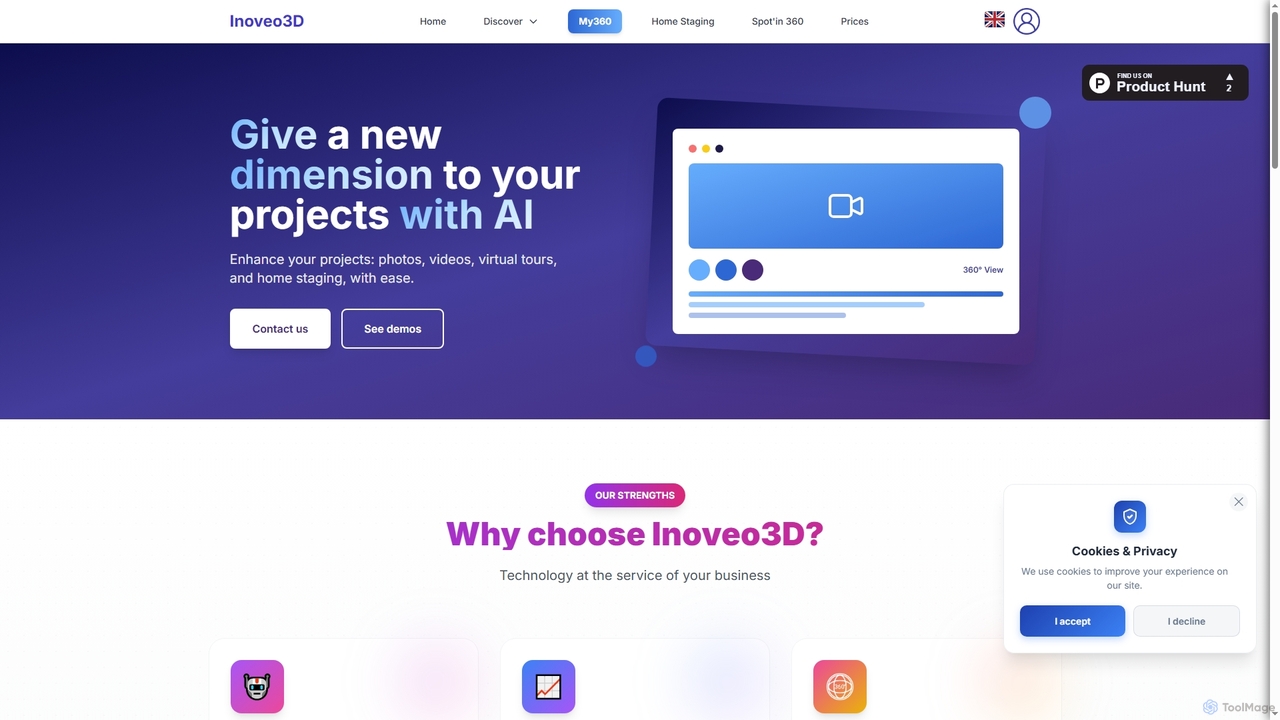
Inoveo3D is an AI-powered platform designed for real estate professionals to create immersive 360° virtual tours and enhance …

3.1K
Vestate

Vestate

Vestate is an AI-powered real estate marketing platform that redefines the property sales journey. It leverages interactive 3D …

4.4K

About Virtual Tours

Virtual Tours are AI-powered tools that create immersive, interactive digital walkthroughs of physical spaces. Leveraging advanced computer vision and 3D rendering, these platforms enable users to explore properties, venues, or sites remotely with a high degree of realism. They significantly enhance property viewing experiences, making them accessible and engaging for potential buyers or visitors worldwide.

Core Features

  • 360° Image/Video Stitching: Automatically combines multiple images or video clips into seamless panoramic views.
  • Interactive Hotspots: Allows embedding information, media, or navigation points within the tour for an enriched experience.
  • Floor Plan Integration: Overlays virtual tours onto 2D floor plans, providing spatial context and easy navigation between rooms.
  • AI-Powered Object Recognition: Identifies and highlights key features or furniture within a space, offering additional details or measurements.
  • Guided Tour Creation: Enables automated or semi-automated guided paths through a property, highlighting specific areas of interest.

Applicable Scenarios

Primarily used in real estate, virtual tours allow potential buyers to explore properties from anywhere, reducing the need for physical visits and accelerating decision-making. They are also invaluable for showcasing hotels, museums, and event venues, offering a preview that enhances booking rates and visitor engagement.

How to Choose

When selecting a virtual tour platform, consider the ease of 360° content capture and upload, the level of interactivity offered (hotspots, floor plans), and integration capabilities with existing CRM or listing platforms. Evaluate the output quality, mobile compatibility, and pricing structure based on your volume and feature needs.

Virtual ToursUse Cases

1

Showcasing Residential Properties

Real estate agents can create high-fidelity virtual tours of homes, allowing prospective buyers to walk through properties online at their convenience. This reduces the number of physical showings, qualifies leads more effectively, and expands reach to out-of-town or international buyers, significantly streamlining the sales process.

2

Marketing Commercial Real Estate

Commercial property developers and brokers utilize virtual tours to present office spaces, retail units, or industrial facilities to potential tenants or investors. Interactive elements can highlight amenities, floor plans, and nearby infrastructure, providing a comprehensive overview without requiring on-site visits, which is crucial for large-scale projects.

3

Promoting Hospitality Venues

Hotels, resorts, and event venues leverage virtual tours to offer guests an immersive preview of rooms, facilities, and common areas. This helps potential customers visualize their stay, build confidence, and make booking decisions, leading to higher conversion rates and reduced booking cancellations due to unmet expectations.

4

Virtual Museum & Gallery Experiences

Cultural institutions and art galleries use virtual tours to make their collections accessible to a global audience. Visitors can navigate through exhibits, zoom in on artworks, and access multimedia information through interactive hotspots, providing an educational and engaging experience beyond physical attendance.

5

Facilitating Construction Project Walkthroughs

Construction companies and architects employ virtual tours to document project progress, conduct remote site inspections, and present completed projects to clients. This allows stakeholders to review the build quality, identify potential issues early, and visualize the final outcome without needing to be physically present on site.

6

Enhancing Educational Campus Tours

Universities and schools create virtual tours of their campuses, dormitories, and academic facilities for prospective students and their families. This enables remote exploration of the campus environment, helping students make informed decisions about their higher education choices, especially for international applicants.

Virtual ToursFrequently Asked Questions