Getlinkai
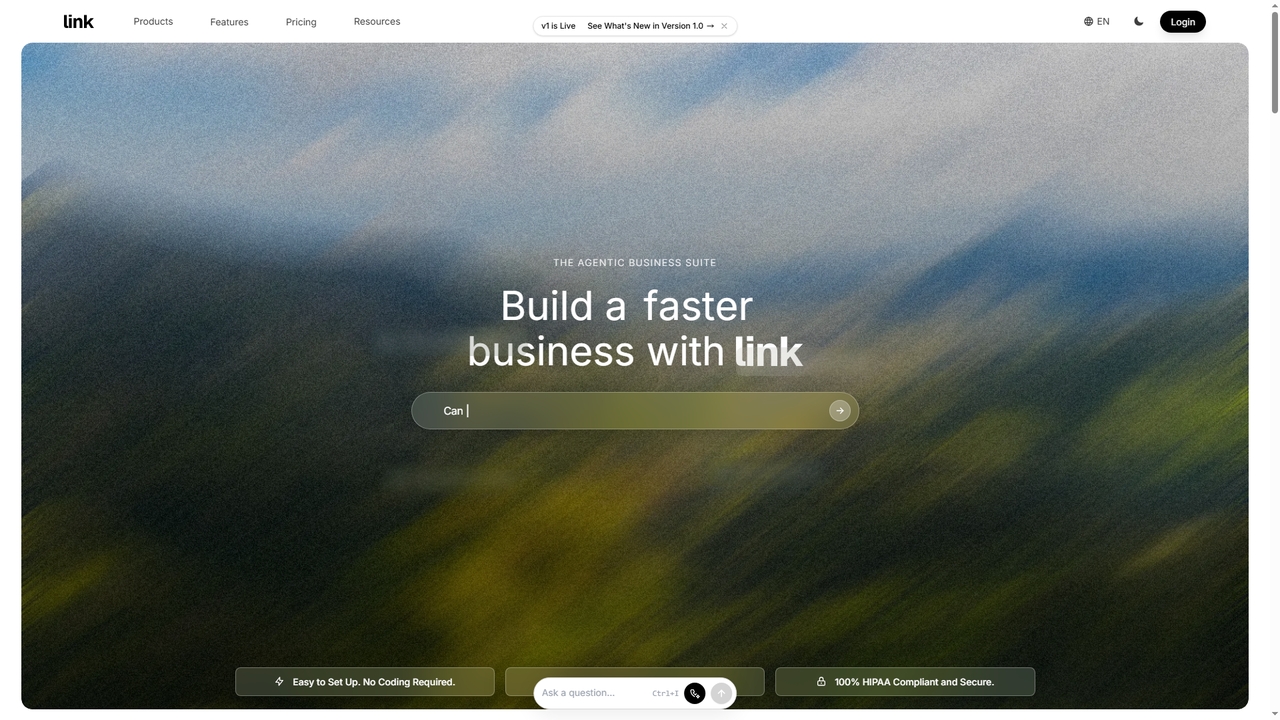
Getlinkai is an AI Agentic Business Suite designed to automate and accelerate business operations. It enables businesses to …
Getlinkai is an AI Agentic Business Suite designed to automate and accelerate business operations. It enables businesses to build, deploy, and manage conversational AI agents across multiple channels (web, WhatsApp, Instagram, phone) without coding. Core offerings include workflow automation, voice agents, order management, and a personal assistant (Ally), all accessible through a unified dashboard.
Zerly
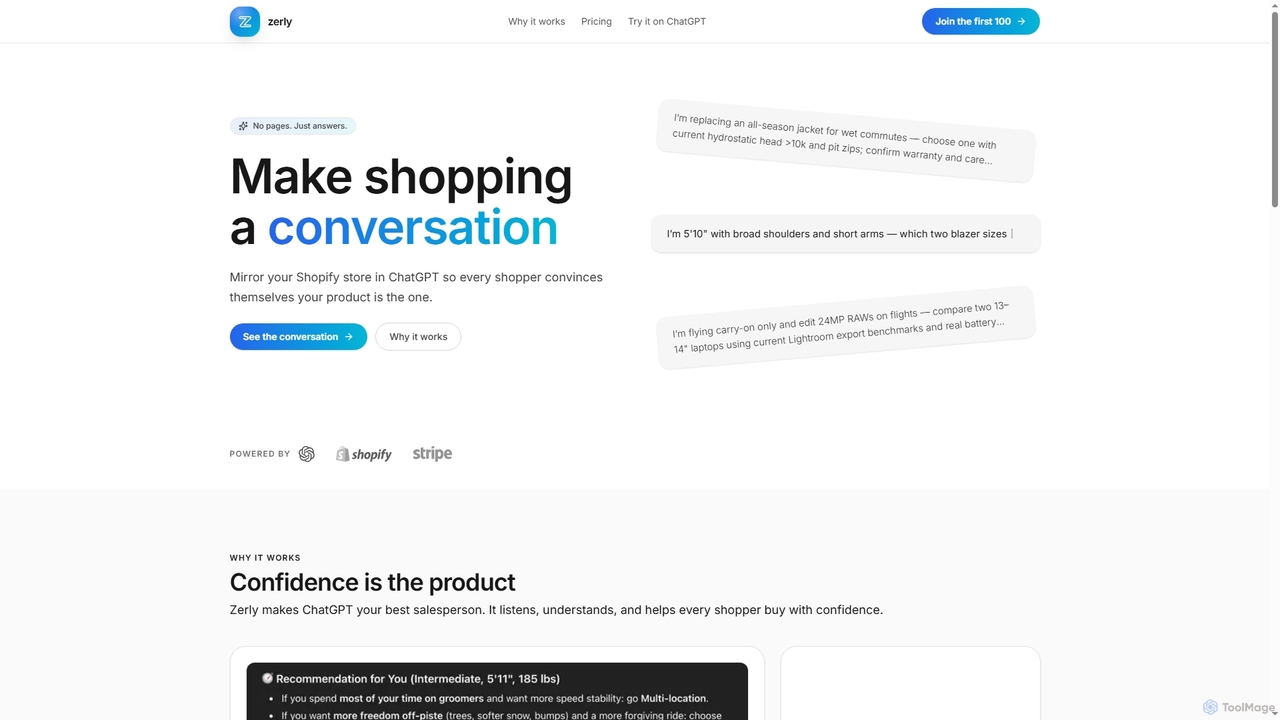
Zerly transforms e-commerce by mirroring your Shopify store within ChatGPT, turning shopping into a natural conversation. It acts …
Zerly transforms e-commerce by mirroring your Shopify store within ChatGPT, turning shopping into a natural conversation. It acts as an AI salesperson, allowing customers to discover, compare, and purchase products directly in a chat interface, boosting confidence and conversions.
Postscript
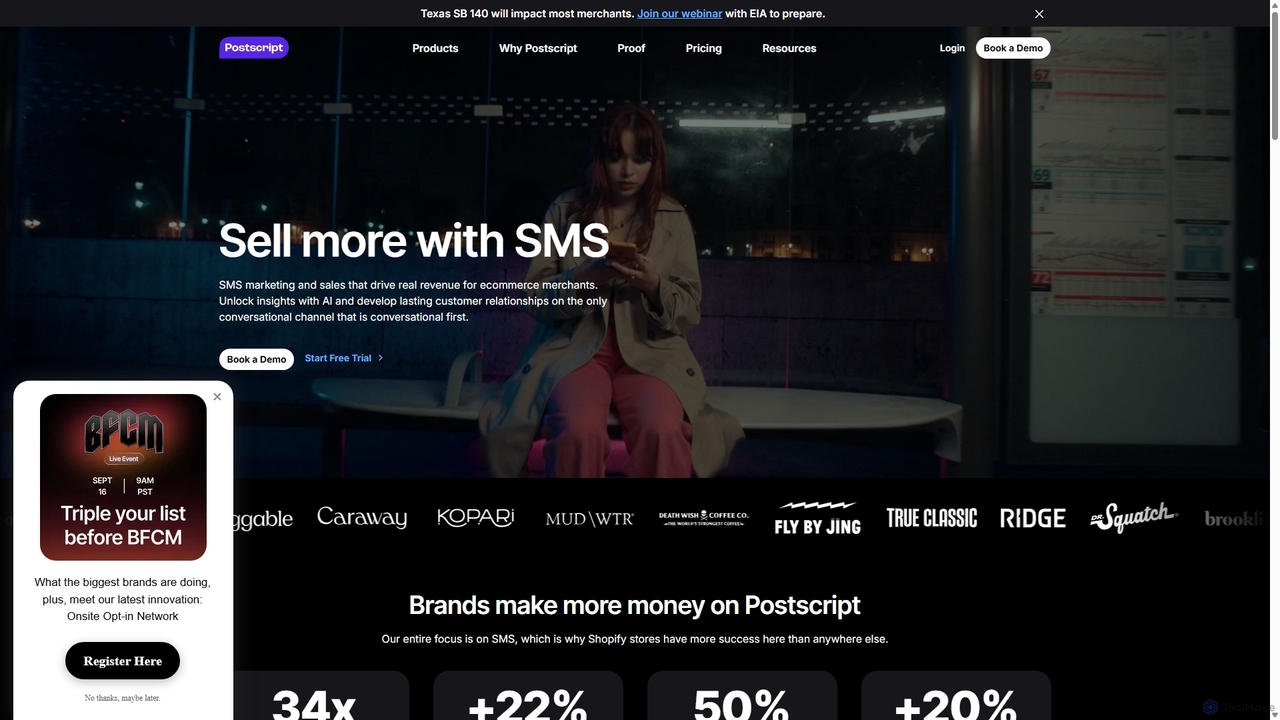
Postscript is a leading AI-powered SMS marketing and sales platform designed specifically for Shopify brands. It enables e-commerce …
Postscript is a leading AI-powered SMS marketing and sales platform designed specifically for Shopify brands. It enables e-commerce merchants to drive significant revenue, grow subscriber lists, and build lasting customer relationships through conversational SMS, automated campaigns, and advanced AI optimization features.
Zoko
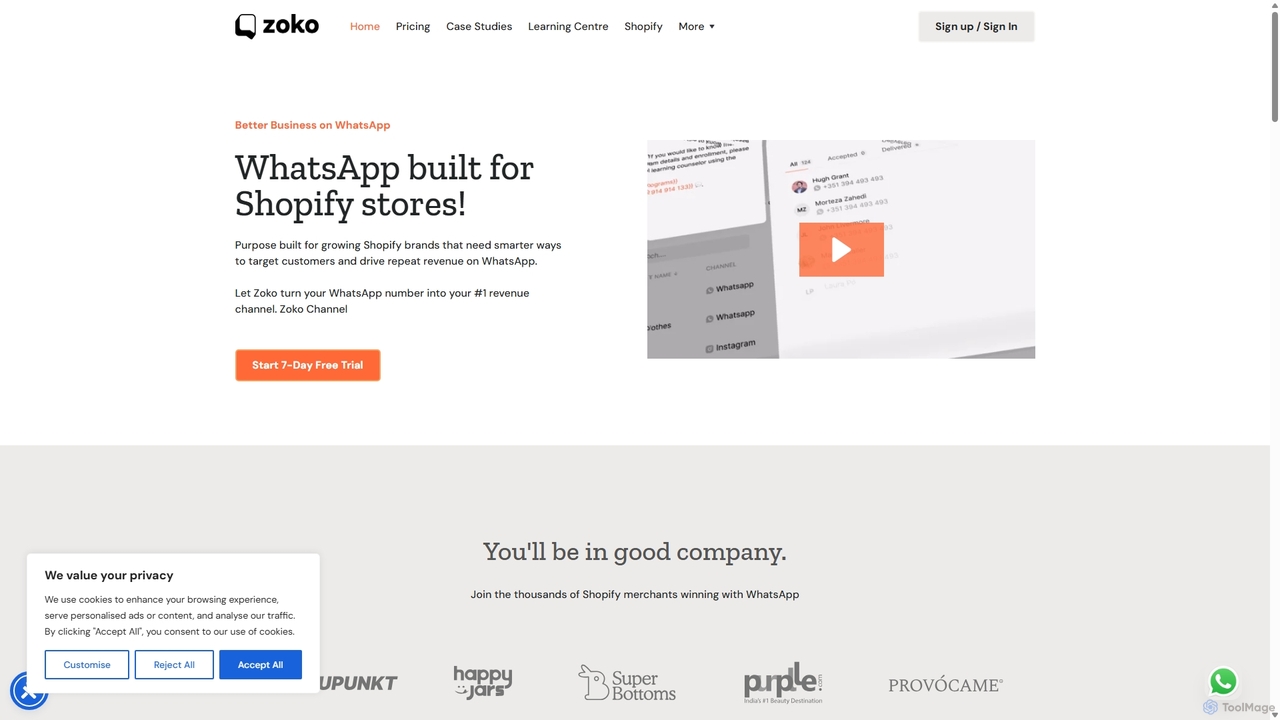
Zoko is a WhatsApp Business Platform that empowers businesses to manage sales, marketing, and customer support through a …
Zoko is a WhatsApp Business Platform that empowers businesses to manage sales, marketing, and customer support through a unified WhatsApp inbox. It leverages the official WhatsApp API to provide features like shared team inboxes, automated e-commerce workflows, broadcast messaging, and detailed analytics, helping companies enhance customer engagement and drive growth.
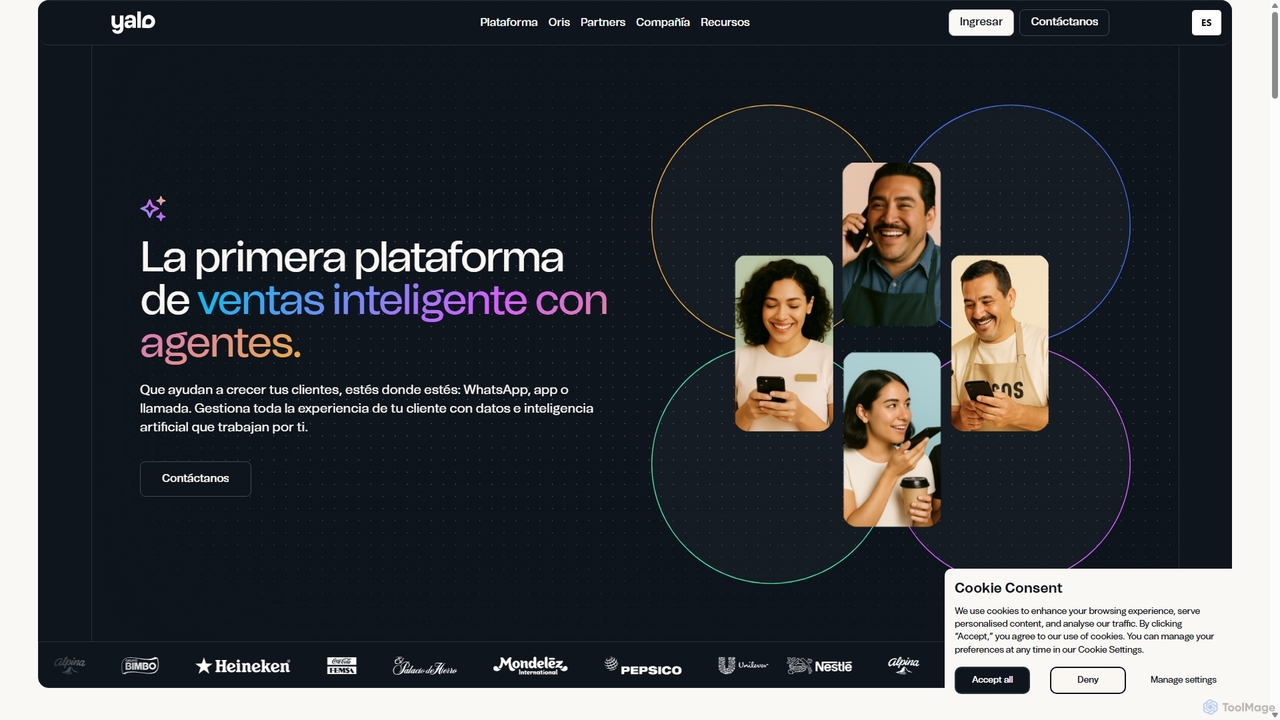
Yalo
Yalo is an AI-powered conversational commerce platform that helps businesses increase sales and enhance customer relationships. It deploys …
Yalo is an AI-powered conversational commerce platform that helps businesses increase sales and enhance customer relationships. It deploys intelligent agents on channels like WhatsApp to automate sales, marketing, and service, providing personalized experiences at scale.
WotNot
WotNot is a user-friendly, no-code AI agent and chatbot platform designed to streamline business communications. It helps automate …
WotNot is a user-friendly, no-code AI agent and chatbot platform designed to streamline business communications. It helps automate lead generation, customer support, and product recommendations at scale, offering powerful integrations and enterprise-grade security.
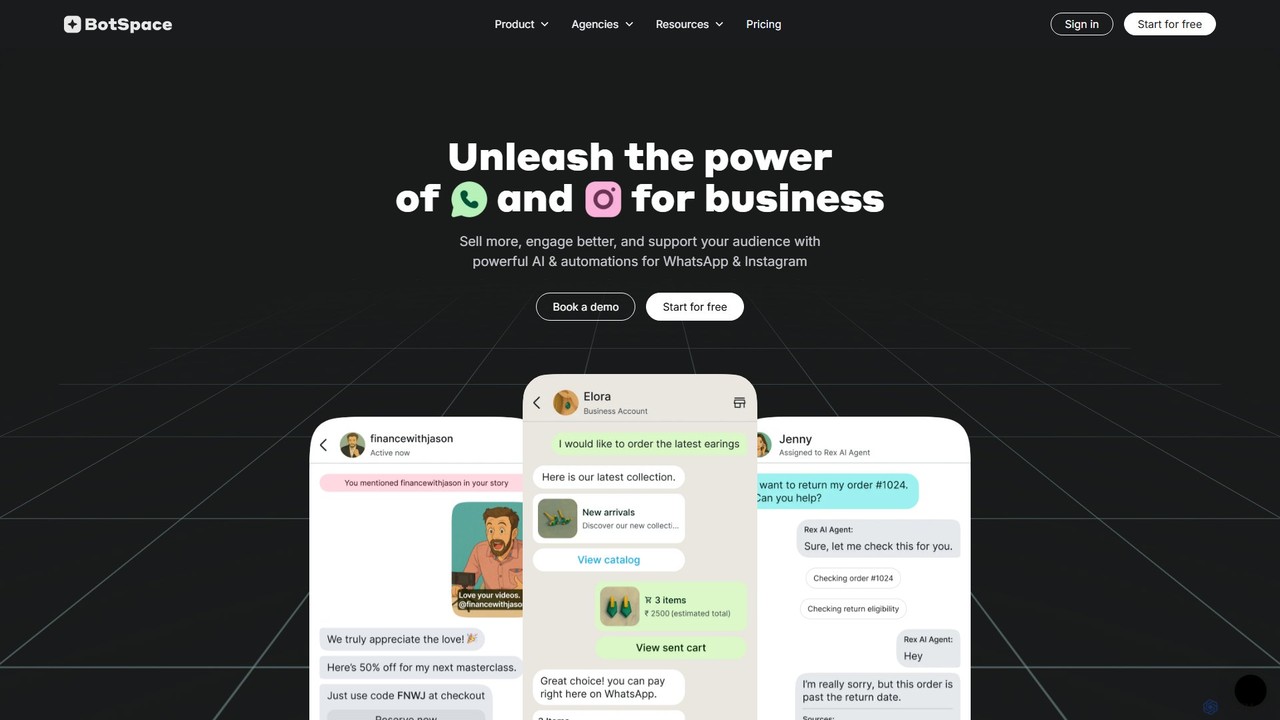
BotSpace
BotSpace is an AI-powered automation platform for WhatsApp and Instagram, designed to enhance marketing, sales, and customer support. …
BotSpace is an AI-powered automation platform for WhatsApp and Instagram, designed to enhance marketing, sales, and customer support. It helps businesses boost lead generation, automate responses, and drive sales directly within chat applications using features like AI agents, broadcasts, and integrated catalogs.
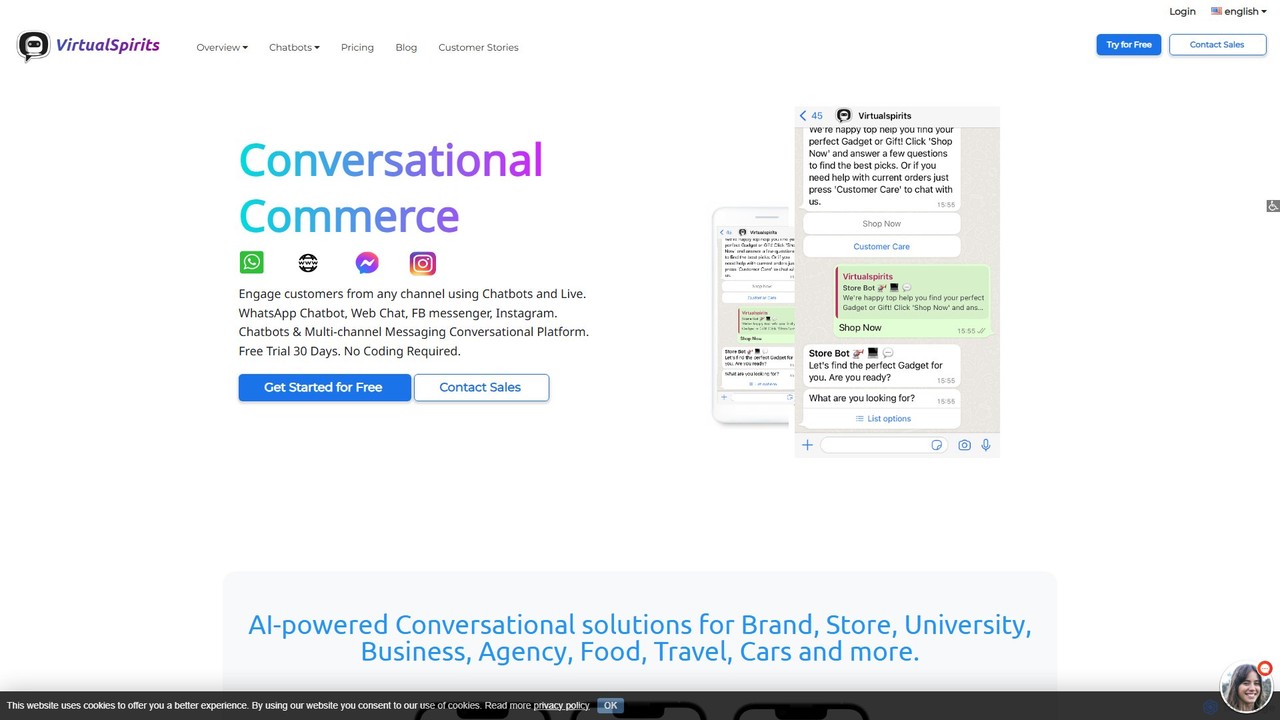
VirtualSpirits
VirtualSpirits is an AI-powered conversational platform that enables businesses to build and deploy no-code chatbots across multiple channels, …
VirtualSpirits is an AI-powered conversational platform that enables businesses to build and deploy no-code chatbots across multiple channels, including websites, WhatsApp, Facebook Messenger, and Instagram. It's designed to enhance customer engagement, generate leads, and provide 24/7 automated support, seamlessly integrating with live chat and existing CRM systems.
About Conversational Commerce
Conversational Commerce tools are AI-powered solutions that enable businesses to engage with customers through natural language interfaces across various digital channels, guiding them through the sales journey. These tools leverage advanced Natural Language Processing (NLP) and machine learning to understand user intent, provide personalized recommendations, and automate interactions. Their primary value lies in creating seamless, interactive shopping experiences, enhancing customer satisfaction, and driving sales efficiency within the broader sales ecosystem.
Core Features
- Automated Product Discovery: Guides customers to relevant products based on their expressed needs and preferences.
- Personalized Recommendations: Offers tailored product suggestions, promotions, and content in real-time.
- 24/7 Customer Support: Provides instant answers to FAQs, order status updates, and basic troubleshooting.
- Guided Selling Flows: Leads customers through a series of questions to help them make informed purchase decisions.
- Multi-channel Integration: Ensures consistent conversational experiences across websites, messaging apps (e.g., WhatsApp, Messenger), and social media.
Applicable Scenarios
E-commerce businesses utilize Conversational Commerce to transform passive browsing into active, guided shopping experiences, increasing conversion rates. Retailers deploy these tools for 24/7 customer service, handling inquiries about product availability, store hours, or return policies. Service providers can use them to qualify leads, book appointments, or offer personalized service packages, streamlining their sales and support operations.
How to Choose
When selecting a Conversational Commerce tool, prioritize its integration capabilities with your existing CRM, e-commerce platform, and messaging channels. Evaluate the sophistication of its NLP for understanding diverse customer queries and its ability to personalize interactions. Consider scalability to handle growing customer volumes and the depth of its analytics features for gaining insights into customer behavior and sales performance. Finally, assess the ease of customization for tailoring conversational flows to your specific business needs.
Conversational CommerceUse Cases
Streamline Product Discovery for E-commerce Shoppers
An online fashion retailer implements a conversational AI on its website and WhatsApp. Customers can describe their desired style, occasion, or budget, and the AI instantly suggests relevant clothing items, accessories, and even complete outfits. This personalized guidance helps shoppers quickly find what they need, reducing bounce rates and significantly increasing conversion by simplifying the product discovery process.
Provide 24/7 Automated Customer Support
A consumer electronics brand uses conversational commerce tools to offer round-the-clock support. Customers can inquire about product specifications, warranty details, or troubleshooting steps via chat. The AI provides immediate, accurate answers, resolving common issues without human intervention. This ensures continuous customer satisfaction and frees up human support agents to focus on more complex cases, improving overall service efficiency.
Personalize Shopping Experience with Guided Selling
A home appliance store integrates a conversational assistant into its online store. When a customer is looking for a washing machine, the assistant asks about their household size, laundry habits, and preferred features (e.g., energy efficiency, smart functions). Based on these responses, it recommends the most suitable models, compares features, and highlights current promotions, making the purchasing decision easier and more informed.
Automate Order Management and Tracking
Customers of a food delivery service can interact with a conversational AI through their preferred messaging app. They can check the real-time status of their order, modify delivery instructions, or even reorder past meals with simple text commands. This automation reduces calls to customer service, provides instant gratification for customers, and enhances the overall post-purchase experience, building loyalty.
Qualify Leads and Schedule Demos for B2B Sales
A SaaS company deploys a conversational chatbot on its landing pages. When a visitor expresses interest in their software, the bot engages them in a brief qualification conversation, asking about their company size, industry, and specific needs. Based on the responses, it can instantly schedule a demo with a sales representative or provide relevant case studies, ensuring sales teams focus on high-potential leads.
Collect Post-Purchase Feedback and Upsell Opportunities
After a customer purchases a fitness tracker, the brand's conversational AI sends a follow-up message via SMS or app notification. It asks for feedback on the product and the buying experience. Based on positive responses, it might suggest complementary products like smart scales or premium subscription services. This proactive engagement strengthens customer relationships and identifies new revenue streams.