ToolMage
Sign in

Best 2 Voice Ai AI tools for Sales

Popular Voice Ai AI tools in Sales include Tomato.ai and novaecho, helping you work more efficiently.

novaecho
Paid

novaecho

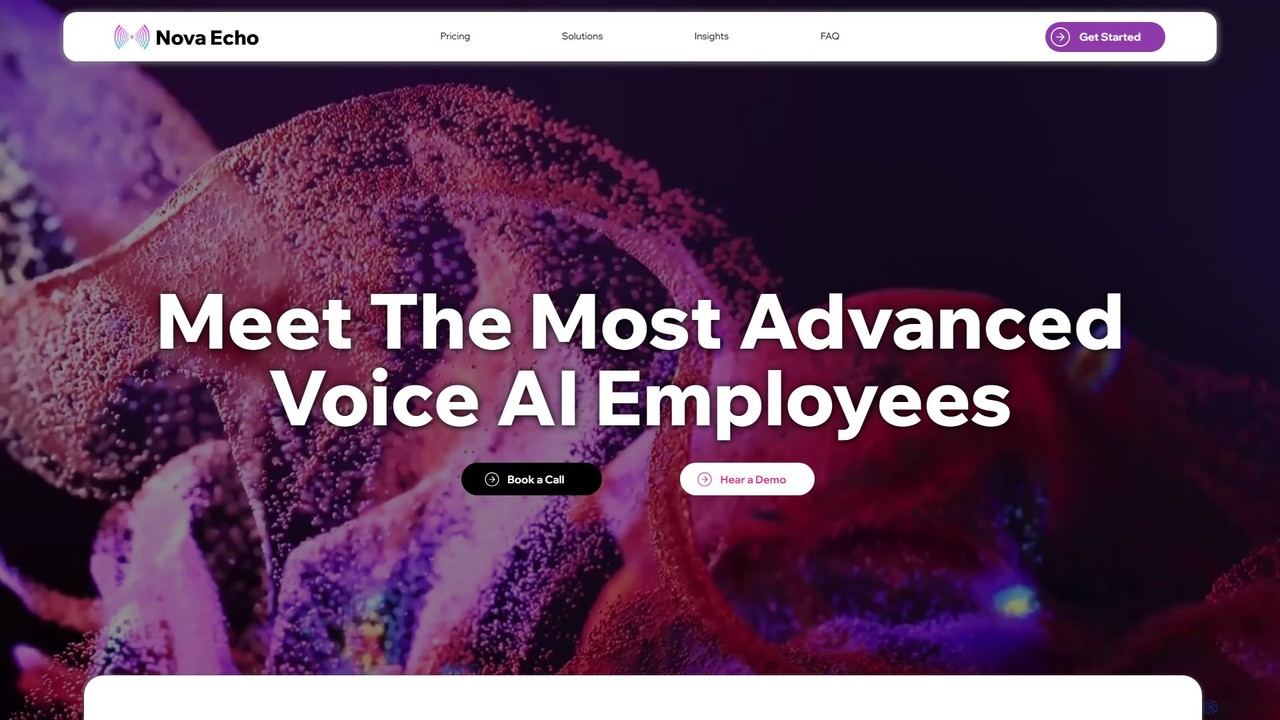
Novaecho is an advanced conversational AI platform that automates sales and customer service with human-like voice agents. It enables businesses to make outbound sales calls, handle inbound inquiries, and set appointments 24/7. Featuring support for 38 languages, an integrated CRM, and low-latency conversations, it helps companies scale operations, reduce costs, and enhance customer engagement without the need for large human teams.

Call Center Automation
Visits 9.6KFavorites 152Likes 156
Tomato.ai
Paid

Tomato.ai

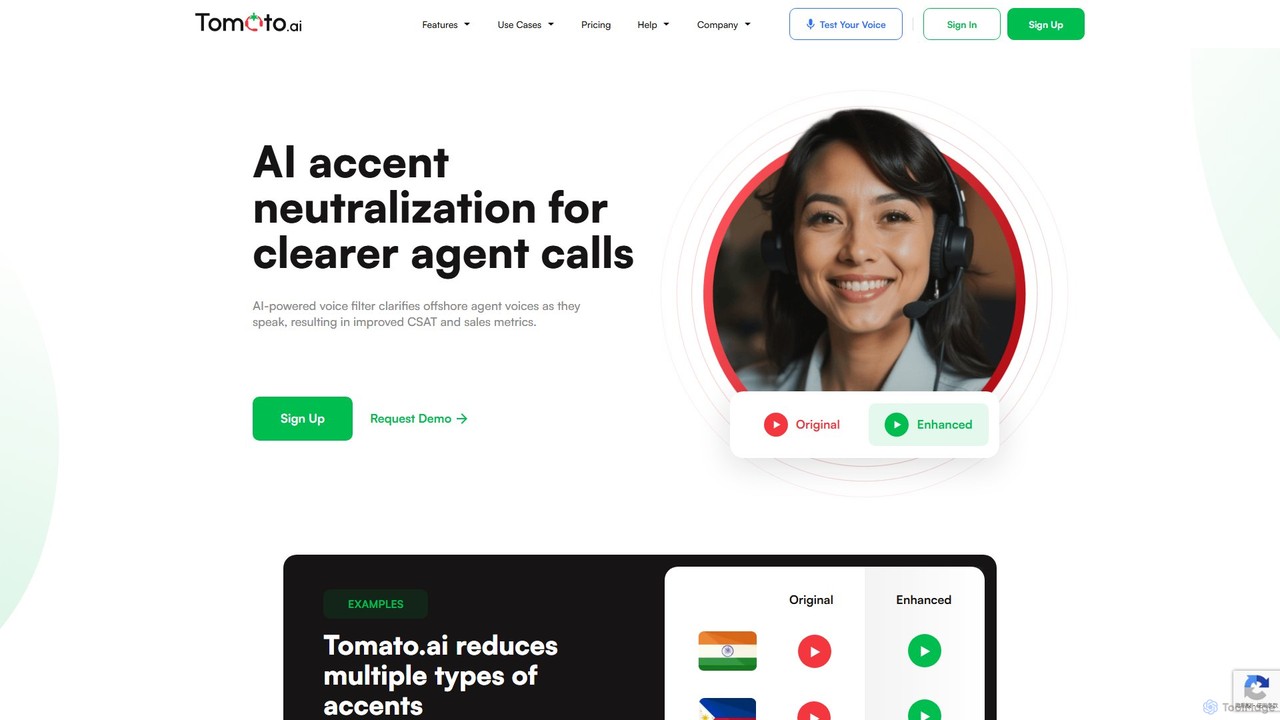
Tomato.ai is an AI-powered voice filtering solution designed for call centers. It neutralizes and reduces the accents of offshore agents in real-time, making their speech clearer to customers. This enhances communication, improves customer satisfaction (CSAT), and boosts sales metrics by reducing misunderstandings and frustration.

Voice Modulation
Visits 12.7KFavorites 157Likes 141

About Voice Ai

Voice AI tools for sales are a class of software that use artificial intelligence to analyze, automate, and optimize voice-based interactions with customers. Leveraging technologies like Natural Language Processing (NLP) and sentiment analysis, these tools transcribe and interpret conversations in real-time or post-call. They provide sales teams with actionable insights, automate repetitive outreach, and offer live guidance to improve performance. Unlike generic voice assistants, they are specifically designed to identify buying signals, track script adherence, and measure key sales metrics directly from conversations.

Core Features

  • Conversation Intelligence: Automatically transcribes and analyzes sales calls to identify keywords, topics, sentiment, and talk-to-listen ratios.
  • Real-time Sales Coaching: Provides live on-call suggestions, script prompts, and objection handling tips to sales agents during conversations.
  • AI Voice Dialer & Outreach: Automates the process of making calls and leaving personalized, AI-generated voicemails at scale.
  • Sentiment Analysis: Gauges customer emotion and engagement levels throughout a call to help reps adapt their approach dynamically.
  • Voice Cloning for Personalization: Creates a digital replica of a salesperson's voice to deliver personalized audio messages in outreach campaigns.

Use Cases

These tools are primarily used by inside sales teams, sales development representatives (SDRs), account executives (AEs), and sales managers in B2B and B2C environments. Common applications include analyzing discovery calls to improve qualification, coaching new hires during live calls, and automating follow-up voicemails after a product demonstration.

How to Choose

When selecting a Voice AI tool for sales, consider its integration capabilities with your existing CRM (e.g., Salesforce, HubSpot) for automatic data syncing. Evaluate the analytical depth, including the accuracy of its transcription and the relevance of its insights. Decide whether you need real-time coaching for agents or if post-call analysis for training is sufficient. Finally, ensure it supports the languages and dialects of your customer base.

Voice Ai use cases

1

Automating Post-Demo Voicemail Follow-ups

An Account Executive (AE) often needs to follow up with dozens of prospects after product demos, a time-consuming manual task. Using a Voice AI tool with an AI dialer and voice cloning, the AE can automate this process. They record a natural-sounding voicemail message once. The tool then automatically dials prospects who don't answer and leaves a personalized version of the message, inserting the prospect's name. This ensures 100% follow-up consistency, saves hours of repetitive work, and can significantly increase call-back rates compared to generic voicemails or no follow-up at all.

2

Onboarding and Coaching New Sales Reps

A sales manager needs to train new Sales Development Representatives (SDRs) effectively. Instead of just listening to call recordings after the fact, the manager uses a Voice AI tool with real-time coaching. As a new SDR is on a live call, the AI listens for specific keywords and phrases. If a prospect raises a common objection, the AI instantly displays a proven response on the SDR's screen. It can also prompt them to ask key qualifying questions they might have missed. This accelerates the learning curve, reduces manager intervention time, and ensures consistent messaging from day one, potentially shortening ramp-up time by over 30%.

3

Analyzing Competitor Mentions in Sales Calls

A product marketing manager wants to understand how competitors are perceived in the market. They use a Voice AI platform's conversation intelligence feature to scan thousands of hours of recorded sales calls. They set up trackers for competitor names and related terms. The AI automatically identifies, transcribes, and categorizes every mention. The manager can then generate reports showing which competitors are mentioned most often, in what context (e.g., pricing, features), and the sentiment associated with those mentions. This provides invaluable, unfiltered market intelligence directly from the customer's voice, helping to refine sales battle cards and product strategy.

4

Identifying Top Performer Habits

A Head of Sales wants to understand what makes their top salespeople so successful and replicate it across the team. They use a Voice AI platform to analyze the call recordings of their top 5 performers against the rest of the team. The AI provides comparative analytics on metrics like talk-to-listen ratio, number of questions asked, and time spent discussing pricing. It can also identify common phrases or techniques used by top reps that lead to successful outcomes. This data allows the sales leader to create a data-backed playbook of best practices for training the entire sales force, moving beyond anecdotal advice to scalable, proven strategies.

5

Gauging Customer Sentiment for At-Risk Accounts

An Account Manager is responsible for customer retention and needs to proactively identify at-risk accounts. They use a Voice AI tool that performs sentiment analysis on all customer check-in calls. The system flags conversations with sustained negative sentiment or a sharp decline in positive sentiment over time. This provides an early warning signal, allowing the manager to investigate the issue, escalate to support, or schedule a strategic review with the client long before they formally express a desire to churn. This data-driven approach to account health helps prioritize retention efforts and reduce customer churn.

6

Optimizing Cold Outreach Scripts

A team of Sales Development Representatives (SDRs) is struggling with low meeting booking rates from cold calls. The team lead uses a Voice AI platform to A/B test different opening lines and value propositions. The platform tracks not only which calls result in a booked meeting but also analyzes the conversational dynamics. It can pinpoint the exact phrases that cause prospects to engage (e.g., longer talk time, positive sentiment) versus those that lead to quick dismissals. By analyzing data from hundreds of calls, the team can iteratively refine their scripts based on real-world evidence, leading to a measurable improvement in their conversion rates.

Voice Ai FAQ

What is Voice AI for Sales?

Voice AI for Sales is a category of software that uses artificial intelligence to analyze, automate, and enhance voice communications between salespeople and customers. It goes beyond simple call recording by using technologies like Natural Language Processing (NLP) to transcribe calls, identify topics, analyze sentiment, and extract key data. Core functions include conversation intelligence for post-call analysis, real-time coaching during live calls, and automating outreach with AI-powered dialers. Its primary goal is to provide data-driven insights to improve sales performance, coaching, and strategy.

How to choose the right Sales Voice AI tool?

Choosing the right tool involves evaluating several key factors. First, prioritize deep integration with your existing CRM to ensure seamless data flow. Second, assess the accuracy of its core technology, such as transcription and language recognition, especially for your specific industry jargon. Third, decide on the feature set you need: do you require real-time, on-call coaching for reps, or is post-call analytics for managers and training sufficient? Finally, consider scalability and compliance. Ensure the tool can grow with your team and complies with call recording regulations (like GDPR or CCPA) in the regions you operate.

What's the difference between Voice AI and a standard CRM call logger?

A standard CRM call logger primarily records audio and logs the existence of a call as an activity. Its function is archival. Voice AI for sales, on the other hand, is analytical. It not only records the call but actively processes the conversation. It transcribes the audio, identifies who is speaking, analyzes sentiment, tracks keywords (like competitor mentions), and generates actionable insights. While a logger tells you *that* a call happened, Voice AI tells you *what* happened in the call and *why* it matters, providing a much deeper layer of intelligence for coaching and strategy.

What are the main benefits of using Voice AI in a sales team?

The main benefits are centered around performance, efficiency, and strategy. Key advantages include:

  • Data-Driven Coaching: Replace subjective feedback with objective insights from real conversations to train reps more effectively.
  • Increased Productivity: Automate manual tasks like CRM data entry, note-taking, and leaving voicemails, freeing up reps to focus on selling.
  • Improved Performance: Identify and scale the habits of top performers across the entire team to lift overall results.
  • Enhanced Deal Visibility: Gain deeper insights into the health of deals by analyzing customer sentiment and engagement in conversations, leading to more accurate forecasting.
Is it difficult to implement a Voice AI platform?

Implementation difficulty varies, but most modern, cloud-based Voice AI platforms are designed for relatively easy setup. The process typically involves connecting to your CRM and communication systems (like VoIP or dialers) via APIs or native integrations, which can often be done in a few steps. The primary challenge is usually not technical but organizational. It involves getting team buy-in, training reps and managers on how to use the insights effectively, and integrating the tool's data into your existing coaching and sales processes. A successful implementation focuses as much on adoption and process change as it does on the initial technical configuration.