Backlink Manager
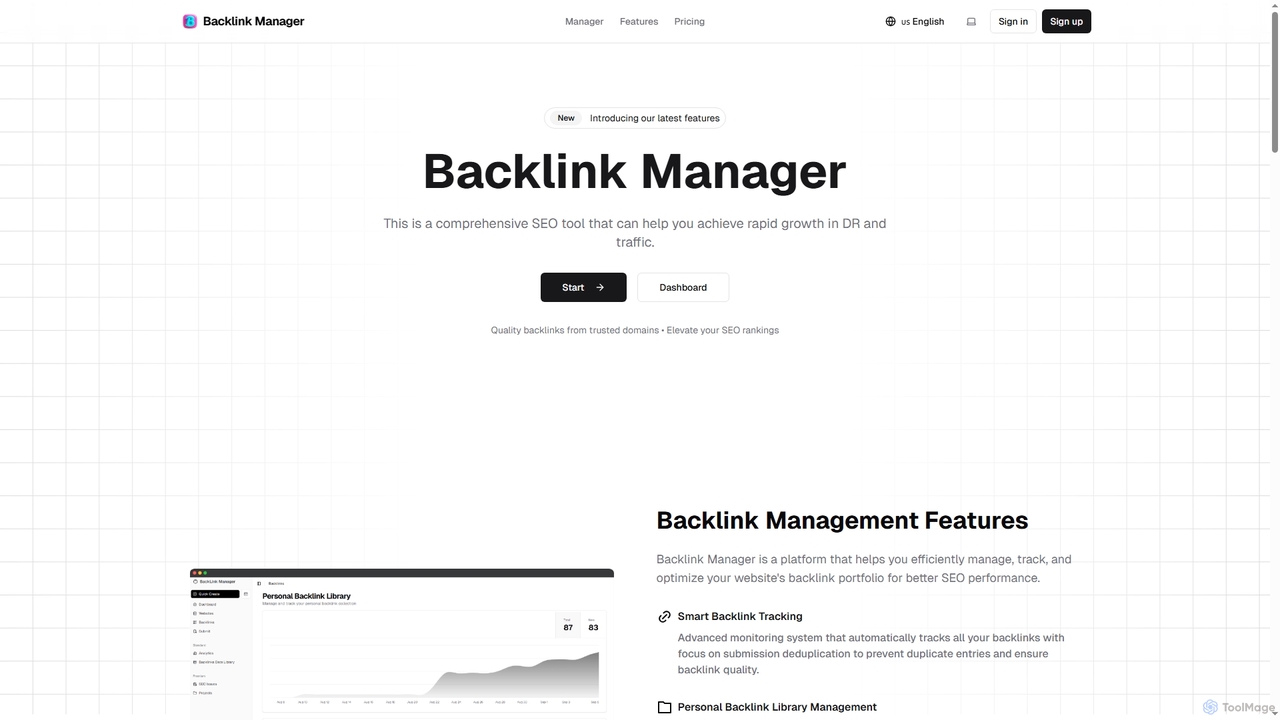
Backlink Manager is a comprehensive SEO tool designed to streamline the management, tracking, and optimization of your website's …
Backlink Manager is a comprehensive SEO tool designed to streamline the management, tracking, and optimization of your website's backlink portfolio. It helps businesses achieve rapid growth in Domain Rating (DR) and organic traffic through smart tracking, quality analysis, and efficient organization of link-building efforts.
About Backlink Management
Backlink Management tools are a specialized category of SEO software for monitoring, analyzing, and maintaining a website's backlink profile. Using AI and large-scale data crawling, these tools automatically track new and lost links, assess link quality based on various metrics, and identify potentially harmful backlinks. They are essential for protecting a site from negative SEO, understanding competitor strategies, and making informed decisions to improve domain authority. This focused approach allows SEO professionals to proactively manage their link equity and maintain a healthy, high-quality profile.
Core Features
- Backlink Monitoring: Automatically tracks new and lost backlinks, providing real-time alerts on profile changes.
- Link Profile Analysis: Evaluates metrics like Domain Authority (DA), anchor text distribution, and referring domain quality.
- Toxic Link Detection: Uses AI to identify spammy, low-quality, or unnatural links that could lead to search engine penalties.
- Competitor Analysis: Uncovers the backlink strategies of competing websites to find new link-building opportunities.
- Disavow File Generation: Simplifies the process of creating and submitting disavow files to Google to negate the impact of harmful links.
Use Cases
These tools are primarily used by SEO agencies managing multiple client portfolios, in-house SEO teams for medium to large websites, and digital marketers aiming to recover from search engine penalties. They are crucial for performing regular backlink audits, conducting competitive research, and executing link reclamation campaigns.
How to Choose
When selecting a Backlink Management tool, consider the size and freshness of its link index, as this determines data accuracy. Evaluate the depth of its analysis metrics, such as spam scores and link-type categorization. Also, assess its integration capabilities with platforms like Google Search Console and the customizability of its reporting features for stakeholder communication.

Backlink ManagementUse Cases
Conducting a Regular Backlink Audit
An in-house SEO specialist performs a quarterly health check of their company's website. They use a backlink management tool to export a complete list of all referring domains. By filtering for links acquired in the last 90 days and sorting by a 'spam score' or 'toxicity' metric, they can quickly identify potentially harmful links from private blog networks or irrelevant directories. This allows them to proactively add these domains to a disavow file, preventing potential algorithmic penalties and maintaining a clean, authoritative link profile that supports stable search rankings.
Analyzing Competitor Link Building Strategies
A digital marketing manager is planning a new link-building campaign. They input three main competitors into a backlink management tool to analyze their profiles. The tool reveals the competitors' top-performing content (pages with the most backlinks) and their most common referring domains. The manager discovers that a high-authority industry blog has linked to all three competitors but not their own site. This insight provides a high-value, qualified target for their next outreach campaign, basing their strategy on proven successes within their niche rather than guesswork.
Recovering from a Negative SEO Attack
A website owner notices a sudden drop in rankings and organic traffic. Using a backlink management tool, they discover thousands of new, low-quality links from spammy foreign domains have appeared in a short period—a clear sign of a negative SEO attack. The tool's AI-powered toxic link detection automatically flags these harmful domains. The owner can then quickly select all flagged domains, generate a correctly formatted disavow file with a single click, and submit it to Google Search Console. This rapid response helps mitigate the damage and begin the recovery process much faster than manual analysis would allow.
Identifying and Reclaiming Lost Backlinks
A technical SEO analyst is tasked with preserving link equity after a major website redesign. They use the 'Lost Links' report in their backlink management tool. This report shows valuable links that once pointed to live pages but are now hitting 404 errors because URLs were changed during the redesign. The analyst exports this list, prioritizes links from high-authority domains, and provides it to the outreach team. The team then contacts the webmasters of these sites to request they update the link to the new, correct URL. This process reclaims significant SEO value that would have otherwise been permanently lost.
Managing Link Profiles for Multiple SEO Clients
An SEO agency account manager oversees the off-page strategy for ten different clients. Using a backlink management tool with a dashboard feature, they can monitor key metrics for all clients in a single view. This includes tracking new/lost links, monitoring changes in domain authority, and receiving alerts for potential toxic links. They schedule automated weekly reports to be sent to each client, providing transparency and demonstrating progress. This centralized management saves hours of manual data collection and allows the manager to quickly spot issues or opportunities across their entire client portfolio.
Vetting Potential Link Building Opportunities
An outreach specialist has identified a list of 100 potential websites for a guest posting campaign. Before contacting them, they use a backlink management tool to vet each site's quality. They input the list of domains and analyze metrics such as Domain Authority, Spam Score, and the ratio of outgoing to incoming links. The tool reveals that 20 of the sites have very high spam scores and are part of a known link farm. By filtering these out, the specialist creates a high-quality, targeted outreach list, saving time and resources by avoiding low-value or potentially harmful websites.