Clonable
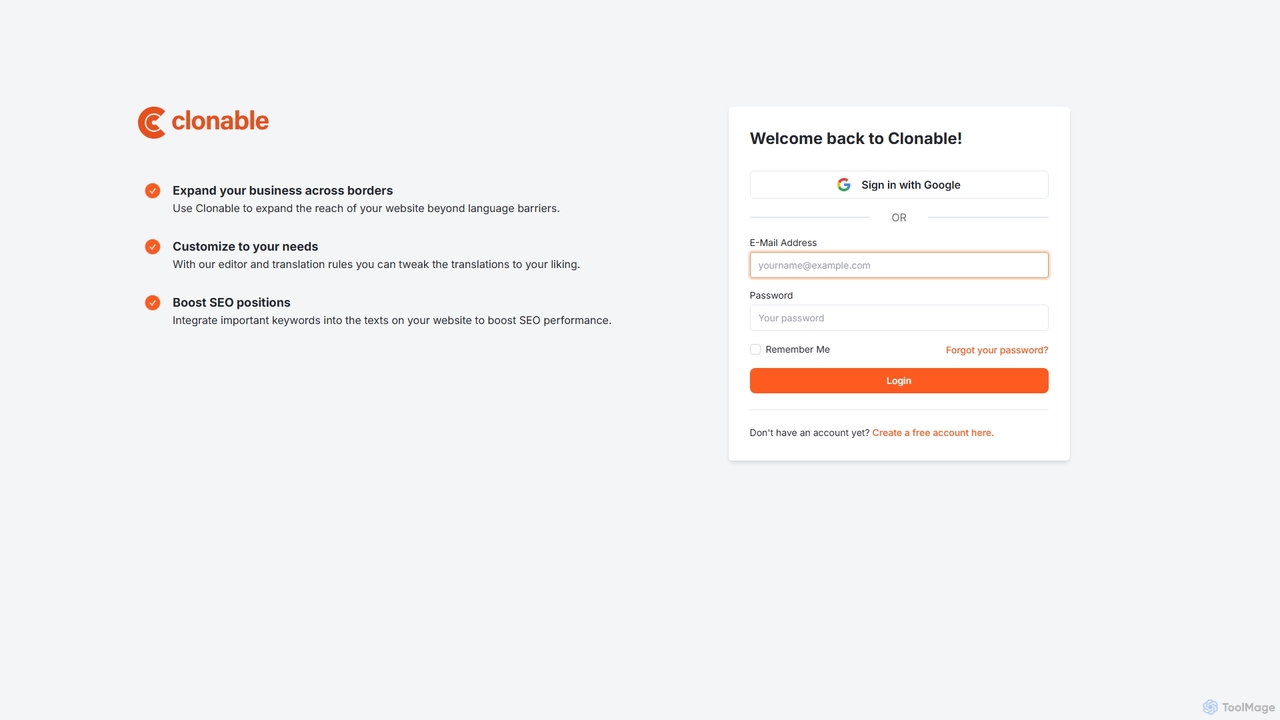
Clonable is an AI-powered website translation and localization platform that enables businesses to effortlessly create multilingual versions of …
Clonable is an AI-powered website translation and localization platform that enables businesses to effortlessly create multilingual versions of their websites. It clones your site and translates the content, offering full customization and robust SEO features to help you expand your global reach and rank higher in international search results.
About International Seo
International SEO tools are AI-powered solutions designed to optimize websites for global search engines and diverse linguistic audiences. These tools leverage advanced algorithms to analyze international search trends, manage multilingual content, and ensure proper geo-targeting. Their primary value lies in helping businesses expand their global reach, attract international traffic, and enhance visibility in specific regional markets by addressing unique local search behaviors and cultural nuances.
Core Features
- Multilingual Keyword Research: Identifies relevant keywords and search intent across various languages and regions.
- Hreflang Tag Management: Automates the generation and validation of hreflang tags to correctly signal language and regional targeting to search engines.
- Localized Content Optimization: Assists in adapting website content, meta descriptions, and titles for cultural relevance and local search engine algorithms.
- International Technical SEO Audit: Analyates site structure, server locations, CDNs, and mobile responsiveness for optimal global performance.
- Global Rank Tracking & Analytics: Monitors keyword rankings and website performance across different countries and languages, providing actionable insights.
Use Cases
International SEO tools are essential for businesses aiming to penetrate new global markets, e-commerce platforms with multi-country operations, and content creators targeting diverse linguistic audiences. They help ensure that a website's content is not only translated but also culturally and technically optimized for specific international search engine results pages (SERPs).
How to Choose
When selecting an International SEO tool, consider its language support breadth, accuracy of geo-targeting data, robustness of hreflang tag management features, and integration capabilities with other SEO platforms. Evaluate its ability to provide localized insights and support optimization for non-Google search engines prevalent in target markets.
International SeoUse Cases
Expanding E-commerce to New Markets
An online retailer uses International SEO tools to identify high-demand products and relevant keywords in a new target country. They then localize product descriptions, optimize category pages for local search intent, and ensure the website's technical setup supports the new region, leading to increased visibility and sales in that market.
Global Content Marketing Strategy
A content agency leverages International SEO tools to adapt blog posts and articles for different linguistic and cultural contexts. By analyzing local search trends and cultural nuances, they ensure content resonates with diverse international audiences and ranks well locally, maximizing engagement and brand authority across borders.
Multi-regional Website Technical Audit
A webmaster uses International SEO tools to audit hreflang implementation, server response times in various regions, and identify geo-targeting issues for a complex multi-country website. This ensures that the correct language version of the site is served to users based on their location and language preferences, preventing duplicate content penalties and improving user experience.
Localizing SaaS Product Landing Pages
A SaaS company employs International SEO tools to translate and culturally adapt landing pages for specific target countries. This involves optimizing calls-to-action, messaging, and visual elements to resonate with local audiences, leading to higher conversion rates and improved lead generation in international markets.
Monitoring Competitor Performance in Global Markets
A marketing team tracks competitor rankings and keyword strategies across different international search engines using specialized International SEO tools. This allows them to identify gaps in their own global SEO efforts, discover new market opportunities, and refine their international content and link-building strategies to gain a competitive edge.
Optimizing for Specific Local Search Engines
A business targeting markets where Google isn't dominant (e.g., Baidu in China, Yandex in Russia) uses specialized International SEO tools to optimize for these unique search engine algorithms and local search behaviors. This ensures maximum visibility and relevance in regions with distinct search engine landscapes, beyond the typical Google-centric approach.