Seo Best in category 1 results Monitoring AI Tool

Popular AI tools in the Monitoring field of Seo include Hexowatch, etc., helping you quickly improve efficiency.

Hexowatch

Hexowatch

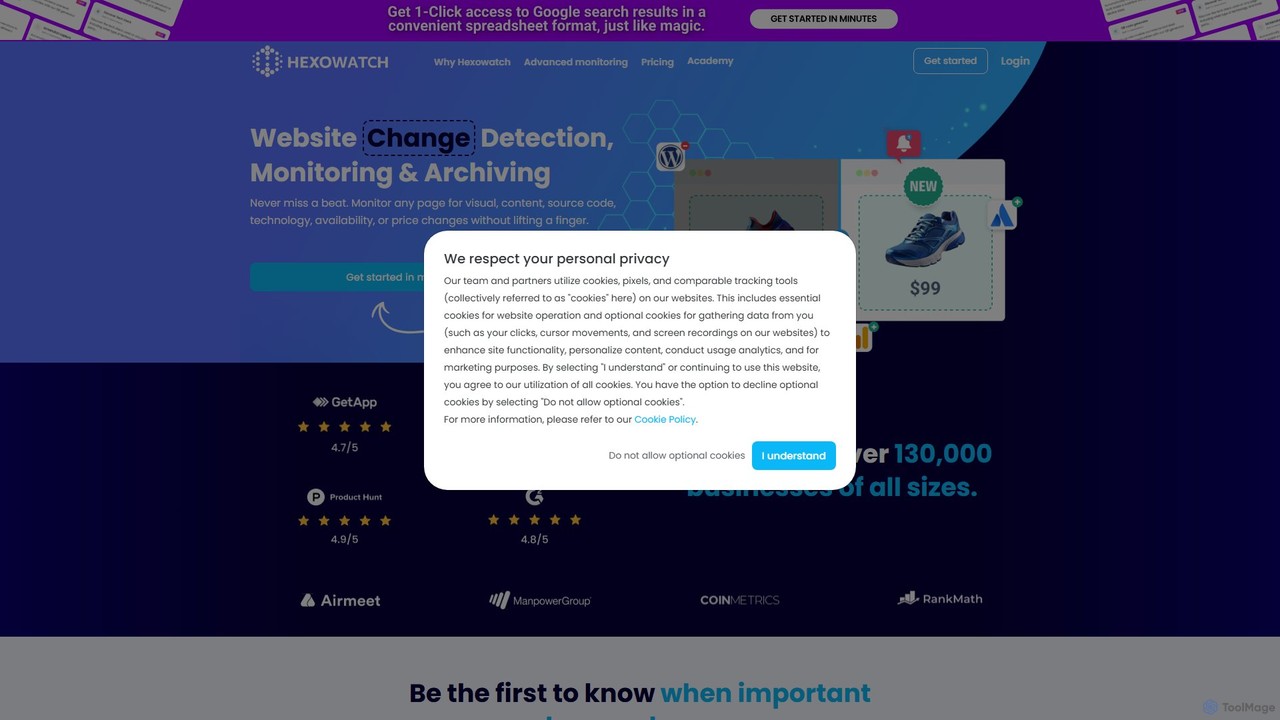
Hexowatch is an AI-powered platform for automated website change detection, monitoring, and archiving. It tracks visual, content, source …

18.6K

About Monitoring

AI-powered Monitoring tools are specialized solutions within the SEO landscape designed to track, analyze, and report on various aspects of a website's search engine performance. These tools leverage artificial intelligence to automate data collection, identify trends, and provide actionable insights into keyword rankings, backlink profiles, technical health, and competitor activities. They empower SEO professionals and marketers to proactively optimize their strategies, detect issues early, and measure the effectiveness of their efforts in real-time.

Core Features

  • Keyword Rank Tracking: Automatically monitors and reports on the organic search positions of target keywords across major search engines.
  • Backlink Analysis: Scans and analyzes incoming and outgoing links, identifying new backlinks, lost links, anchor text distribution, and potential toxic links.
  • Technical SEO Auditing: Continuously checks website health for issues like crawl errors, broken pages, slow loading times, and other technical factors impacting SEO.
  • Competitor Intelligence: Provides insights into competitor keyword strategies, backlink acquisition, and content performance to identify market opportunities.
  • Performance Reporting & Alerts: Generates customizable reports on key SEO metrics and sends real-time notifications for significant changes or detected issues.

Applicable Scenarios

These tools are crucial for SEO specialists, digital marketers, and webmasters who need to maintain a competitive edge and ensure their online presence is optimized. They are used to understand market dynamics, respond quickly to algorithm changes, and demonstrate the tangible impact of SEO initiatives.

How to Choose

When selecting an AI SEO Monitoring tool, consider its scope of data collection (e.g., global vs. local rankings, specific backlink sources), the frequency and granularity of its reporting, and its integration capabilities with other analytics platforms. Evaluate the customization options for dashboards and alerts, and ensure its scalability aligns with your website's size and future growth, alongside a transparent pricing structure.

MonitoringUse Cases

1

Tracking Keyword Performance for Content Strategy

Content marketers regularly monitor the organic search rankings of their target keywords using AI monitoring tools. This allows them to see how their content performs over time, identify keywords that are gaining or losing traction, and discover new opportunities for content creation or optimization. By understanding keyword performance, they can refine their content strategy to better align with search intent and improve visibility.

2

Identifying and Disavowing Toxic Backlinks

SEO specialists utilize AI monitoring tools to continuously scan their backlink profiles for potentially harmful or spammy links. These tools can automatically flag links from low-quality domains, suspicious anchor text, or sudden spikes in link acquisition. This proactive identification allows specialists to disavow toxic backlinks quickly, protecting their website's domain authority and preventing potential penalties from search engines.

3

Proactive Technical SEO Issue Detection

Webmasters and SEO teams rely on AI monitoring tools to continuously audit their website's technical health. These tools can automatically detect critical issues such as broken links, crawl errors, duplicate content, slow page loading times, and server response problems. By receiving real-time alerts for these issues, teams can address them promptly, preventing negative impacts on user experience and search engine rankings before they escalate.

4

Benchmarking Against Competitors' SEO Strategies

Marketing teams leverage AI monitoring tools to gain competitive intelligence by tracking competitor keyword rankings, backlink acquisition, and content performance. This allows them to identify gaps in their own strategy, discover new market opportunities, and understand what's working for their rivals. By benchmarking against competitors, businesses can refine their SEO tactics to stay ahead in their industry.

5

Reporting SEO ROI to Stakeholders

SEO managers and agencies use AI monitoring tools to generate comprehensive, customizable reports on key performance indicators (KPIs) such as organic traffic growth, keyword ranking improvements, and backlink acquisition. These reports provide clear, data-driven evidence of SEO campaign effectiveness, allowing them to demonstrate return on investment (ROI) to clients and internal stakeholders, justifying ongoing SEO efforts and budget allocation.

6

Monitoring Core Web Vitals and Page Experience

Web developers and SEOs utilize AI monitoring tools to track critical user experience metrics known as Core Web Vitals (LCP, FID, CLS) and other page experience signals. These tools provide continuous data on page load speed, interactivity, and visual stability, often with AI-driven insights into root causes of performance issues. Proactive monitoring ensures websites meet Google's page experience standards, which are crucial for both user satisfaction and search rankings.

MonitoringFrequently Asked Questions