ToolMage
Sign in

Best 1 Research AI tools for Seo

Popular Research AI tools in Seo include aismartcube, helping you work more efficiently.

aismartcube
Freemium

aismartcube

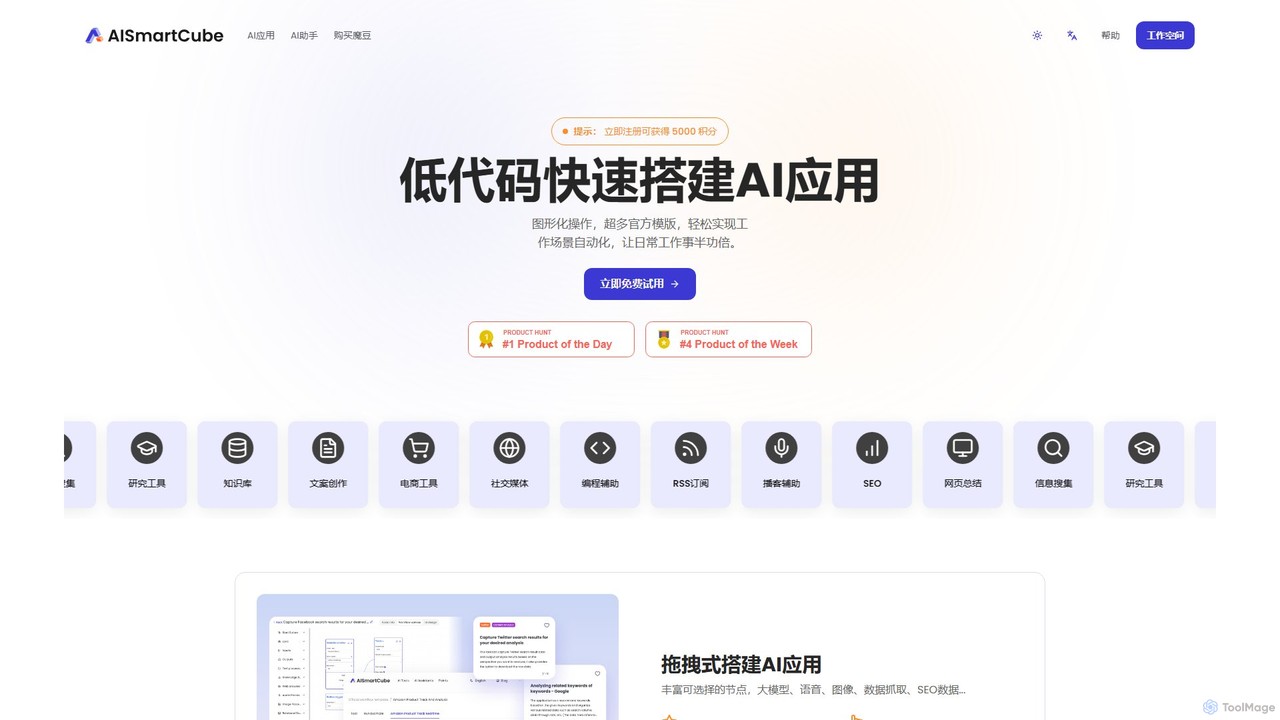
aismartcube is a low-code AI application development platform that allows users to build and automate complex workflows using a visual, drag-and-drop interface. It integrates with major large language models like ChatGPT, Claude, and Gemini, and offers a wide range of plugins for data scraping, SEO, social media, and more. Users can create custom "AI Employees" and leverage pre-built templates to streamline tasks in marketing, content creation, and research, all with a flexible pay-as-you-go pricing model.

Low Code No Code
Visits 4.8KFavorites 127Likes 122

About Research

AI Research tools for SEO are a specialized category designed to automate and deepen the process of discovering keywords, analyzing competitors, and identifying content opportunities. They leverage large language models and vast datasets to analyze search engine results pages (SERPs), user search behavior, and competitor websites at scale. This enables SEO professionals and marketers to build data-driven strategies, uncover untapped niches, and understand the competitive landscape more effectively. Unlike general SEO platforms, these tools focus specifically on the initial data-gathering and analysis phase, providing granular insights that form the foundation of any successful SEO campaign.

Core Features

  • Keyword Discovery & Clustering: Automatically finds relevant keywords and groups them into semantic clusters for targeted content creation.
  • Competitor Analysis: Analyzes top-ranking pages to identify their content structure, keyword usage, and backlink profiles.
  • SERP Analysis: Deconstructs search engine results pages to understand search intent, featured snippets, and ranking factors for a given query.
  • Content Gap Identification: Compares your website's content against competitors to find topics they rank for that you don't.
  • Backlink Opportunity Research: Identifies potential high-quality backlink sources by analyzing competitor link profiles.

Applicable Scenarios

These tools are primarily used by SEO specialists, content strategists, digital marketing agencies, and in-house marketing teams. They are essential for planning new content, optimizing existing pages, and conducting market research before launching a new product or service online.

Selection Criteria

When choosing an AI Research tool for SEO, consider the data source and its accuracy, the depth of analysis provided (e.g., intent classification), integration capabilities with tools like Google Search Console, and the overall user-friendliness of the interface for interpreting complex data.

Research use cases

1

Building a New Content Strategy

A content strategist for a B2B SaaS company uses an AI research tool to identify a pillar topic. The tool generates hundreds of long-tail keywords, clusters them into subtopics for blog posts, and analyzes the top 10 competitors for the main keyword. This analysis helps outline the pillar page structure, ensuring comprehensive coverage and high ranking potential from the start.

2

Competitor Backlink Gap Analysis

An SEO agency analyst needs to build authority for a new client. They use an AI research tool to compare the client's backlink profile against three main competitors. The tool automatically identifies high-authority domains linking to competitors but not the client, creating a prioritized list of outreach targets for the link-building team.

3

Optimizing Existing Blog Posts for Higher Rankings

An in-house SEO specialist wants to improve an underperforming blog post. They input the target keyword and URL into an AI research tool. The tool analyzes the current top-ranking pages and provides specific recommendations, such as adding missing subtopics, incorporating semantically related keywords, and improving the internal linking structure to boost its relevance.

4

Identifying 'People Also Ask' Content Opportunities

A freelance writer is creating an FAQ page for a client's product. They use an AI research tool to scrape and analyze the 'People Also Ask' (PAA) sections from Google for dozens of related queries. The tool organizes these questions by theme, providing a ready-made structure for a comprehensive FAQ that directly addresses user search intent.

5

International Keyword Research for Market Expansion

A global e-commerce brand plans to launch in Spain. The marketing manager uses an AI research tool to find relevant Spanish keywords, analyze their search volume and competition, and understand local search intent. The tool helps them avoid direct translation errors and build a localized SEO strategy that resonates with the new market, ensuring a more effective entry.

6

SERP Feature Analysis for Featured Snippets

A digital marketer aims to capture a featured snippet for a high-traffic 'how-to' query. They use an AI research tool to analyze the SERP. The tool identifies that the current snippet is a numbered list and provides the exact structure, heading, and word count of the winning content. This allows the marketer to reformat their content for a higher chance of being featured.

Research FAQ

What are AI SEO Research tools?

AI SEO Research tools are specialized software that use artificial intelligence to automate and enhance the discovery and analysis phases of search engine optimization. They help users find valuable keywords, analyze competitor strategies, and identify content gaps. Unlike all-in-one SEO platforms, they focus deeply on providing the foundational data needed to build an effective SEO campaign.

How do I choose the right AI SEO Research tool?

When choosing a tool, consider these factors:

  • Data Accuracy: Ensure the tool uses up-to-date and reliable data for keywords and SERP analysis.
  • Feature Set: Match the tool's features (e.g., keyword clustering, competitor analysis) to your specific needs.
  • Ease of Use: A user-friendly interface is vital for interpreting complex data efficiently.
  • Integration: Check if it connects with other tools you use, like Google Analytics or project management software.
What's the difference between an AI Research tool and a general SEO platform?

General SEO platforms (like Ahrefs or Semrush) offer a broad suite of features, including rank tracking, site audits, and reporting. Dedicated AI Research tools focus specifically on the pre-production phase of SEO. They often provide deeper, more specialized analysis for keyword clustering, content structure analysis, and intent prediction, delivering more granular insights for strategy development before you even start writing or optimizing.

Who should use AI SEO Research tools?

These tools are ideal for SEO professionals, content strategists, digital marketing agencies, and business owners who want to make data-driven decisions for their content and SEO efforts. They are particularly valuable for anyone responsible for planning content calendars, performing competitive analysis, or trying to enter new markets with a solid, research-backed strategy.

Can these tools predict Google's algorithm?

No, AI SEO Research tools cannot predict Google's algorithm changes. Instead, they analyze vast amounts of real-time and historical data from actual search results. By deconstructing what is currently ranking successfully, they provide insights and patterns that help you create content that aligns with Google's established quality signals and user expectations, thereby increasing your chances of ranking well.